☰
🛕 Lord Devi | 📍 Udaipur, Gomati, Tripura
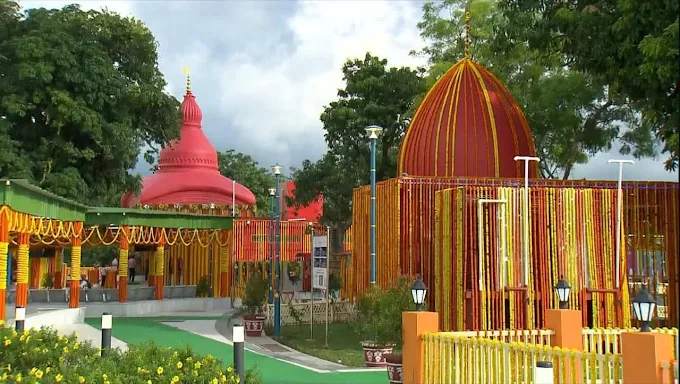
Tripura Sundari Temple, popularly known across northeastern India as 'Matabari', is situated in the historic town of Udaipur (formerly Rangamati), the ancient royal seat of the Manikya monarchs in the Gomati district of Tripura. It is celebrated as one of the sacred 51 Shakti Peethas in Hindu tradition. According to scriptural lore and the Pithamala Grantha, when Lord Vishnu deployed the Sudarshana Chakra to sever the body of Devi Sati into sacred fragments during Lord Shiva's grief-stricken Rudra Tandava, Sati's right foot (specifically the right toe and foot, 'Dakshina Pada') fell upon this sacred hillock.
The temple is uniquely perched upon a gentle hill that naturally resembles the humped shell of a tortoise, designating it as a 'Kurma Peetha' (Kurmapristhakriti). In Shakta Tantra, a Kurma Peetha is considered one of the holiest and most potent geometric formations for Shakti sadhana. The presiding deity is worshipped as Devi Tripura Sundari, the third of the Dasa Mahavidyas (also known as Shodashi or Tripureshwari), representing supreme cosmic consciousness and auspicious maternal grace. Her divine consort and accompanying Bhairava is worshipped as Tripuresh.
The sanctum sanctorum houses two ancient black touchstone (Kashti pathar) idols: a prominent 5-foot deity representing Tripura Sundari, and a smaller 2-foot idol affectionately venerated as 'Chhoto-Ma' (an aspect of Goddess Chandi). Directly adjacent to the temple is the vast, sacred lake known as 'Kalyan Sagar' (measuring roughly 6.4 acres), which is sanctified by the presence of giant freshwater fishes and the rare, critically endangered black softshell Bostami turtles (Nilssonia nigricans), venerated by pilgrims as sacred inhabitants linked to the goddess. Matabari is also an iconic sanctuary of syncretism and universal harmony, where people across diverse faiths, tribal communities, and denominations have brought devotional offerings for centuries.
The recorded history of Tripura Sundari Temple is intimately linked with the Manikya dynasty, which ruled the independent kingdom of Tripura for centuries. According to the royal court chronicles 'Rajmala' and temple records, the temple was founded in 1501 CE (1423 Saka Era) by Maharaja Dhanya Manikya, one of the greatest rulers of Tripura.
According to documented traditional accounts, the king initially undertook construction on the hillock intending to build a sanctuary for Lord Vishnu. However, during the construction phase, he received a divine visionary instruction in a dream commanding him to bring the idol of Goddess Tripura Sundari from the Chittagong Hill Tracts (present-day Bangladesh) and consecrate it upon this hill. The king initially experienced spiritual conflict regarding establishing a Shakti icon within an intended Vaishnavite precinct; subsequent divine revelations enlightened him on the fundamental non-duality and unity of Vishnu and Shakti (Hari-Shakti oneness). Thus, the stone murti was transported from Chittagong and enshrined in 1501 CE. The smaller murti, 'Chhoto-Ma', was historically treasured by the Manikya monarchs as a divine guardian deity and was ceremoniously carried into battlefields and royal encampments to ensure victory and safety.
Architecturally, the shrine stands as an outstanding specimen of medieval Bengal 'Ek-Ratna' (single-spired) and Char-Chala hut-style brick architecture. It features a square sanctum of approximately seven square meters topped with a curvilinear chala dome crowned by a traditional finial, erected upon a raised kurma-shaped earthen base. In 1558 CE, Maharaja Kalyan Manikya excavated the vast Kalyan Sagar lake adjacent to the temple to serve ritual ablutions. Following a damaging lightning strike in the late 17th century, Maharaja Rama Manikya renovated the sanctum, and further protective restorations were executed by Maharaja Radhakishore Manikya in the early 20th century. Historical texts such as the 'Gazinama' document that even the 18th-century ruler Shamsher Gazi offered worship at Matabari after conquering Udaipur, underscoring its broad regional veneration. The temple also profoundly influenced Indian literature: Nobel laureate Rabindranath Tagore drew inspiration from the historical events and Shakta traditions at this shrine for his celebrated works, including the drama 'Visarjan' and the novel 'Rajarshi'. Following the merger of the princely state of Tripura with the Indian Union in 1949, the temple was integrated into state heritage administration and is now overseen by the Mata Tripura Sundari Temple Trust.
Devotees traditionally believe that offering prayers to Devi Tripura Sundari, the granter of all worldly and spiritual benedictions, resolves deep anxieties and fulfills noble wishes.
Reflecting the royal tradition where the Manikya kings carried the idol of 'Chhoto-Ma' into battles, pilgrims seek the Goddess's shield against negative influences, litigations, and life adversities.
As one of the prime Shakti Peethas located on a sacred Kurma-shaped mound, traditional belief holds that darshan purifies malefic planetary vibrations and dissolves persistent obstacles.
Pilgrims invoke the maternal grace of Tripura Sundari for healing from chronic physical and mental illnesses and for the overall well-being of their families.
The tranquil environment created by the sanctum and the sacred waters of Kalyan Sagar provides deep meditative peace, fostering spiritual clarity and devotion.
A quintessential offering at the shrine where devotees purchase traditional peda prepared from concentrated cow milk and sugar to offer at the sanctum before distributing it as prasad.
Special ceremonial chanting of the Devi Mahatmyam / Durga Saptashati performed by ordained priests for devotees seeking specific sankalpas or family welfare.
A devotional custom where pilgrims feed puffed rice (muri) to the sacred softshell turtles and large fish residing in the adjoining Kalyan Sagar lake.
Devotees can sponsor the daily midday consecrated meal (Maha Bhog), which is prepared inside the temple kitchen and shared among pilgrims and needy visitors.
An annual multi-day state celebration held during Kartik Amavasya featuring the lighting of thousands of earthen lamps, night-long Tantric pujas, and the renowned Matabari Mela.
No festivals available.
📍 99.20 km away
📍 146.69 km away
📍 155.57 km away
📍 239.70 km away
📍 239.95 km away
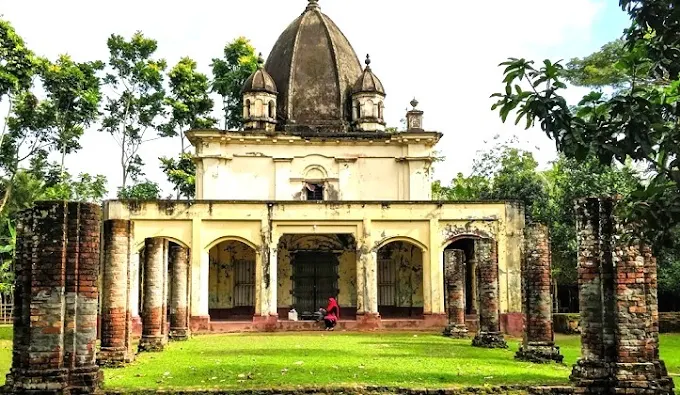
📍 278.63 km away
Stays near Tripura Sundari Shaktipeeth (Matabari Temple)

📍 Near Kurinji Andavar Temple · 2,094.1 km
stayStarting from ₹2,000 / night
Discover more temples you may be interested in
You may also like these temples