☰
🛕 Lord Devi | 📍 Sitakunda, Chattogram, Bangladesh
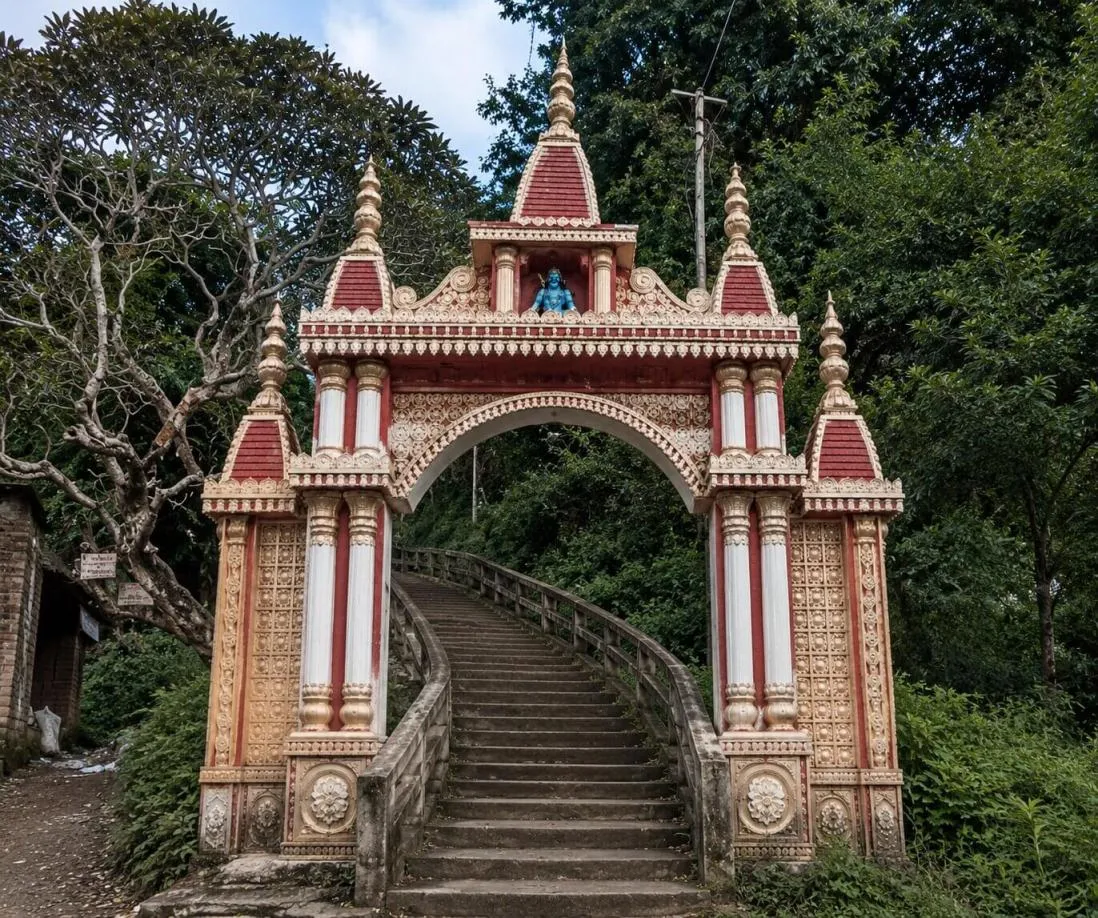
Sitakunda Chattal Bhavani Shakti Peetha is venerated as one of the 51 canonical Shakti Peethas in Hinduism. According to the Puranic tradition documented in sacred texts such as the Tantra Chudamani, Shiva Charita, and Pithanirnaya Tantra, this sacred site marks the holy spot where the right arm ('Dakshina Bahu') of Goddess Sati fell following her self-immolation at Daksha's sacrifice, after Lord Vishnu severed her mortal form with the Sudarshana Chakra to pacify the cosmic sorrow of Lord Shiva. In traditional Shakta theology, the divine mother is worshipped here as Devi Bhavani (the embodiment of life-giving primordial kinetic power), while Lord Shiva is consecrated as her Bhairava under the divine epithets Kramadhiswar and Chandrashekhar (the moon-crowned Lord). The Shakti Peetha forms an integral spiritual component of the ancient Chandranath Dham pilgrimage geography in Sitakunda, Chittagong. While the primary Bhavani temple complex is consecrated near the foothills along the banks of the sacred Mandakini stream and Sita Kunda holy springs, the Bhairava shrine—the renowned Chandranath Temple—is enshrined at the summit of Chandranath Parbat at an elevation of approximately 1,020 feet. Devotees believe that a pilgrimage to this Peetha invokes the ultimate protection of the Divine Mother, grants emotional fortitude, dispels deep-seated karmic afflictions, and unites the seeker with the synchronized forces of Shiva and Shakti.
The sacred pilgrimage tradition of Chattal Bhavani and Chandranath Dham stretches back into ancient and medieval history, deeply interwoven with the socio-religious fabric of historic Bengal. The sanctuary is mentioned in classical texts and regional chronicles, most notably the 'Rajmala' (the royal chronicle of Tripura) and the 'Nigamakalpataru'. According to the Rajmala, approximately 800 years ago, Raja Biswambhar Sur, a royal descendant of King Adisur of Gaur, embarked on a sea expedition to reach the sacred Chandranath hill to offer worship. The 12th-century Sanskrit poet Jayadeva, celebrated for composing the Gita Govinda, is traditionally recorded in the Nigamakalpataru to have spent time residing and meditating at the serene slopes of Chandranath Dham. During the late 15th and early 16th centuries, the illustrious ruler of Tripura, Maharaja Dhanya Manikya, extended royal patronage and established extensive religious endowments for the temple. Regional chronicles recount that King Dhanya Manikya attempted to relocate the revered Shiva Lingam from Chandranath to his capital in Udaipur, Tripura, but abandoned the effort following an ominous divine dream warning him that the deity must eternally remain anchored on Chandranath Parbat. Over successive centuries, the complex received sustained patronage from regional Hindu zamindars, merchants, and ascetic orders from Bengal and Assam. To facilitate the arduous ascent to the summit Bhairava shrine across steep cliffs, wealthy patrons and pilgrims constructed stone staircases; historical inscriptions note that Sri Gangaram Biswas of 24 Parganas initiated the laying of extensive stone stairways so that elderly pilgrims could undertake the climb. While the temples faced periods of regional unrest and damage during the geopolitical upheavals of 1971, local Hindu management committees, sadhus, and the Chandranath Temple Trust have preserved the daily rituals, the annual Shiva Chaturdashi Fair, and the perennial worship of Devi Bhavani.
According to Shakta tradition, worshipping Devi Bhavani at the site of Sati's right arm invokes supreme divine protection, dispelling deep-seated fears and shielding households from negative influences.
Devotees traditionally believe that the right arm of the Goddess represents active divine prowess, bestowing immense willpower, resolve, and mental strength to overcome formidable life obstacles.
The presence of Devi Bhavani alongside Lord Chandrashekhar is believed to harmonize internal masculine and feminine energies, fostering domestic peace, conjugal harmony, and familial concord.
Pilgrims hold the sacred conviction that bathing in the sanctified foothill Sita Kunda springs and undertaking the arduous penance of the hill climb purifies the soul and mitigates past karmic burdens.
The largest annual festival observed in the month of Phalgun; features four-prahar Jalabhishekam, night-long vigil, special Havana, and the historic Sitakunda Mela drawing vast congregations of devotees.
Special nine-day autumnal invocation dedicated to Goddess Bhavani, marked by continuous Devi Mahatmya (Chandi Path) recitations, pushpanjali, and grand homam.
Individual and family sankalpa fire sacrifices and elaborate bilva-patra/kumkum archana performed by pilgrims seeking special ancestral peace or personal vows.
The Shiva Chaturdashi Mela is the largest and most historic festival held across the Chandranath Dham complex, which encompasses the Chattal Bhavani Shakti Peetha and its Bhairava...
Chattal Bhavani Shakti Peetha is venerated in Shakta tradition as the spot where the right arm of Goddess Sati is believed to have fallen. During the Hindu lunar month of Ashwin, t...
Observed during the Chaitra lunar month, Vasanta Navratri (also observed as Basanti Puja in Bengal) is the spring adoration of the Divine Mother. At Chattal Bhavani, traditional ri...
📍 99.20 km away
📍 147.41 km away
📍 249.07 km away
📍 265.92 km away
📍 313.08 km away
📍 330.77 km away
Stays near Sitakunda Chattal Bhavani Shakti Peetha

📍 Near Kurinji Andavar Temple · 2,043.7 km
stayStarting from ₹2,000 / night
Discover more temples you may be interested in
You may also like these temples