☰
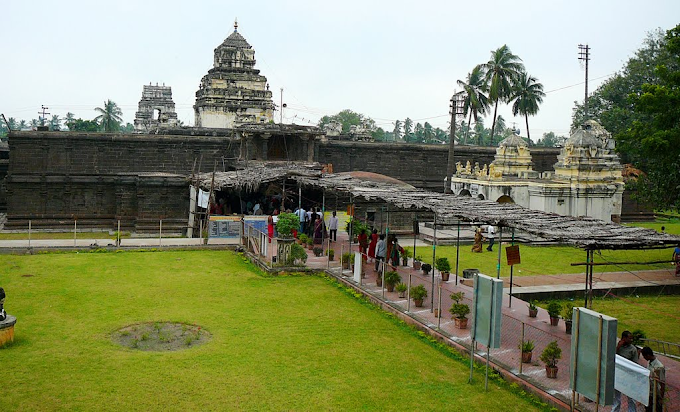
🛕 Lord Devi | 📍 Draksharamam, Dr. B. R. Ambedkar Konaseema, Andhra Pradesh
Draksharamam Sri Manikyamba Devi Sametha Sri Bhimeswara Swamy Temple, located in the Konaseema district of Andhra Pradesh, holds a unique and sacred dual distinction in Hindu sacred geography. It is venerated as both one of the eighteen Maha Shakti Peethas (Ashtadasa Shakti Peethas) and one of the five venerable Pancharama Kshetras of Lord Shiva. According to traditional belief and the 'Ashtadasa Shakti Peetha Stotram' attributed to Adi Shankaracharya ('Draksharame Manikyamba'), the shrine marks the holy spot where the left cheek (Vaama Gandasthala) of Goddess Sati fell following the cosmic destruction of Daksha's sacrifice. Revered here as Goddess Manikyamba, the divine mother is worshipped in a potent, motherly form in a sanctum situated at the north-eastern corner of the inner enclosure.
Simultaneously, the temple enshrines Lord Shiva as Bhimeswara Swamy in the form of a massive, 2.6-metre tall (approximately 9 to 14 feet) Spatika (crystal) Shiva Lingam. Sacred lore from the Skanda Purana associates this lingam with the slaying of demon Tarakasura by Lord Kumara Swamy; when the demon's invulnerable Amrita Lingam was shattered into five divine fragments, the largest piece fell at Draksharamam, establishing it as the most prominent of the Pancharamas. Uniquely, the sanctum sanctorum is constructed across two storeys: the base of the lingam (representing Lord Shiva) is viewed and worshipped from the ground floor, while the holy crown (sirabhaga) is worshipped and receives ceremonial abhishekam from an elevated upper gallery on the first floor.
The complex also holds the sacred water body known as the Sapta Godavari Kundam, traditionally believed to have been brought together by seven revered rishis (Kashyapa, Atri, Bharadwaja, Viswamitra, Gautama, Jamadagni, and Vashishta) to facilitate sacred ablutions. Due to the spiritual potency of this confluence, the kshetra has been celebrated since ancient times as 'Dakshina Kashi' (the Kashi of the South), where both Shaivism and Shaktism unite in exceptional harmony.
The recorded architectural and epigraphical history of the Draksharamam Bhimeswara Swamy Temple dates back to the reign of the Eastern Chalukyan dynasty of Vengi. Inscriptions preserved on the temple walls establish that the foundation of the massive stone complex was laid between the late 9th century and the early 10th century CE by the Eastern Chalukyan monarch King Chalukya Bhima I (who reigned approximately 892–922 CE), after whom the presiding deity Sri Bhimeswara is named. Built in the contemporary early medieval Dravidian style with distinctive Chalukyan rock-cut and structural features, the temple resembles a monumental stone citadel, featuring two massive concentric rectangular enclosures (prakarams) with towering entry gateways.
Epigraphically, Draksharamam is one of the richest archaeological sites in South India, preserving over 380 inscribed stone epigraphs dating between the 11th and 15th centuries CE. These inscriptions chronicle substantial patronage and land endowments from a succession of major South Indian dynasties, including the Imperial Cholas (under Rajendra Chola I and Kulottunga Chola I), the Western Chalukyas, the Velanati Chodas, the Eastern Gangas of Kalinga, the Kakatiyas of Warangal, the Reddy dynasty of Rajahmundry, and the Vijayanagara Empire. Inscriptions document administrative grants, permanent lamps (akhanda deepas), flower gardens, jewel presentations, and the maintenance of Vedic colleges and feeding houses (satrams).
In addition to historical epigraphy, religious tradition and Puranic lore (notably found in the Skanda Purana) connect this kshetra to King Daksha Prajapati's historic sacrifice, giving the town its ancient name 'Daksha-Arama' (the grove of Daksha), which gradually evolved phonetically into Draksharamam. Local tradition also notes that Maharishi Vyasa resided here after leaving Kashi and installed holy lingams in the vicinity. Today, the monument's historical structures, including its intricate mandapas, granite pillars, and ancient epigraphs, are protected and maintained under the aegis of the Archaeological Survey of India (ASI) in coordination with the Andhra Pradesh Endowments Department.
According to local devotional belief, performing Kumkumarchana at the Manikyamba Shakti Peetha and Abhishekam to Bhimeswara Swamy alleviates planetary doshas, particularly marital obstacles and chronic Rahu-Ketu afflictions.
Traditionally revered as Dakshina Kashi, it is believed that taking a holy dip in the Sapta Godavari Kundam and worshipping the crystal lingam grants freedom from accrued sins and spiritual liberation (moksha).
Devotees, especially women, traditionally offer red silk garments and participate in Kumkumarchana at the Manikyamba shrine to pray for the longevity of spouses, matrimonial peace, and domestic prosperity.
By traditional faith, witnessing the sacred abhishekam of the Spatika (crystal) Lingam and receiving the theertham is considered auspicious for healing persistent physical illnesses and restoring vitality.
Elaborate Vedic abhishekam performed to the sacred Bhimeswara Lingam from the upper-storey gallery with complete Mahanyasa and Namaka-Chamaka recitations.
Special Shakta ritual where sacred kumkum is offered one hundred thousand times to Goddess Manikyamba with divine namavalis for health, wealth, and prosperity.
Devotional ritual offering one hundred thousand sacred bilwa leaves to Lord Bhimeswara Swamy, traditionally conducted on auspicious Mondays and festival occasions.
Ceremonial divine wedding ritual celebrating the sacred union of Lord Bhimeswara Swamy and Goddess Manikyamba Devi performed by temple priests.
No festivals available.
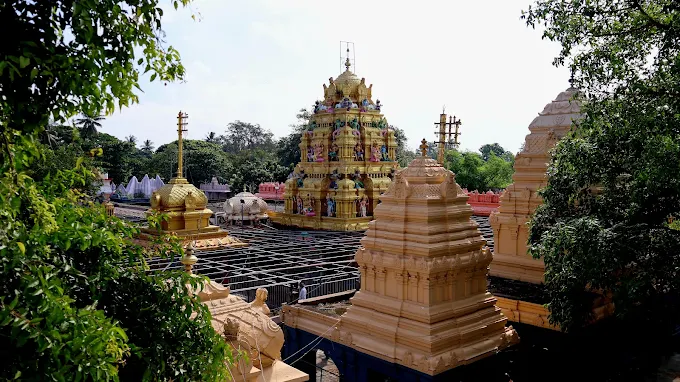
📍 39.92 km away
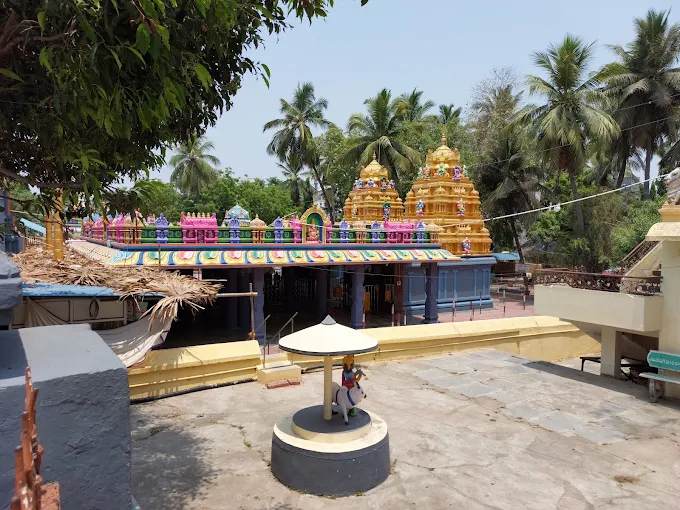
📍 40.43 km away
📍 350.10 km away
📍 350.11 km away
📍 422.88 km away
📍 423.84 km away
Stays near Draksharamam Manikyamba Shaktipeeth

📍 Near Kurinji Andavar Temple · 880.5 km
stayStarting from ₹2,000 / night
Discover more temples you may be interested in
You may also like these temples