☰
🛕 Lord Devi | 📍 Pandua, Hooghly, West Bengal
Shrinkala Devi (also spelt Shrinkhala or Srunkhala) holds a venerable position in Hindu Shakta tradition as one of the 18 Maha Shakti Peethas (Ashtadasha Shakti Peethas) consecrated by Jagadguru Adi Shankaracharya in his sacred hymn, the 'Ashta Dasha Shakti Peetha Stotram' ('Pradyumne Shrinkhala devi...'). According to scriptural lore, after Devi Sati immolated herself at Daksha's sacrificial altar and Lord Shiva carried her lifeless body across the cosmos in his cosmic grief, Lord Vishnu utilized the Sudarshana Chakra to sever her mortal frame into sacred fragments to restore universal balance. Traditional Shakta belief holds that Sati's stomach (udara) or ornamental belly band/girdle (shrinkhala) fell at Pradyumna, identified by long-standing tradition with Pandua in the Hooghly district of West Bengal.
The name 'Shrinkhala' carries two profound spiritual interpretations in devotional philosophy. In the first meaning, 'Shrinkhala' signifies an iron chain, binding thread, or fetter. In this context, the Divine Mother represents the ultimate cosmic power that breaks the mortal chains of ego, attachment, and worldly karma (samsara bandhana), while remaining bound solely to universal truth and Lord Shiva. Devotees worship her to achieve liberation from mental bondages and cycles of birth and death. In the second theological interpretation, 'Shrinkhala' refers to the tight postnatal abdominal band tied by a mother following childbirth. Here, the Goddess is visualized in a tender postnatal maternal state (Shishu Bhava), treating every living creature across the cosmos as her newborn infant. Devotees approach her with childlike innocence and complete surrender (sharanagati), seeking maternal nourishment, unreserved compassion, and spiritual sanctuary.
The history of the Shrinkala Devi Shakti Peetha encompasses a combination of ancient sacred lore and recorded medieval archaeological history:
1. Sacred Lore and Scriptural Origin: The site of Pradyumna is mentioned in ancient puranic accounts and Shakta treatises as a paramount seat of feminine cosmic energy. A prominent legend links this peetha to Maharshi Rishyasringa (the revered sage born with deer horns), son of Sage Vibhandaka. The sage performed rigorous tapasya in this region, perceived the living presence of the Goddess, and worshipped her. Traditional accounts recount that the Devi eventually instructed the sage to transport her subtle divine presence to Sringeri in Karnataka, thereby weaving an enduring spiritual thread between eastern India and the southern Sahyadri hills. Shakta pilgrims historically journeyed to Pradyumna to seek her divine grace.
2. Recorded Medieval History and Monument Transformation: Historically, Pandua (Pundooah) in Hooghly was the capital of a local Hindu realm, ruled by monarchs remembered in local memory as King Pandu (Panduraja). During the late 13th and early 14th centuries, following the expansion of the Delhi Sultanate and independent Bengal Sultanate rulers into Lower Bengal, military campaigns were led into Pandua by forces associated with Sufi warrior-saint Syed Shah Safiuddin (nephew of Sultan Firoz Shah Khilji). Following the defeat of the local Hindu rulers, medieval monuments were constructed over the civic and sacred centre of the town using materials dismantled from pre-existing Hindu and temple structures. These include the massive 125-foot Pandua Minar (built around 1340–1477 CE as a victory and azan tower) and the neighbouring Bais Darwaza Masjid (Bari Masjid).
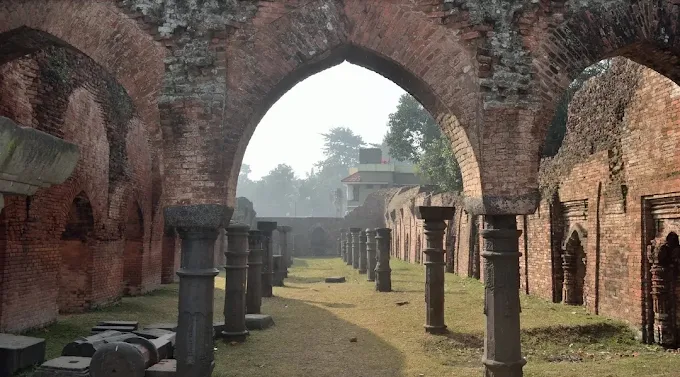
3. Present Archaeological Status: Today, no functioning ancient temple structure stands at the site traditionally identified as the Shrinkala Devi Peetha. The remaining monuments—consisting of the towering multi-tiered brick minar and the pillared ruins of Bari Masjid—are protected by the Archaeological Survey of India (ASI) as Monuments of National Importance. Carved basalt stone pillars, lintels, and plinth stones bearing classical Hindu motifs remain visible embedded in the medieval ruins. While no consecrated sanctum sanctorum or active murti is present, the geography remains intensely sacred to Shakta pilgrims, who visit the heritage precinct to offer mental prayers. Additionally, the historic grounds host an annual intercommunity gathering known as the 'Mela Tala' during the Bengali month of Magha (January–February).
According to traditional Shakta belief, contemplating Shrinkala Devi helps dissolve worldly attachments, emotional dependencies, and negative karmic chains, granting inner peace and clarity.
Devotees believe that meditating upon the Goddess in her postnatal maternal form (Shishu Bhava) bestows divine comfort, relieves severe anxiety, and shields the devotee in times of crisis.
Because the peetha is traditionally linked to the stomach and maternal binding cloth, women and couples traditionally pray to Shrinkala Devi for the blessing of healthy children and safe childbirth.
Pilgrims undertaking the sacred circuit of the 18 Maha Shakti Peethas believe that paying homage at this holy site brings spiritual completeness and divine merit to their yatra.
Traditional faith holds that seeking the grace of Shrinkala Devi dispels unrighteous influences, grants courage to face adversity, and protects the seeker along life's journey.
A historic month-long cultural and devotional fair held annually in the Bengali month of Magha (January–February) on the grounds adjoining the Pandua monument, where pilgrims gather and offer prayers.
Informal devotional observances and private recitations conducted by Shakta sadhakas and devotee forums on New Moon (Amavasya) days invoking Maa Shrinkala's blessings.
Private devotional recitation of the Devi Mahatmyam / Durga Saptashati performed during the Ashwin and Chaitra Navaratri periods by Shakta devotees dedicated to Shrinkala Devi.
No festivals available.
📍 59.88 km away
📍 61.89 km away
📍 65.24 km away
📍 73.92 km away
📍 91.73 km away
📍 94.71 km away
Stays near Shrinkala Devi Shakti Peetha

📍 Near Kurinji Andavar Temple · 1,830.9 km
stayStarting from ₹2,000 / night
Discover more temples you may be interested in
You may also like these temples