☰
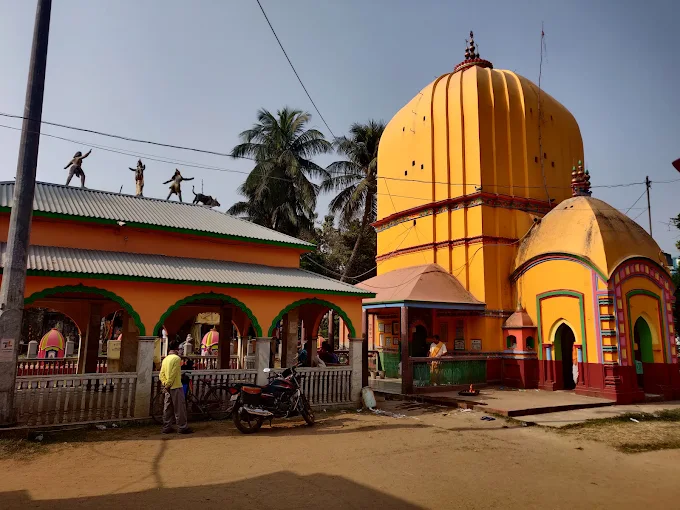
🛕 Lord Devi | 📍 Khanakul, Ratnakar River area, Hooghly, West Bengal
Khanakul Ratnavali Kumari Shakti Peetha, locally revered as the Anandamayee Mandir, is regarded in Shakta tradition as one of the 51 sacred Shakti Peethas. According to Hindu mythology, when Devi Sati self-immolated at the Daksha Yajna, Lord Shiva carried her body across the cosmos in grief and rage. To preserve cosmic order, Lord Vishnu severed her physical form with his Sudarshan Chakra, scattering her divine relics across the subcontinent. At this sacred riverine site in Khanakul, Sati's right shoulder ('Dakshina Skandha') is believed to have fallen on the ancient banks of the Ratnakar River. The presiding divine feminine power is worshipped as 'Kumari' (the eternal pure maiden) or 'Anandamayee' (the embodiment of celestial bliss), while Lord Shiva is venerated as her protector Bhairava (often associated in local lore with Bhairava or nearby Ghanteshwar Shiva). The peetha holds immense spiritual sanctity for practitioners of Bengal Shaktism, Tantra, and Devi worship, symbolising purity, bliss, and active cosmic energy.
Historically, Khanakul and the adjacent village of Radhanagar in the Arambagh subdivision of Hooghly district represent an ancient cultural and spiritual belt in the Rarh region of West Bengal. The village is also renowned as the ancestral birthplace of the legendary 19th-century social reformer Raja Rammohan Roy. Historical records distinguish the spiritual folklore of the Puranas from the architectural history of the shrine. While scriptural traditions trace the site's spiritual lineage back several centuries, the temple complex features traditional Bengali vernacular brick and terracotta architecture, characterized by typical chala-style curved cornices. Over the centuries, the shrine stood on the banks of the Ratnakar River, a historic watercourse linked to the Dwarakeswar and Rupnarayan river network. However, due to natural siltation and hydrological changes, the river gradually receded and transformed into a paleochannel, leaving the temple set within lush rural surroundings. The temple complex suffered structural damages during severe regional floods in 1943 and other monsoon inundations, following which it was restored through the initiatives of local zamindars, priest lineages, and devout community members. Unlike prominent commercial pilgrimage centers, the Ratnavali shrine has preserved its authentic, peaceful rural ambiance where daily worship has been continually sustained by dedicated local families of shebaits (priests).
Devotees traditionally believe that praying to Devi Anandamayee dissolves internal turmoil and bestows mental tranquility and profound spiritual joy.
According to traditional belief, venerating the presiding Bhairava alongside Devi Kumari shields the worshipper from negative energies and irrational fears.
Devotional tradition holds that worshipping the Divine Mother in her maiden Kumari aspect nurtures purity of mind, virtuous character, and spiritual clarity.
Pilgrims visit the shrine with earnest vows, believing that the compassionate Mother fulfills sincere worldly and spiritual prayers while preserving domestic harmony.
Auspicious multi-day Shakta festival featuring special Chandi Path, elaborate pushpanjali offerings, and traditional Kumari veneration.
Special night-long abhishekam, bilva patra offerings, and sacred chanting dedicated to Bhairava / Ghanteshwar Shiva during Phalguna.
Traditional chanting of the Devi Mahatmyam conducted by local priests on behalf of visiting devotees seeking special blessings.
Special cooked meal or sweet offering arranged through the local shebaits during festive occasions or the fulfillment of vows.
No festivals available.
📍 47.39 km away
📍 54.40 km away
📍 59.88 km away
📍 92.35 km away
📍 111.68 km away
📍 112.63 km away
Stays near Khanakul Ratnavali Kumari Shakti Peetha

📍 Near Kurinji Andavar Temple · 1,771.5 km
stayStarting from ₹2,000 / night
Discover more temples you may be interested in
You may also like these temples