☰
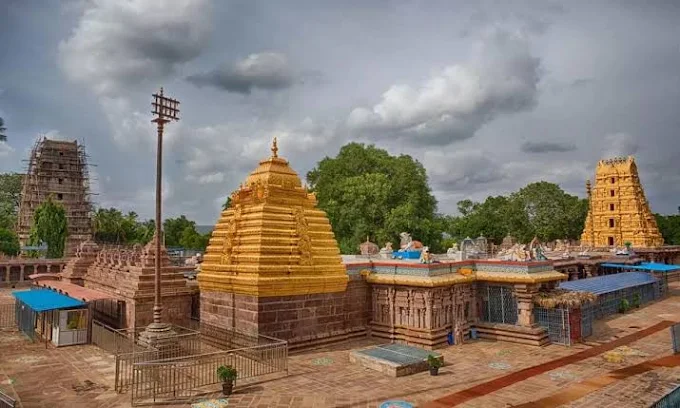
🛕 Lord Shiva | 📍 Srisailam, Nandyal, Andhra Pradesh
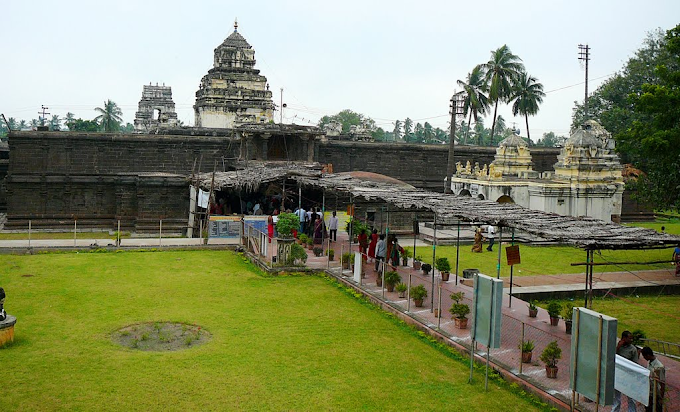
Sri Bhramaramba Mallikarjuna Swamy Temple, located atop the verdant Nallamala Hills along the southern banks of the Krishna River in Srisailam, Andhra Pradesh, occupies a peerless status in Sanatana Dharma. It is one of the exceptionally rare holy sanctuaries that serves simultaneously as both a Jyotirlinga and an Ashtadasa Maha Shakti Peetha. The presiding deity, Lord Shiva, is consecrated here as Lord Mallikarjuna Swamy (one of the 12 sacred Jyotirlingas), while His divine consort, Goddess Parvati, is worshipped as Sri Bhramaramba Devi (traditionally revered as the neck portion where Sati Devi fell, among the 18 premier Shakti Peethas). In addition, the temple is recognized in ancient Tamil Shaivite tradition as one of the 276 Paadal Petra Sthalams celebrated by the Nayanmars (Appar and Sambandar in the Tevaram hymns) under the name 'Tirupparuppatham'. According to Puranic tradition, Lord Kartikeya left Mount Kailash in grievance after Lord Ganesha won the contest for the fruit of wisdom; Lord Shiva and Parvati followed him to soothe his anger and took up residence here upon the Srisaila Parvatha. Another cherished legend tells of Princess Chandravathi offering fresh jasmine (Mallika) blossoms daily to an aniconic swayambhu lingam discovered in the forest, earning the Lord the name Mallikarjuna. In Hindu theology, an ancient belief asserts that merely visiting or even meditating upon the peak of Srisailam grants spiritual liberation ('Srisaila Sikharam Drishtwa Punarjanma Na Vidyate'). Jagadguru Adi Shankaracharya visited this holy shrine and composed the sublime devotional hymn 'Sivananda Lahiri' as well as verses of the 'Bhramarambashtakam'. Srisailam stands as an enduring beacon of both Shaivite and Shakta union, emphasizing universal access to divine grace.
The recorded architectural and epigraphical history of Srisailam spans nearly two millennia, supported by royal inscriptions and archaeological excavations. The earliest historical epigraphical reference to Sriparvata/Srisailam is found in the Nasik cave inscriptions of the Satavahana dynasty, where King Pulumavi (2nd century CE) refers to the sacred hill Sirithan/Setagiri. Furthermore, early Satavahana rulers like Malla Satakarni derived their names from the regional folk-Shaivite deity Mallanna. The subsequent Ikshvaku dynasty (circa 3rd-4th century CE), ruling from nearby Vijayapuri (Nagarjunakonda), actively supported the holy region. Later, the Vishnukundin kings (4th to 6th centuries CE) bore royal titles proclaiming their steadfast devotion to the lotus feet of 'Bhagavat Sriparvata Swamy' (Mallikarjuna). During the 7th through 14th centuries, the Badami Chalukyas, Kalyani Chalukyas, and Kakatiya monarchs patronized the temple extensively. Kakatiya Queen Rudrama Devi and King Prataparudra carried out substantial structural expansions, granting entire villages and mandapas to regulate worship and pilgrim administration. In the 14th century, the Reddi dynasty of Kondaveedu built the famous steps leading down to Pathala Ganga (the Krishna River ghat). The golden architectural age of Srisailam emerged under the Vijayanagara Empire (14th-16th centuries CE). King Harihara Raya II constructed the grand Mukhamandapam in front of the sanctum in 1398 CE. In 1516 CE, Emperor Sri Krishnadevaraya visited the shrine following his Eastern campaign, ordering the construction of the soaring Rajagopuram, surrounding stone cloistered corridors (Salumandapas), and donating fertile revenue villages. Later, the Maratha ruler Chhatrapati Shivaji Maharaj visited Srisailam in 1677 CE, performed worship, and constructed a prominent gopuram on the northern side. In recent years, excavations by the Archaeological Survey of India (ASI) at the Ghanta Matham within the temple precinct unearthed rare medieval copper plate charters and historic bronzes, attesting to continuous imperial patronage.
According to ancient Shaivite scriptural tradition, merely catching sight of or meditating upon the holy mountain peak of Srisailam liberates a devotee from the cycle of birth and death.
Because Srisailam uniquely houses both a Jyotirlinga and a Maha Shakti Peetha, tradition holds that worshipping here bestows the dual divine blessings of cosmic consciousness and supreme motherly energy.
Devotees believe that participating in Sparsha Darshan and physically touching the Swayambhu Lingam dissolves heavy karmic burdens and purifies one's spiritual consciousness.
Offering Rudrabhishekam and Mrityunjaya rituals at this sacred kshethram is traditionally believed to avert untimely afflictions, ward off diseases, and grant peace of mind.
Worshipping Goddess Bhramaramba Devi with Kumkumarchana is traditionally believed to safeguard marital harmony, remove planetary impediments, and bless households with spiritual peace.
Prestigious seva performed inside the main sanctum sanctorum where the sevadar touches and performs sacred abhishekam rituals directly to the Swayambhu Mallikarjuna Jyotirlinga.
Group abhishekam conducted with holy mantras in the Kalyana Mandapam area within the temple precincts for single devotees or married couples.
Special abhishekam performed to the ancient Vruddha Mallikarjuna Lingam situated in the inner prakaram of the temple courtyard.
Vedic fire ritual dedicated to Lord Rudra and Lord Ganesha for peace, spiritual purification, and mitigation of negative karmic influences.
Ceremonial celestial wedding ritual depicting the divine matrimony of Lord Mallikarjuna Swamy and Goddess Bhramaramba Devi.
Sacred vermilion offering ritual performed at the sanctum of Goddess Sri Bhramaramba Devi for family health, prosperity, and marital well-being.
A seven-day annual Brahmotsavam conducted during the month of Pushya Masam to mark the Makara Sankramanam. Srisailam is unique in celebrating Brahmotsavams twice a year (Makara San...
The premier annual Brahmotsavam of the temple, spanning 11 days with Navahnika Deeksha during the month of Magha. It commemorates the divine wedding and cosmic presence of Sri Mall...
A five-day annual temple festival marking the Telugu and Kannada New Year (Chaitra Shukla Pratipada). Srisailam holds special significance during Ugadi for hundreds of thousands of...
The most significant Shakta tantric ritual celebrated exclusively for Goddess Bhramaramba Devi (one of the 18 Maha Shakti Peethas). According to centuries-old temple custom, it is...
A 10-day major annual festival celebrated with great spiritual fervor at the temple. Goddess Bhramaramba Devi is worshipped across nine days in her Nava Durga alankarams (incarnati...
A month-long festival dedicated to Lord Shiva observed throughout the sacred month of Karthika according to the Telugu Amanta calendar. Millions of devotees visit Srisailam Jyotirl...
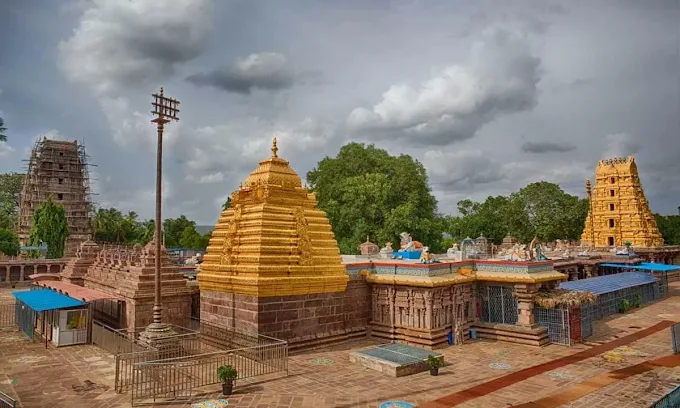
📍 0.00 km away
📍 81.33 km away
📍 273.45 km away
📍 326.75 km away
📍 332.30 km away
📍 350.10 km away
Stays near Srisailam Mallikarjuna Swamy Temple

📍 Near Kurinji Andavar Temple · 665.7 km
stayStarting from ₹2,000 / night
Discover more temples you may be interested in
You may also like these temples