☰
🛕 Lord Shiva | 📍 Trimbak, Nashik, Maharashtra
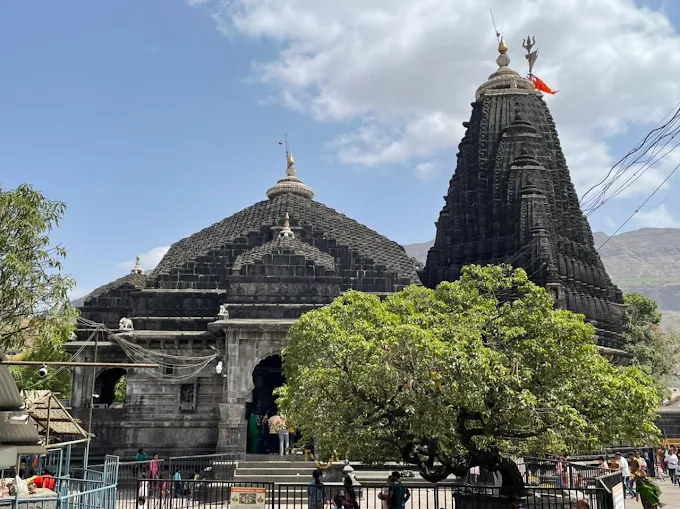
Trimbakeshwar Shiva Temple, situated in the holy town of Trimbak at the foothills of the Brahmagiri mountain in Nashik district, Maharashtra, is revered as one of the twelve sacred Jyotirlingas of Lord Shiva. The temple is singular among all Jyotirlinga shrines because the presiding lingam does not depict Lord Shiva alone; rather, it manifests in a hollow cavity housing three thumb-sized lingams (or faces) representing the Trimurti—Lord Brahma (the Creator), Lord Vishnu (the Preserver), and Lord Shiva (the Destroyer). Because water continuously oozes from the core of the Jyotirlinga, erosion naturally occurs, which devotees venerate as a symbol of cosmic transience.
Geographically and spiritually, the shrine marks the origin of the holy Godavari River—often called the Gautami Ganga or Dakshin Ganga. According to devotional lore, the river emerged due to the penance of Sage Gautama, and its sacred waters surface at the adjoining Kushavarta Kund (a holy stepwell tirth raj). The temple is also one of the focal centres of the historic Sinhastha Kumbh Mela held once every 12 years in the Nashik-Trimbak region, where akhadas and millions of pilgrims take ceremonial holy baths. In Hindu ritual tradition, Trimbakeshwar is regarded as the preeminent kshetra for ancestral peace and planetary dosha remedies, specifically rites like Narayan Nagbali, Tripindi Shraddha, and Kaal Sarp Shanti.
The spiritual legacy of Trimbak is rooted in ancient Puranic accounts, primarily detailed in the Shiva Purana, Padma Purana, and Skanda Purana, which associate the site with Sage Gautama, his consort Ahalya, and the descent of the Godavari River to expiate the sin of gohatya (accidental killing of a cow). Historical inscriptions and regional chronicles indicate that Trimbakeshwar had long existed as an ancient Shaivite tirtha and a revered seat of the Nath tradition, where Saint Nivruttinath (the elder brother and guru of Sant Dnyaneshwar) attained Sanjeevan Samadhi in the 13th century.
The present monumental black basalt stone temple was constructed during the Maratha Empire under the patronage of the third Peshwa, Balaji Baji Rao (also known as Nana Saheb Peshwa). Construction began around 1755–1756 CE following the day of Mahashivratri and spanned over three decades (completed around 1786 CE) at an expenditure of crores of rupees of that era. Designed in the classical Maratha-Nagara Hemadpanthi architectural idiom, the temple features intricate exterior sculptural friezes depicting deities, mythological figures, and animals. The complex is fortified within high stone walls with an expansive courtyard. In the sanctum sanctorum sits the venerable three-faced Jyotirlinga, which is crowned on special ceremonial occasions with an exquisite jewel-studded golden mask (Swarna Mukut) traditionally dating back to the Peshwa era.
Devotees traditionally perform Narayan Nagbali and Tripindi Shraddha here in the belief that satisfying departed ancestors brings peace, family harmony, and progeny.
Trimbakeshwar is traditionally regarded as the premier shrine in India for Kaal Sarp Yog Shanti rituals to mitigate astrological obstacles and hurdles in life.
Because the Jyotirlinga embodies Brahma, Vishnu, and Shiva simultaneously, worship here is traditionally believed to confer the unified grace of creation, preservation, and spiritual liberation.
Taking a sacred bath in Kushavarta Kund where the Godavari River surfaces is traditionally believed to cleanse sins and bestow spiritual purity equivalent to bathing in the Ganga.
Official prioritized darshan entry pass issued by the Devasthan Trust to facilitate quicker entry through a dedicated queue.
Special Vedic Rudrabhishekam arranged through the Devasthan Trust/purohits with sacred oblations and recitations of Sri Rudram.
A unique three-day Vedic rite performed outside the main sanctum by authorized Tamrapatradhari Purohits to remove pitru dosha and serpent afflictions (rates determined by dakshina and materials).
Traditional astrological remediation puja performed by certified local purohits at Trimbak to pacify Rahu-Ketu planetary placements.
Special ancestral oblation ritual performed to bring peace to departed souls across three generations and alleviate unsatisfied spirit afflictions.
During the sacred month of Shravan, tens of thousands of devotees undertake the traditional barefoot Brahmagiri Pradakshina (Feri), a circumambulation of approximately 40 to 42 kil...
Celebrated once every twelve years when Jupiter enters the zodiac sign of Leo (Simha) and the Sun is in Aries or Leo. Trimbakeshwar serves as the principal hub for all Shaiva Akhar...
Observed on the midnight of Kartik Shukla Chaturdashi preceding Kartik Purnima, this ritual celebrates the sacred convergence of Lord Vishnu and Lord Shiva (Hari and Har). The temp...
An annual chariot festival celebrated on Kartik Purnima (Tripurari Purnima). The utsav murti, padukas, and silver mask of Lord Trimbakeshwar are placed in a 150-year-old, 30-foot w...
The largest annual Shaivite festival at Trimbakeshwar Jyotirlinga, observed on Krishna Chaturdashi of the Magha/Phalguna month. The sanctum sanctorum remains open for continuous da...
Marks the Marathi New Year on Chaitra Shukla Pratipada. At 5:00 AM, the trustees perform a special Mahapuja of Lord Trimbakeshwar, hoist the ceremonial Gudi flags atop the temple p...
📍 64.42 km away
📍 95.63 km away
📍 171.60 km away
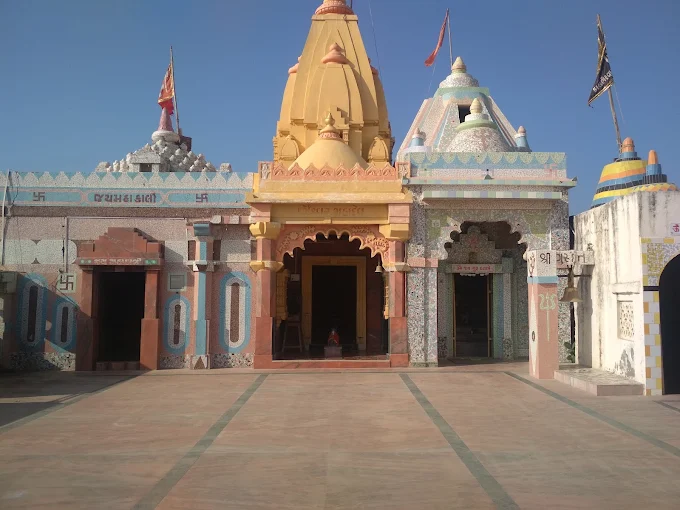
📍 342.05 km away
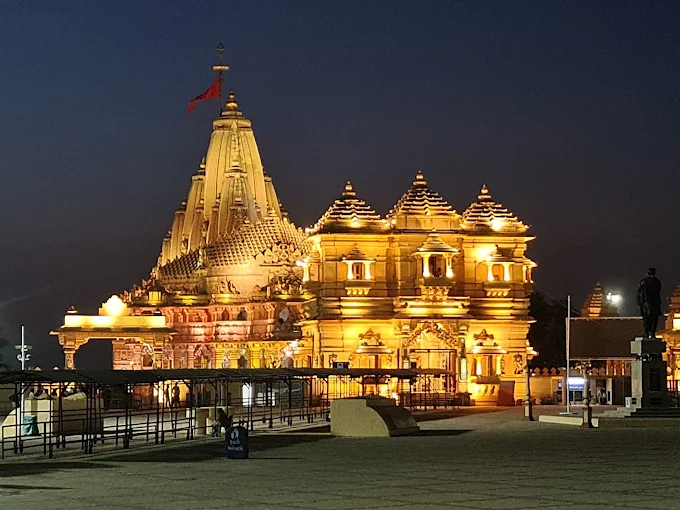
📍 343.01 km away
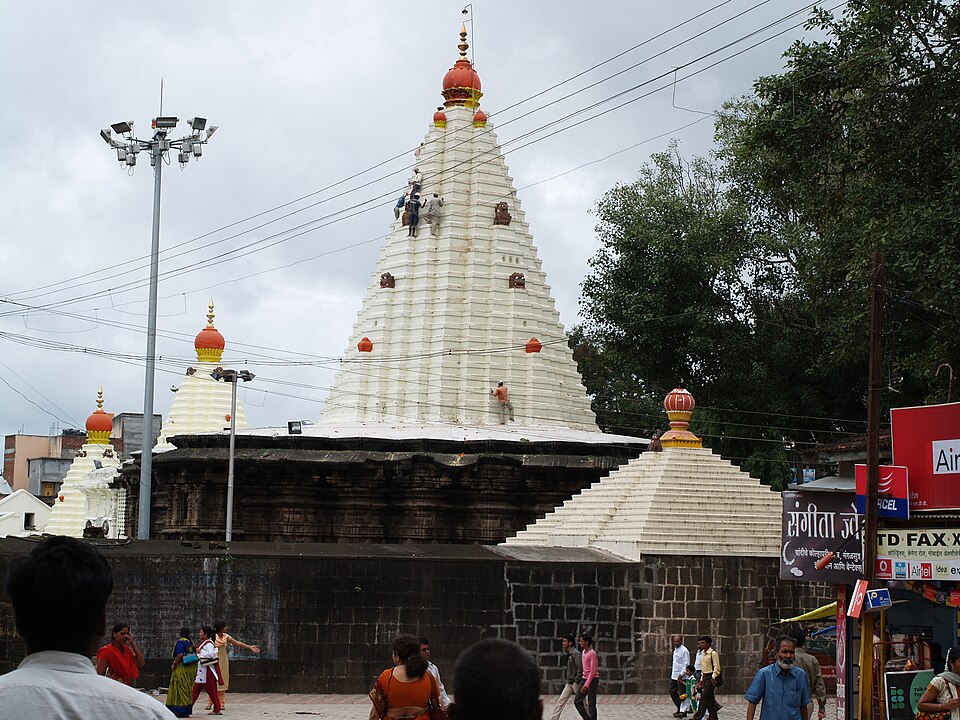
📍 367.31 km away
Stays near Trimbakeshwar Temple

📍 Near Kurinji Andavar Temple · 1,158.3 km
stayStarting from ₹2,000 / night
Discover more temples you may be interested in
You may also like these temples