☰
🛕 Lord Shiva | 📍 Deoghar, Deoghar, Jharkhand
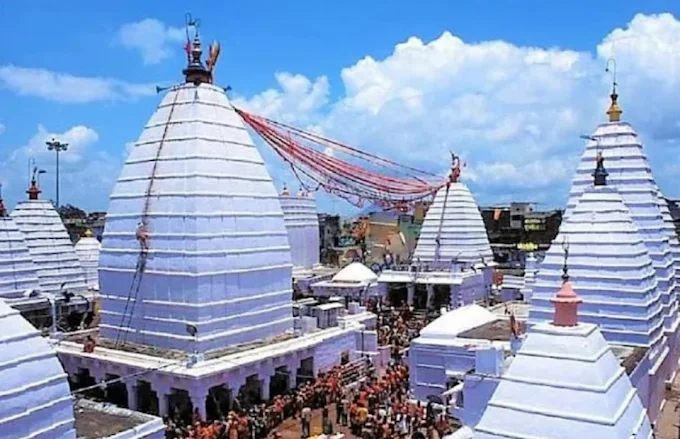
Baba Baidyanath Dham in Deoghar, Jharkhand, is one of the most sacred pilgrimage destinations in India, uniquely revered as both one of the twelve sacred Jyotirlingas of Lord Shiva and one of the 51 Shakti Peethas of Goddess Sati. According to Hindu sacred tradition, it is the 'Hridaya Peetha', the spot where the heart of Devi Sati fell while Lord Shiva carried her body during the cosmic Tandava, establishing an auspicious confluence of Shaivism and Shaktism within the same sacred enclosure. Lord Shiva is worshipped here as 'Baidyanath'—the Divine Physician or Supreme Healer—symbolizing the alleviation of bodily diseases, mental torment, and karmic afflictions. The presiding Shiva Lingam is also celebrated as 'Kamna Linga', believed by devotees to grant the innermost desires of earnest seekers. Architecturally and ritually, the temple features a rare 'Panchshula' (a five-pronged brass trident) atop the pyramidal shikhara rather than the traditional three-pronged trishula. Another deeply venerated devotional tradition is the 'Gathbandhan', where devotees tie a holy red and yellow cloth across the tall spires linking the sanctum of Baba Baidyanath with the adjoining temple of Maa Parvati, invoking marital harmony and eternal divine union. The shrine is also the epicenter of the famous annual Shravani Mela, where millions of saffron-clad pilgrims (Kanwariyas) undertake an arduous barefoot walk of over 105 kilometers from Sultanganj, carrying sacred Ganges water to offer Jalabhishek to the deity.
The history of Baidyanath Dham encompasses both rich mythological traditions and documented architectural history. According to the Shiva Purana and local legends, the demon king of Lanka, Ravana, performed rigorous austerities in the Himalayas to please Lord Shiva. He offered nine of his heads into the sacrificial fire, and as he was about to offer his tenth, Shiva intervened, pleased by his supreme devotion. Shiva restored his severed heads acting as a 'Vaidya' (physician) and granted Ravana the Atmalinga to take to Lanka on one condition: if it touched the ground during transit, it would become permanently rooted there. Fearing the consequences of the Lingam reaching Lanka, the devas devised a plan with Varuna and Lord Vishnu; disguised as a cowherd/shepherd, Vishnu held the Lingam while Ravana relieved himself, and then placed it firmly on the ground at Deoghar. When Ravana realized he was tricked, he attempted to dislodge the Lingam with force, causing the top of the stone lingam to break and crack, which is still visible today. Another local folk tradition attributes the discovery of the lingam in the forest to an indigenous hunter named Baiju (or Baijnath), from whom the temple also derived widespread regional patronage. In terms of recorded epigraphical and architectural history, the temple complex features a classic North Indian Nagara style. A prominent inscription near the front porch records that Raja Puran Mal, an ancestor of the Maharaja of Gidhaur (a Chandel Rajput dynasty), reconstructed and restored the main stone shrine in 1596 CE at the request of the head priest Raghunath Ojha. Over subsequent centuries, neighboring Hindu rulers, local chieftains, and the high priests (Sardar Pandas) added 21 secondary shrines dedicated to various deities within the courtyard. During the early British East India Company period following 1757, Collector Keating attempted to supervise pilgrim tax collections in 1788, but later withdrew state interference and restored full administrative autonomy to the hereditary high priest. Today, administrative oversight and pilgrim facilities are managed collaboratively by the Baba Baidyanath Temple Management Board and the District Administration of Deoghar under the Government of Jharkhand.
According to ancient Shaivite belief, Lord Shiva in His aspect as 'Baidyanath' (the Supreme Physician) heals persistent chronic illnesses, mental depression, and physical suffering of devotees who offer sincere prayers and sacred water.
Traditional devotional lore reveres the Swayambhu Lingam as the 'Kamna Linga', believed to fulfill the righteous desires, career milestones, and life aspirations of sincere pilgrims.
Because the temple houses both a Jyotirlinga and a Shakti Peetha, performing the holy 'Gathbandhan' (tying the sacred thread connecting the Shiva and Parvati spires) is traditionally believed to resolve marital discord and bless couples with lasting harmony.
Performing holy Jalabhishek with pure water and bel leaves over the Jyotirlinga is traditionally considered an act of supreme purification that cleanses negative karma and grants spiritual peace.
Devotional tradition associates worship of Baidyanath Jyotirlinga with the Mahamrityunjaya aspect of Lord Shiva, offering devotees protection from catastrophic fears and leading toward liberation (Moksha).
An official queue-bypass darshan token issued by the temple management and district administration that enables faster sanctum entry and darshan via a dedicated queue.
A unique, sacred devotional ceremony where a massive red and yellow holy fabric ribbon is carried by daring climbers across the roofs to tie together the tops of the Baba Baidyanath temple and the Maa Parvati temple, symbolizing divine marital bliss.
A powerful Vedic ritual invoking Sri Rudram, where the Shiva Lingam is ritually bathed with sacred liquids such as milk, curd, honey, ghee, sugarcane juice, and holy Ganga water by registered temple purohits.
A traditional pilgrimage offering where Kanwariyas bring holy water carried on foot in pots from the Ganges at Sultanganj and pour it directly onto the sacred Jyotirlinga, especially prominent during the Shravan month.
A unique, centuries-old ritual held exclusively at Baidyanath Dham. Devotees from the Mithila region regard Goddess Parvati as their daughter/sister and Lord Shiva as their brother...
The cosmic wedding anniversary of Lord Shiva and Mata Parvati is celebrated with all-night vigils (Char Pahar Puja), Rudrabhishek, and special shringars at the Jyotirlinga. The gra...
The largest and most famous annual pilgrimage fair at Baba Baidyanath Dham, lasting the entire lunar month of Shravan (July–August). Millions of pilgrims (Kanwariyas) trek over 105...
Observed through the month of Bhadrapada immediately following the conclusion of Shravani Mela. Held by tradition to be even older than Shravani Mela, this period marks the removal...
Baba Baidyanath Dham is uniquely revered as both a sacred Shiva Jyotirlinga and the Jai Durga Shakti Peetha (Hridaya Peetha), where tradition holds that Sati's heart fell. During t...
Observed on Ashwin Purnima (Sharad Purnima) at the temple shrines, Maa Lakhi Puja involves traditional evening worship, offerings of seasonal fruits, and midnight aarti ceremonies...
Celebrated on Kartik Krishna Paksha Amavasya across the Baidyanath Dham complex. Midnight Kali Puja is conducted at the Kali shrine with special tantric offerings, accompanied by D...
📍 0.04 km away
📍 96.58 km away
📍 116.45 km away
📍 134.85 km away
📍 135.48 km away
📍 157.24 km away
Stays near Deoghar Baidyanath Dham Temple

📍 Near Kurinji Andavar Temple · 1,860.3 km
stayStarting from ₹2,000 / night
Discover more temples you may be interested in
You may also like these temples