☰
🛕 Lord Devi | 📍 Labhpur, Birbhum, West Bengal
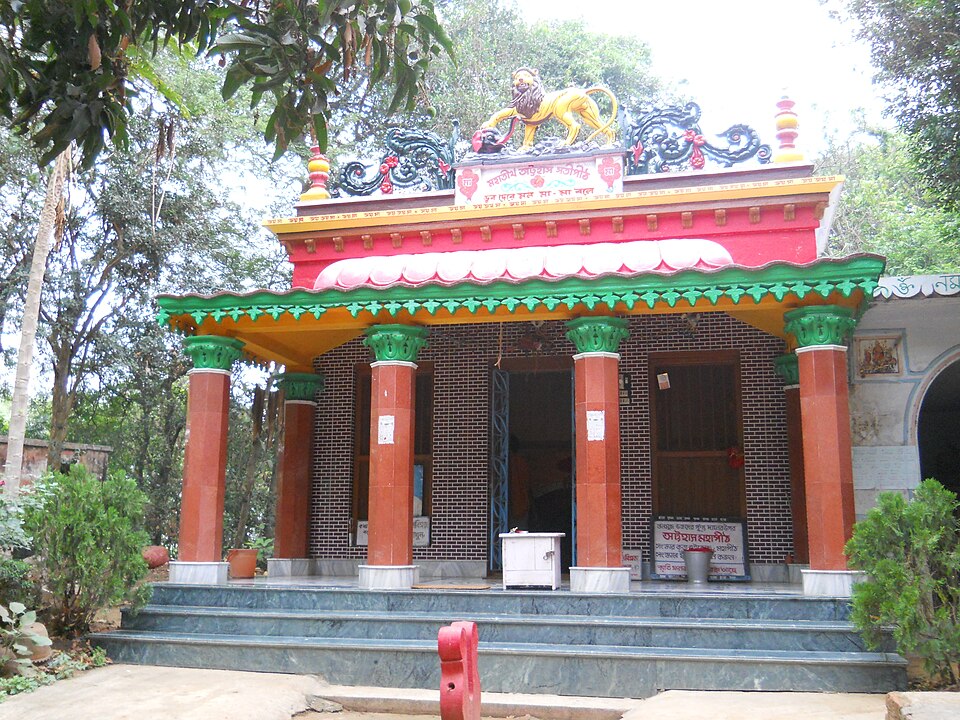
Attahas Phullara Devi Shakti Peetha is venerated as one of the 51 sacred Shakti Peethas in Hinduism. According to the foundational Shakta legend of the Daksha Yajna, Goddess Sati immolated herself in the sacrificial fire after her father insulted Lord Shiva. In grief and cosmic fury, Lord Shiva carried her mortal remains across the universe, performing the Tandava. To restore universal equilibrium, Lord Vishnu released His Sudarshana Chakra, dismembering Sati's sacred body into fifty-one parts. Traditional scriptures, notably the 'Pithanirnaya Tantra', proclaim that the lower lip ('Adhara' or 'Oshtha') of the Goddess fell at Attahas. The word 'Attahas' derives from the Sanskrit roots 'Atta' (extreme/intense) and 'Hasa' (laughter), signifying the profound, divine cosmic laughter of Mahadevi that reverberates through creation, symbolizing resilience, transcendence over worldly grief, and cosmic joy. The presiding Shakti is revered as Maa Phullara (literally meaning 'the blossoming one' or 'blooming like a flower'), symbolizing perpetual life, renewal, and motherly benevolence. The Bhairava guarding this sacred seat is Lord Vishwesh (also worshipped as Vishweshwara or Billesha). Uniquely, the inner sanctum does not enshrine a conventional sculpted anthropomorphic idol; instead, devotees revere a massive natural stone boulder, measuring roughly 15 to 18 feet in length, smeared with vermilion and sandalwood paste, representing the holy fallen lip. Adjacent to the shrine sits a sculpted stone image of Lord Shiva seated upon a lotus. According to regional Treta Yuga lore documented in the Krittivasi Ramayana, when Lord Rama was preparing to worship Goddess Durga (Akalbodhan) prior to his battle against Ravana, Lord Hanuman flew to the sacred pond at this Peetha to harvest 108 blue lotuses (Neelkamal). The shrine is nestled within a grove that doubles as an ecologically protected habitat for thousands of Asian openbill storks, uniting Shakta mysticism with pristine natural serenity.
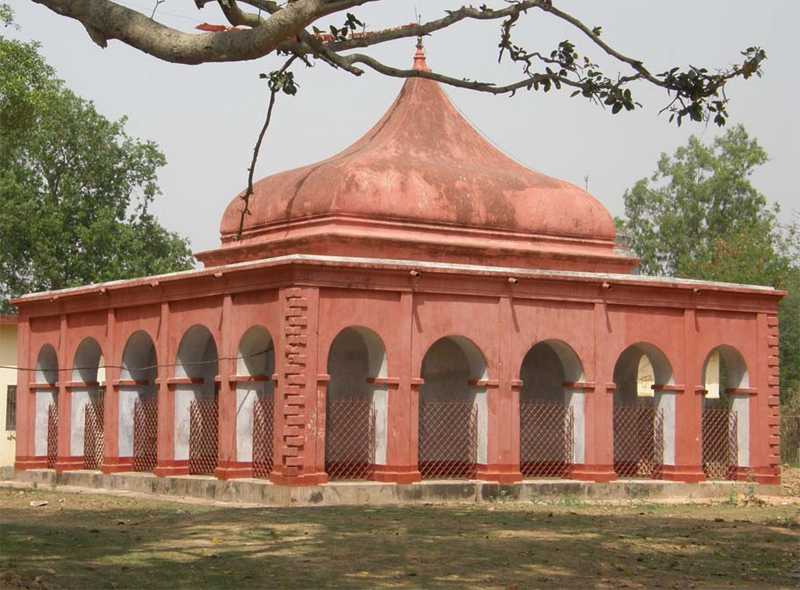
The antiquity of Attahas Shakti Peetha is deeply interwoven with early Shakta traditions of the Rarh region of Bengal. In Shakta texts and classical Sanskrit geography, Attahas is categorized as a prominent Peetha. Historically, two neighboring geographical sites in western Bengal share deep cultural and spiritual links to this tradition: the secluded forest shrine at Dakshindihi village (Nirol Gram Panchayat, Ketugram-II CD block, Katwa subdivision, Purba Bardhaman district) situated on the bank of the Ishani (Kandor) river, and the historic Fullara Devi Mandir at Labhpur town in adjacent Birbhum district, situated approximately 30 kilometers away. Both shrines share identical mythological attributes (the lower lip of Sati, Maa Phullara, and Bhairava Vishwesh), with Dakshindihi housing the venerated natural boulder shrine in the forest, and Labhpur hosting the prominent annual Magh Purnima Fullara Mela and immortalized in Bengali literature by legendary novelist Tarashankar Bandyopadhyay. Archaeological surveys in the surrounding Katwa-Labhpur tract have unearthed terracotta artifacts and stone carvings indicating that active Tantric and Shakta ritualism flourished here between the 9th and 12th centuries CE under the patronage of the Pala and Sena dynasties. Historical chronicles of the 20th century record that an ancient metal (ashtadhatu) murti was preserved in the temple until around 1915, when it was temporarily transferred to the Bangiya Sahitya Parishad Museum in Kolkata; upon its subsequent return and re-consecration, the idol was tragically stolen, leading the priesthood to maintain worship exclusively upon the eternal aniconic lip-shaped boulder and an established stone Mahishasuramardini icon. The modern temple structure, featuring a classic Bengal flat-roofed Nat Mandir and marble-clad sanctum, was rebuilt over the ancient foundation by local patrons in the twentieth century, and modern road access was formally established across the Ishani river basin under rural infrastructure schemes.
According to traditional Shakta belief, as Attahas is the sacred spot where Goddess Sati's lower lip fell, earnest worship here is believed to bless devotees with eloquence, truthful speech, communicative confidence, and protection against slander.
Devotees hold the faith that meditating upon the divine laughter (Attahasa) of Maa Phullara helps alleviate deep-seated emotional pain, anxiety, and depression, replacing despair with inner courage and spiritual optimism.
Long revered by Shakta practitioners and saints as an intense Siddha Peetha, performing silent japa and contemplation in this tranquil riverside forest is traditionally believed to accelerate spiritual advancement and mental focus.
Devotional tradition holds that paying homage to Maa Phullara along with Bhairava Vishwesh neutralizes malefic astrological influences, dispels negative energies, and provides an protective shield around one's family.
It is traditionally believed that offering and receiving Anna Bhog (sacred consecrated rice offering) at the feet of Maa Phullara brings abundance, good health, and the fulfillment of honest prayers.
Devotees can contribute a nominal token amount at the temple counter to partake in the sanctified noon rice meal (bhog) prepared under orthodox Bengali Shakta traditions.
Devotional offering of a red silk saree (chunari), alta, vermilion, and red hibiscus garlands to the sacred stone representing the fallen lip of Devi Sati; organized through temple priests.
Ceremonial chanting of the Devi Mahatmyam (Sri Sri Chandi) accompanied by a sacred fire sacrifice (havan), conducted on auspicious occasions like Navratri, Ashtami, and Amavasya.
Voluntary offering and lighting of rows of mustard oil or ghee lamps around the Nat Mandir and sacred pond on Tuesday, Saturday, and Amavasya evenings.
No festivals available.
📍 14.47 km away
📍 19.74 km away
📍 26.78 km away
📍 31.97 km away
📍 44.80 km away
📍 59.39 km away
Stays near Attahas Phullara Devi Shakti Peetha

📍 Near Kurinji Andavar Temple · 1,864.4 km
stayStarting from ₹2,000 / night
Discover more temples you may be interested in
You may also like these temples