☰
🛕 Lord Devi | 📍 Kiritkona, Murshidabad, West Bengal
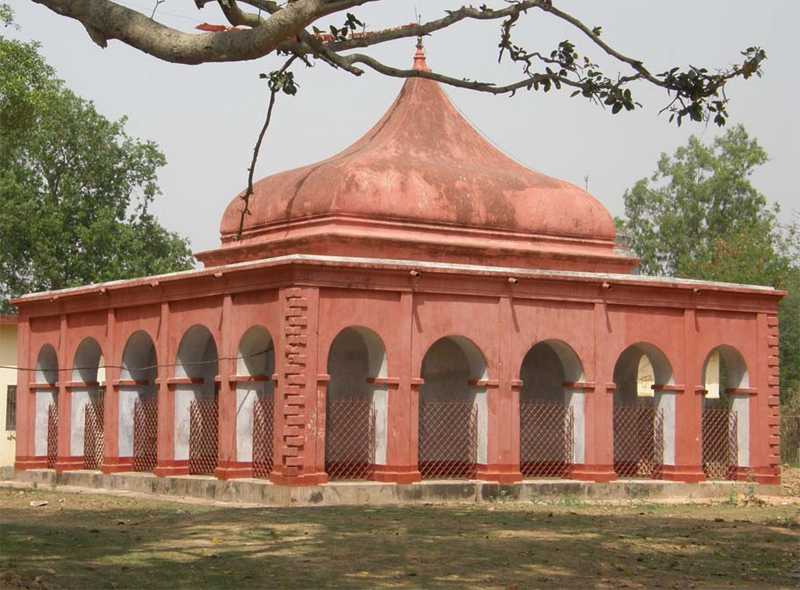
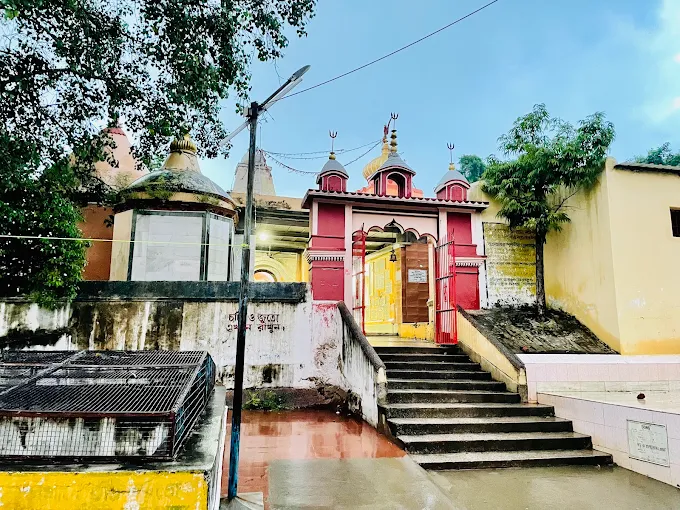
Kiriteshwari Temple, located in the quiet village of Kiritkona (also known as Kiriteshwari) near Lalbagh in Murshidabad district, West Bengal, is recognized in Shakta traditions as one of the 51 Shakti Peethas. According to sacred Puranic cosmology and Shakta texts such as the Shiva Purana and Peetha Nirnaya, when Lord Shiva performed the sorrowful Tandava while carrying the lifeless body of Goddess Sati, Lord Vishnu deployed His Sudarshana Chakra to divide her mortal frame to restore cosmic stability. It is traditionally believed that the ornament crowning Sati's head—her divine crown or 'kirit' (tiara)—fell upon this tranquil spot. Consequently, the sacred kshetra is venerated under the name Kiriteshwari or Mukuteshwari, while some regional scholars classify it as an 'Upapeetha' since a sacred ornament rather than a bodily organ sanctified the grounds.
A profound distinctive feature of Kiriteshwari Temple is the complete absence of a traditional sculpted anthromorphic idol within the garbhagriha (sanctum sanctorum). Devotees offer worship to an ancient reddish-black stone (shila), reverently draped throughout the entire year in a sanctified red veil. This aniconic worship represents primal, unmanifested cosmic feminine power (Para-Brahma Swarupini). Tradition holds that the original headdress or crown of the Devi is safeguarded across the road at Rani Bhabani's Guptamath, where esoteric Shakta rituals were traditionally maintained. In accordance with Shakti Peetha geography, the presiding Devi is revered as Goddess Vimala (or Mukuteshwari), while the eternal guardian Bhairava is venerated as Lord Samvarta (or Sambartaka), whose shrine sits on the nearby bank of the sacred Bhagirathi River. Revered across eastern India as an embodiment of spiritual sovereignty, divine intellect, and equanimity, the temple draws pilgrims seeking quiet meditation, away from bustling urban temple complexes.
The recorded and legendary history of Kiriteshwari Temple spans more than a millennium, mirroring the complex socio-political and cultural history of the Murshidabad region. While medieval texts like the Bhavishya Purana refer to Kiritkona as an ancient tirtha, and oral lore traces worship here back through the Gupta era and visits of Shakta ascetics, tangible architectural history began with local Bengali rulers.
Historical records indicate that the ancient temple structure was destroyed around 1405 CE due to warfare and natural deterioration. During the reign of the Mughal Emperor Akbar, land grants were reportedly conferred to Raja Bhagwan Roy, an ancestor of the Lalgola Royal family, who established early brick structures for the deity. Later, around the 19th century, King Darpanarayan Roy of Lalgola constructed the current red terracotta temple. Further renovations and endowments were carried out by his descendant, Raja Yogendranarayan Roy. Maa Kiriteshwari was revered as the Kula Devi (tutelary goddess) of the regional ruling families of Murshidabad, and historical accounts note that the temple complex once accommodated 16 distinct shrines of various deities scattered near the banks of the Bhagirathi River.
One prominent historical benefactor was Maharani Bhabani of Natore (1716–1803 CE), celebrated throughout Bengal for her boundless philanthropy, temple building, and protection of Sanatana Dharma. She built the 'Guptamath' temple opposite the main shrine, ensuring safe custody of sacred Shakta relics and funding daily rituals.
A celebrated episode linking the temple to the Nawabs of Bengal involves Nawab Mir Jafar. As traditional accounts record, in his final days while suffering from a fatal case of leprosy, Mir Jafar requested the sacred Charanamrita (sanctified bath water) of Maa Kiriteshwari, seeking alleviation of suffering, reflecting the widespread regional faith commanded by the goddess across religious divides. In recent history, reflecting its exceptional rural cultural preservation and communal harmony, Kiriteshwari village was awarded the title of 'Best Tourism Village of India' in 2023 by the Ministry of Tourism, Government of India.
Devotees traditionally believe that worshipping at the site of Goddess Sati's crown (kireet) blesses one with clear thinking, intellectual discrimination, and the wisdom to make righteous life decisions.
The crown symbolizes divine authority and inner mastery over ego; worshippers seek the grace of Maa Vimala to attain self-control, leadership qualities, and courage in adverse circumstances.
Rooted in the regional legend of Nawab Mir Jafar seeking the sacred Charanamrita for mortal disease, devotees traditionally pray here for healing, physical relief, and recovery from prolonged ailments.
Owing to its serene, uncommercialized rural setting along the Bhagirathi River, pilgrims find it an exceptional sanctuary for silence, Japa, and inner spiritual rejuvenation.
In Shakta tradition, Maa Vimala together with the guardian deity Bhairava Samvarta provides spiritual shielding, removing negative influences and bestowing prosperity upon sincere seekers.
The supreme annual ritual conducted on Maha Ashtami during Durga Puja, when the year-long red veil is uncovered, the holy stone is bathed with sacred waters, and a fresh red cloth is ceremonially draped.
A potent tantric night worship and sacred fire sacrifice (yajna) held during the Magha month new moon, invoking the fierce protective aspects of Devi Kiriteshwari.
Traditional bi-weekly worship conducted on Tuesdays and Saturdays throughout the Bengali month of Paush (December-January), accompanied by an ancient cultural village fair along the riverbanks.
Special individual prayer offerings with sarees, fruits, sweets, and Anna Bhog sponsored by pilgrims through local sevayats (official prices are not published; voluntary donations are accepted).
No festivals available.
📍 58.41 km away
📍 59.39 km away
📍 61.23 km away
📍 73.82 km away
📍 80.30 km away
📍 92.58 km away
Stays near Kiriteshwari Temple (Kirita Shakti Peeth)

📍 Near Kurinji Andavar Temple · 1,923.5 km
stayStarting from ₹2,000 / night
Discover more temples you may be interested in
You may also like these temples