☰
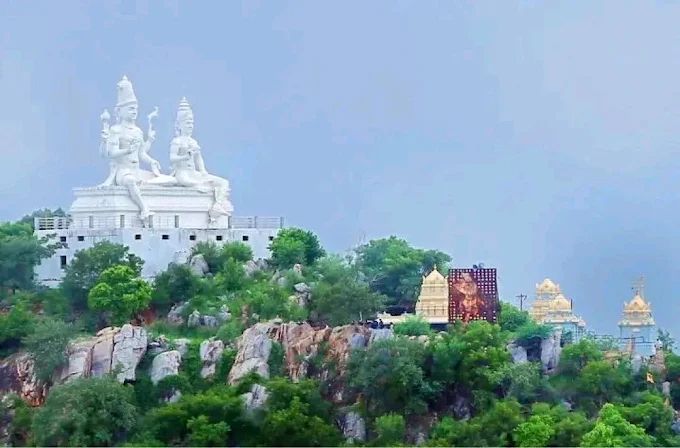
🛕 Lord Shiva | 📍 Srikalahasti, Tirupati, Andhra Pradesh
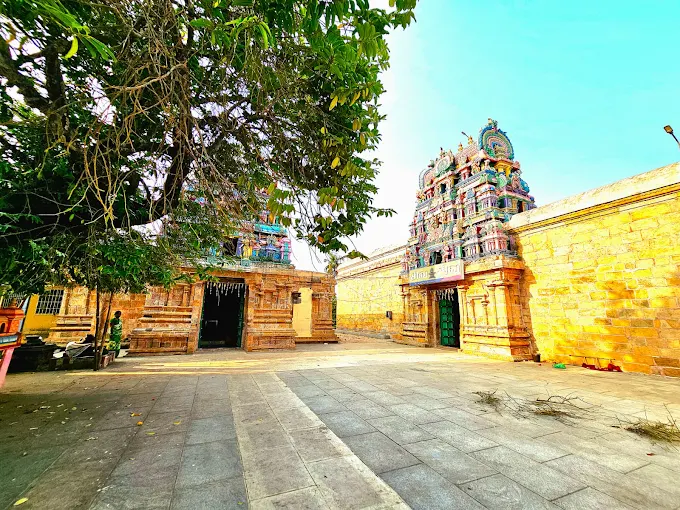
Srikalahasteeswara Temple is one of the most venerated Shaivite pilgrimage shrines in India, revered as the Vayu Sthalam (Air Element) among the sacred Pancha Bhoota Sthalams (the five elemental abodes of Lord Shiva). Situated along the banks of the Swarnamukhi River at the foot of the Kailasagiri hills, the temple enshrines Lord Shiva as Srikalahasteeswara (a self-manifested / Swayambhu Vayu Lingam) and Goddess Parvati as Gnana Prasunambika Devi. A unique physical phenomenon inside the sanctum sanctorum reflects this air element: while the inner sanctum is completely sealed with no windows or drafts, an oil lamp placed beside the main Lingam perpetually flickers, whereas other lamps in the shrine remain completely steady. Priests never touch the Svayambhu Lingam directly during abhishekam; sacred ablutions are performed only to the secondary Spatika (crystal) Lingam and festival icons. The temple's name derives from three devoted creatures of lore—'Sri' (a spider that spun webs to protect the Lingam), 'Kala' (a serpent that adorned the deity with precious gems), and 'Hasti' (an elephant that washed the shrine with river water)—all of whom attained ultimate liberation (moksha) through their devotion. Srikalahasti is also immortalized in Tamil Shaiva literature as a sacred Paadal Petra Sthalam, praised in the Tevaram hymns of the 7th-century Nayanmars Appar, Sambandar, and Sundarar, as well as Manikkavacakar. It is the sacred ground of Bhakta Kannappa (Kannappa Nayanar), the hunter who famously offered his own eyes to stop the bleeding from the Lord's Lingam, embodying supreme unreserved devotion. Renowned as 'Dakshina Kailasam' (Kailash of the South), Srikalahasti is India's preeminent centre for Rahu-Ketu and Sarpa Dosha Nivarana rituals, and uniquely remains open during solar and lunar eclipses when nearly all other Hindu temples close.
The recorded architectural and epigraphical history of Srikalahasteeswara Temple spans over a millennium, showcasing layered patronages from the Pallava, Chola, Yadavaraya, and Vijayanagara dynasties. The foundational stone structures of the inner shrine and lower prakaram date back to the late Pallava period and the early Chola era (9th to 10th centuries CE). Major structural developments occurred during the reign of the Imperial Cholas; epigraphs identify the town under the historic administrative name 'Mummudicholapuram' in Attur Nadu of Jayamkonda Cholamandalam. Rajendra Chola I (reigned 1014–1044 CE) renovated the inner garbhagriha, and extensive granite pillared halls, walls, and mandapams were expanded by Kulothunga Chola I and Kulothunga Chola III in the 11th and 12th centuries. Epigraphs of both the Cholas and later Pandyas on the inner prakara walls document extensive royal endowments of gold, livestock, lands, and daily lamps for Kalahasti-Nayinar. The 13th-century Yadava Rayas further developed the prakarams and peripheral gopurams, including the historical Bikshala Gopuram. Srikalahasti reached the pinnacle of architectural grandeur during the 16th century under the Vijayanagara Empire. Emperor Sri Krishnadevaraya visited the temple in 1516 CE after his triumphant military campaign against the Gajapatis of Udayagiri and Kondavidu. To commemorate his victories, Krishnadevaraya commissioned the magnificent 120-foot-tall western Rajagopuram (popularly acclaimed as the 'Gaali Gopuram') and the sprawling 100-pillared hall (Noorukal Mandapam). The grand Rajagopuram stood as an iconic architectural landmark for nearly five centuries until May 2010, when structural foundation shifts caused its sudden collapse; it was subsequently reconstructed in stone and traditional mortar adhering to Agama guidelines. The extensive temple complex stretches along the contours of the adjoining hillock and houses ancient subterranean shrines, notably the Pathala Vinayaka (underground Ganapati shrine situated nearly 35 feet below the ground level).
According to Vedic astrological tradition, performing the sacred Sarpa Dosha Nivarana ritual at Srikalahasti alleviates planetary afflictions caused by Rahu and Ketu, clearing long-standing hurdles in marriage, progeny, and professional progress.
Devotees revere Srikalahasti as Dakshina Kailasam; worshipping the self-manifested Vayu Lingam is traditionally believed to dissolve accumulated karmic baggage and grant spiritual purification (moksha).
As the air element represents the life force (Prana), prayers to Lord Srikalahasteeswara and Mother Gnana Prasunambika are believed in regional tradition to restore vitality, soothe respiratory illnesses, and dispel inexplicable fears.
Goddess Gnana Prasunambika Devi is worshipped as the supreme flower of divine wisdom; students and seekers seek her grace for higher intelligence, focus, and spiritual discrimination.
Standard Remedial pooja performed in regular batches at the dedicated enclosure within the temple premises; includes pooja materials and silver serpent replicas.
Remedial planetary dosha nivarana pooja conducted in an air-conditioned mandapam with seating arrangement for devotees.
Special batch pooja conducted inside the historic mandapam within the inner temple complex closer to the main shrines.
Exclusive seva batch performed inside the inner enclosure with personal priest guidance and special darshan access.
Premium tier seva performed at the prime mandapam adjoining the sanctum sanctorum, accommodating family members with priority darshan.
Grand ceremonial bathing seva performed to the crystal deity with milk, curds, honey, fruit juices, and holy water accompanied by chanting of Sri Rudram and Chamakam.
Special Friday evening archana to Goddess Gnana Prasunambika Devi using pure gold flowers, invoking prosperity, health, and family well-being.
Daily celestial wedding ceremony depicting the divine union of Lord Srikalahasteeswara and Goddess Gnana Prasunambika Devi.
Arudra Darshanam is observed on the day of the Arudra (Thiruvathirai) star during the lunar month of Margashirsha (Tamil Margazhi). In Shaivite theology, the festival commemorates...
The annual flagship Brahmotsavam of Srikalahasteeswara Temple is celebrated over 13 to 14 days around the festival of Maha Shivaratri. Historical inscriptions dating back to the Ch...
Kailasagiri Pradakshina, traditionally called Kondachuttu Utsavam, is a 22 to 25 km circumambulation around the sacred Kailasagiri hillock adjoining the temple complex. In Hindu be...
Aadi Krithigai is an annual festival celebrated at the hill shrine of Lord Subrahmanya Swamy located within the temple precincts. Falling on the Krittika star in the Tamil month of...
Celebrated over nine nights during the bright half (Shukla Paksha) of the Ashvina month, this festival centers on the temple's presiding goddess, Sri Gnana Prasunambika Devi, rever...
Karthika Deepotsavam is observed during the sacred month of Karthika Masam, reaching its climax on Karthika Pournami (the full moon night). In Shaivite belief, Lord Shiva appeared...
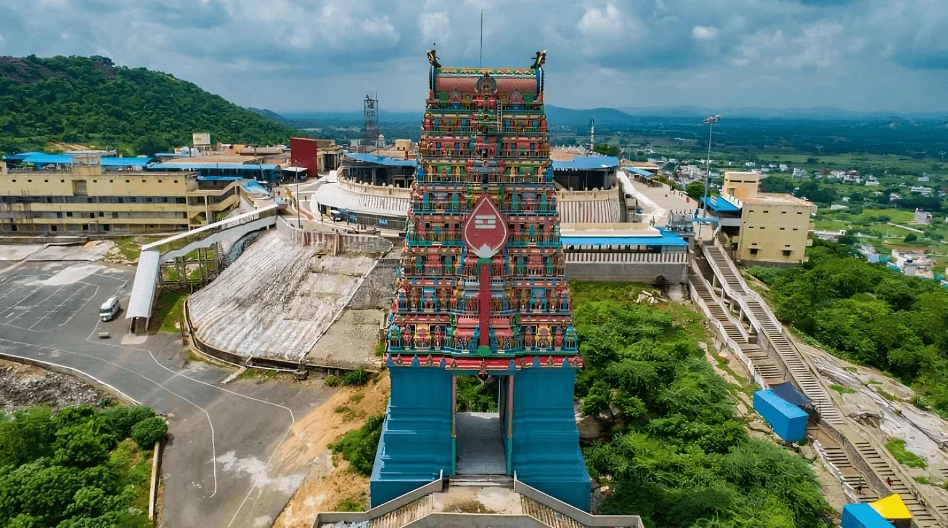
📍 65.07 km away
📍 82.65 km away
📍 83.82 km away

📍 100.01 km away
📍 100.40 km away

📍 101.10 km away
Stays near Srikalahasteeswara Temple

📍 Near Kurinji Andavar Temple · 458.3 km
stayStarting from ₹2,000 / night
Discover more temples you may be interested in
You may also like these temples