☰
🛕 Lord Devi | 📍 Trincomalee, Trincomalee, Sri Lanka
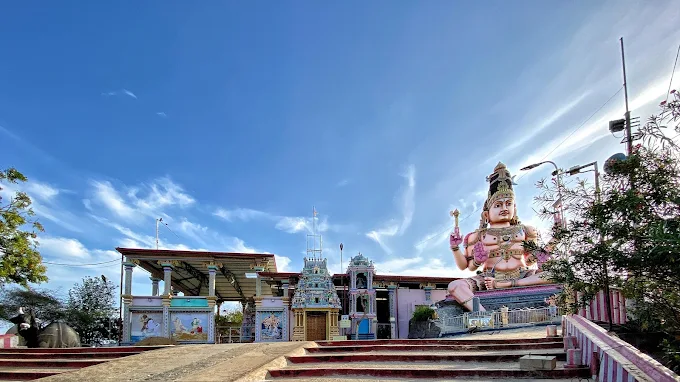
Trincomalee Shankari Devi Temple, situated on the dramatic cliff of Swami Rock (Konamalai) overlooking the Indian Ocean in Trincomalee, holds premier status in Shakta Hinduism. In the revered 'Ashtadasha Shakti Peetha Stotram' attributed to Adi Shankaracharya, the very first line proclaims: 'Lankayam Shankari Devi, Kamakshi Kanchika pure'—designating Shankari Devi of Lanka as the foremost among the eighteen Maha Shakti Peethas. According to Hindu sacred tradition, when Goddess Sati immolated herself at Daksha's sacrificial fire and Lord Shiva traversed the universe in sorrow carrying her remains, Vishnu's Sudarshana Chakra fragmented her body into sacred relics; the groin (or in regional variations, the divine anklet/foot ornament) is believed to have fallen at this seaside promontory. Goddess Shankari is worshiped alongside Lord Shiva, revered here as Trikoneshwarar or Konanathar (accompanied by Goddess Mathumai Amman). The site constitutes part of the ancient Koneswaram shrine complex, venerated as 'Dakshina Kailasam' (Southern Mount Kailash) and one of the five venerable Pancha Ishwarams safeguarding the island. Devotees believe that meditating upon Mother Shankari at this precipice clears deep-seated karmic obstacles, removes fears, and bestows profound spiritual strength, marital peace, and maternal blessings.
The history of the Shankari Devi and Koneswaram temple complex on Swami Rock combines legendary antiquity with rigorously documented historical epochs. In regional lore and the Skanda Purana, the sanctuary's origins trace to Sage Agastya and King Ravana, who was an ardent devotee of Lord Shiva. Epigraphical and classical literary sources indicate that a thriving Shaivite shrine existed on this coastal prominence well before the Common Era. The complex gained immense architectural splendour as the 'Temple of a Thousand Pillars' under the patronage of South Indian dynasties including the Cholas, Pandyas, Pallavas, and the Jaffna rulers, notably celebrated in the 7th-century Thevaram hymns of Tamil Saivite saint Sambandar.
In April 1624, during the Portuguese colonial conquest of the island led by Constantino de Sa de Noronha, the grand multi-tiered ocean-facing temple complex was pillaged and systematically razed; its granite pillars, sculptures, and stones were used to construct Fort Frederick. Before the destruction, temple priests concealed key bronzes and lingams in surrounding wells and sacred tanks. In the 1950s, urban digging and underwater marine explorations—most notably by British author and scuba explorer Sir Arthur C. Clarke in 1956—recovered submerged temple pillars, stone inscriptions, and sacred bronze statues of Shiva, Mathumai Amman, and Ganesha. The local Tamil Hindu community restored the shrine on Swami Rock, leading to the reconsecration of Thirukoneswaram and the installation of the dedicated Shankari Devi shrine, which stands today as a testimony to spiritual resilience.
According to traditional devotional belief, worshiping Mother Shankari brings harmony in marital life, removes misunderstandings between spouses, and aids individuals seeking a suitable life partner.
Traditional belief holds that chanting the Devi's hymns at this oceanfront Shakti Peetha dispels deep-rooted anxiety, mental agitation, and malevolent spiritual influences, bestowing courage and tranquility.
Devotees traditionally tie small symbolic cradles or prayers to the sacred old tree near the cliff shrine, believing that Shankari Devi blesses childless couples with healthy offspring.
Pilgrims believe that offering prayers at this primary Adi Shakti Peetha, flanked by the sacred waters of Gokarna Bay and the Papavinasham springs, washes away past sins and promotes spiritual enlightenment.
Devotional bathing of Goddess Shankari Devi / Mathumai Amman with milk, rose water, sandalwood paste, and sacred offerings, followed by bilateral archana; conducted especially on auspicious Fridays and Pournami (Full Moon) days (charges subject to temple office booking).
Nine nights of elaborate homas, Chandi Parayanam, and special alankaram (ornamentation) dedicated to the manifestations of Goddess Durga, Lakshmi, and Saraswati during Sharad Navaratri.
The grand traditional festival in the Tamil month of Panguni/Chithirai where the Utsava deities of Lord Koneswara and Mother Shankari proceed in a chariot toward the Back Bay Sea for the holy water-cutting ceremony.
No festivals available.
📍 198.37 km away
📍 225.85 km away

📍 246.10 km away
📍 249.98 km away
📍 251.27 km away
📍 271.99 km away
Stays near Trincomalee Shankari Devi Shakti Peetha

📍 Near Kurinji Andavar Temple · 451.3 km
stayStarting from ₹2,000 / night
Discover more temples you may be interested in
You may also like these temples