☰
🛕 Lord Shiva | 📍 Thirumuruganpoondi, Tiruppur, Tamil Nadu
Thirumuruganatha Swamy Temple at Thirumuruganpoondi is an important ancient Shiva temple of Kongu Nadu and is traditionally regarded as the second Kongu Nadu Shiva Sthalam praised in the Thevaram hymns. The presiding deity is Lord Shiva, worshipped as Thirumuruganathaswamy or Thirumuruganathar, with Goddess Avudainayaki as the consort. The temple is especially notable because its name itself preserves the connection between Lord Murugan and Shiva: Shiva is revered here as the Lord worshipped by Murugan.
According to temple tradition, Lord Murugan came to this sacred place after defeating the demon Soorapadman. The killing of the demon was believed to have resulted in Brahmahathi Dosha, and Murugan is said to have installed and worshipped a Shiva Lingam here to obtain relief. Because Murugan himself worshipped Shiva at this place, the deity came to be known as Thirumuruganathar — the Lord of Murugan. This is a sacred tradition rather than an archaeological account, but it remains central to the temple's religious identity. The Tiruppur District Government records this traditional origin story.
The temple has a strong connection with Sundaramurthy Nayanar, one of the great Nayanmars. Sundarar is believed to have visited the temple during his pilgrimage through Kongu Nadu. According to the traditional account, Shiva appeared before Sundarar in the form of a hunter, took away his possessions and entered the temple. Sundarar, distressed by what had happened, sang a Thevaram hymn addressing the Lord. This episode is an important part of the temple's devotional heritage.
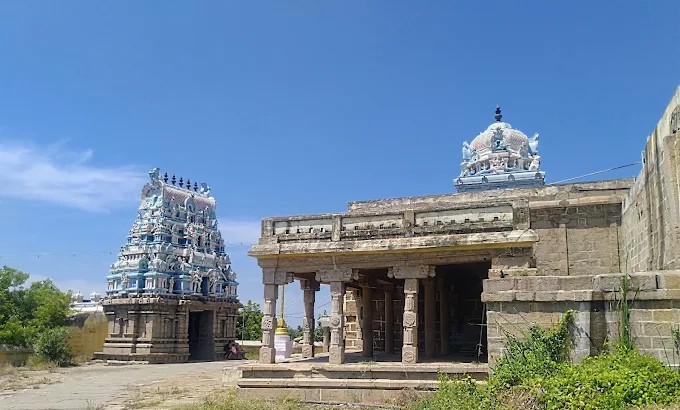
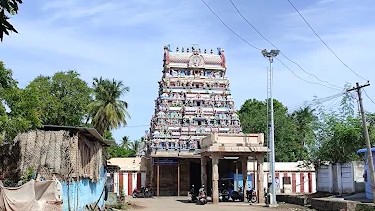
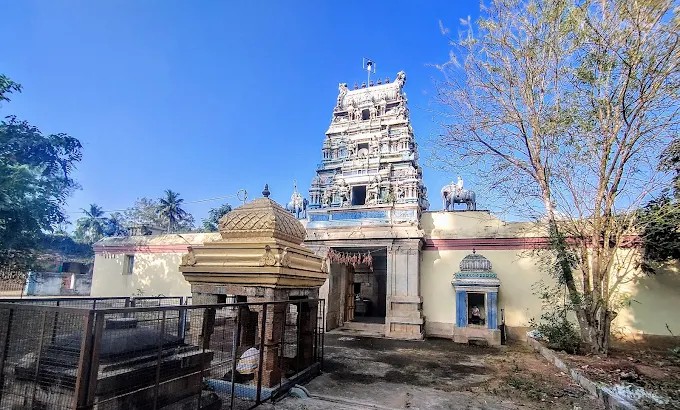
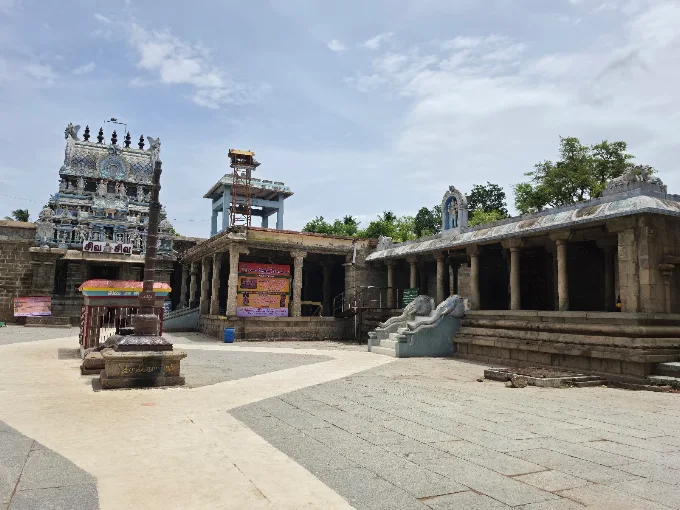
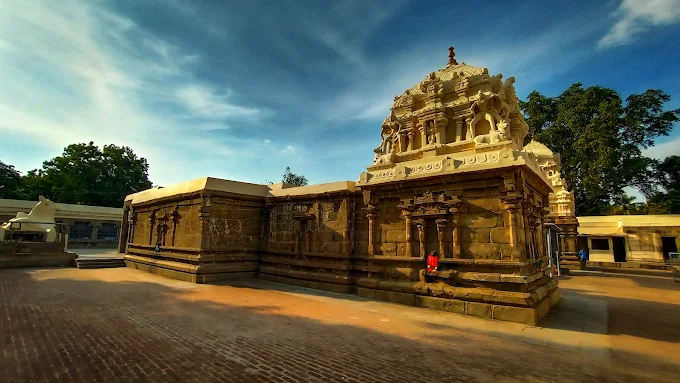
The temple is particularly interesting from an architectural perspective. The official HR&CE description states that the temple faces west, unlike the more common east-facing orientation of many South Indian temples. It does not have a conventional entrance Rajagopuram. Instead, a distinctive stone Deepasthambam stands outside the temple, characteristic of several Kongu-region temples. The complex occupies approximately one acre and has high surrounding walls and two prakarams.
The sanctum houses Shiva in Lingam form, with the deity described by HR&CE as approximately 2½ feet high. A remarkable sculptural feature is found on the rear wall of the sanctum: an elephant is depicted holding a Shiva Lingam with its trunk. Such sculptures add to the temple's artistic and iconographic significance.
The temple also has sacred water sources associated with its worship, including Shanmuga Theertham, Gnana Theertham and Brahma Theertham. Traditional devotional practices associate these theerthams with purification and prayer. Devotees also visit the temple for various forms of parihara worship.
The annual Masi festival is one of the major celebrations, traditionally extending over thirteen days. Maha Shivaratri, Skanda Sashti, Thaipusam, Tirukarthikai, Arudra Darshan and Vaikasi Visakam are among the other festivals associated with the temple.
Thirumuruganpoondi is an old settlement of Kongu Nadu, and the temple dedicated to Thirumuruganathaswamy developed as an important Shaiva centre in the region. The Tiruppur District Government states that the temple dates back to the 9th century and is among the historic and artistic monuments preserved in the district. The same government source identifies Thirumuruganpoondi among the temples protected by the Archaeological Survey of India.
The temple's present appearance represents a long process of development and preservation. Some secondary sources associate the existing structure particularly with the Kongu Chola period and the 10th century, while the government tourism source places the temple's origins around the 9th century. For a MandirVaas historical record, it is therefore safer to describe the temple as an ancient temple with early medieval origins and subsequent architectural development, rather than assigning every surviving structure to a single dynasty.
The religious history of the temple is closely tied to the Tamil Shaiva devotional tradition. Sundaramurthy Nayanar sang about the Lord of Thirumuruganpoondi in the Thevaram tradition. This association gives the temple an important place among the Paadal Petra Sthalams of Tamil Nadu and establishes its connection with the wider Nayanmar pilgrimage network.
The traditional story of Murugan's worship of Shiva gives the temple its distinctive name. According to the sthala tradition, Murugan installed and worshipped Shiva after defeating Soorapadman. Shiva consequently became known as Thirumuruganathar. The story also explains why a temple primarily dedicated to Shiva has such a strong connection with Murugan in its sacred identity.
The architectural character of the temple is particularly valuable. HR&CE describes a west-facing temple without a conventional entrance tower. The stone Deepasthambam outside the entrance is characteristic of the Kongu region. The temple has two prakarams surrounded by substantial walls, and the sanctum contains a Shiva Lingam. The sculpture of an elephant holding a Lingam behind the sanctum is another distinctive artistic feature.
The Tiruppur District Government's listing of the temple among ASI-preserved monuments is important for understanding its heritage status. The temple is therefore not only a living place of worship but also part of the protected architectural heritage of the region.
The temple's ritual and festival traditions have continued alongside this architectural heritage. The thirteen-day Masi festival remains one of its principal celebrations, while Maha Shivaratri, Skanda Sashti, Thaipusam, Tirukarthikai, Arudra Darshan, Annabhishekam and Vaikasi Visakam are also observed.
The historical importance of Thirumuruganatha Swamy Temple therefore lies in the combination of early medieval origins, Kongu Nadu Shaiva tradition, Thevaram association, protected architectural heritage, distinctive west-facing design and continuous living worship.
No daily poojas available.
No special rituals available currently.
No festivals available.
Dress Code: Traditional and modest clothing is recommended.
Photography: No
Prasad: Not Available
Prasad Details: Prasadam is available according to temple arrangements.
📍 5.42 km away
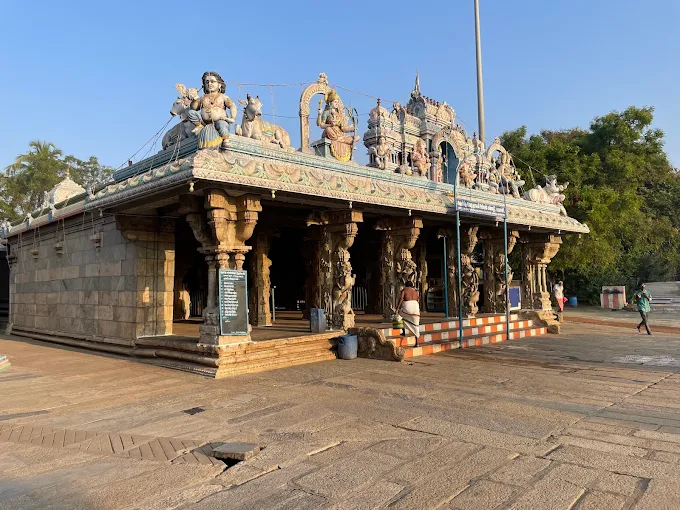
📍 50.47 km away
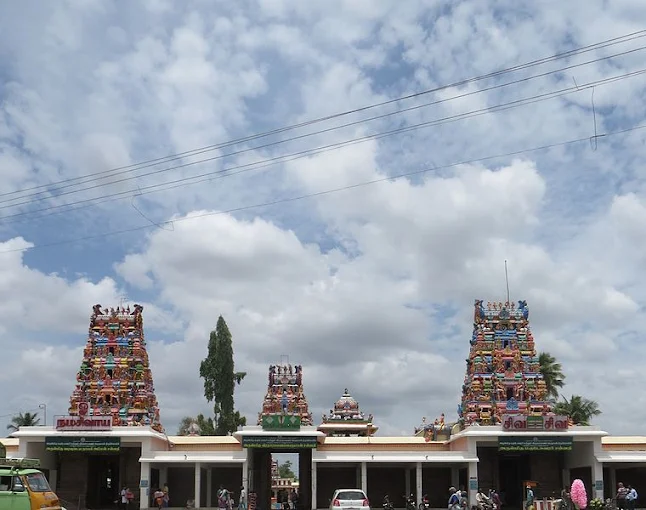
📍 63.75 km away
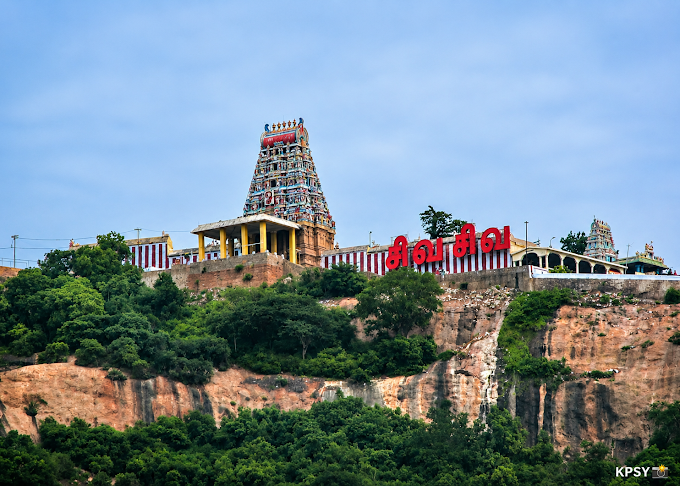
📍 68.03 km away
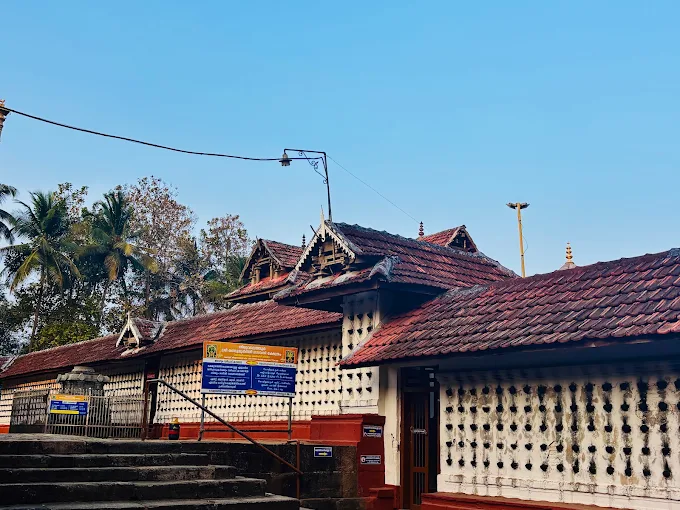
📍 82.67 km away

📍 83.80 km away
Stays near Thirumuruganatha Swamy Temple

📍 Near Kurinji Andavar Temple · 104.6 km
stayStarting from ₹2,000 / night

📍 Near Nachiyar Kovil (Thirunarayur Nambi Temple) · 235.2 km
stayStarting from ₹4,500 / night

📍 Near Kasi Vishwanathar Temple · 1,683.5 km
Starting from ₹1,200 / night


📍 Near Kasi Vishwanathar Temple · 1,683.5 km
Starting from ₹1,200 / night
Discover more temples you may be interested in
You may also like these temples