☰
🛕 Lord Shiva | 📍 Bhavani, Erode, Tamil Nadu
Sri Sangameshwarar Temple at Bhavani is one of the most important Shiva pilgrimage centres of Kongu Nadu and is especially revered for its location at the sacred Kooduthurai, where the Cauvery and Bhavani rivers meet and a traditionally identified subterranean or invisible river called Amirtha is believed to join them. Because of this sacred confluence, the place is also known as Mukkoodal and Dakshina Triveni Sangamam, meaning the southern Triveni confluence. The official Tamil Nadu HR&CE temple website describes Bhavani as a sacred site situated between five hills and identifies the meeting of the three rivers as the reason the presiding Shiva is called Sangameshwarar.
The presiding deity is Lord Sangameshwarar, a form of Shiva, while the Goddess is worshipped as Vedhanayaki Amman, also associated with the temple's local traditions. The sacred geography is central to the temple's identity: devotees come not only for darshan of Sangameshwarar but also to worship at the river confluence and perform traditional religious rites on the riverbank.
The temple has an important place in Tamil Shaiva devotional literature. Erode District's official tourism page identifies Bhavani as one of the 275 Paadal Petra Sthalams, with the sacred place praised by Tirugnana Sambandar, who referred to the place as Thirunana. The temple is also associated with the devotional works of Arunagirinathar, particularly the Tiruppugazh tradition.
Bhavani is also regarded as an important parihara and ancestral-ritual centre. The Bhavani Municipality describes Kooduthurai as a place where priests perform various traditional parihara rituals, including those associated with naga-related beliefs, marriage-related concerns, Navagraha-related beliefs and other doshas. These are religious traditions and should be presented on MandirVaas as customary practices rather than as scientifically established effects.
The riverbank is particularly significant for ancestral rites and remembrance ceremonies. The combination of the sacred confluence, riverbank rituals and Shiva worship has made Kooduthurai an important pilgrimage destination for families visiting Bhavani.
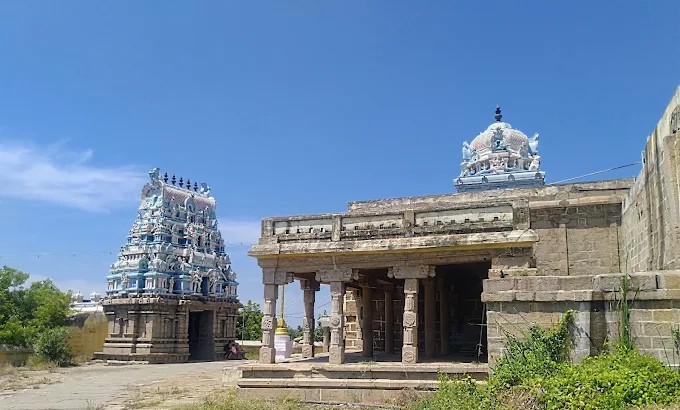
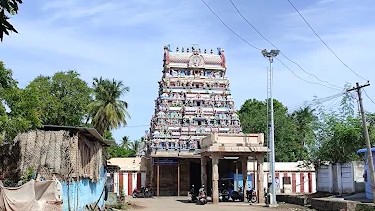
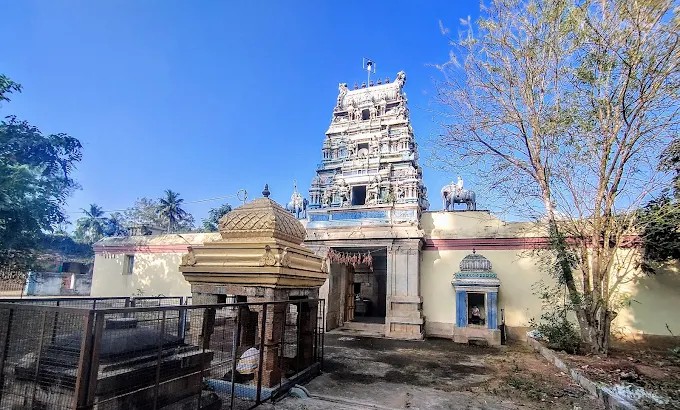
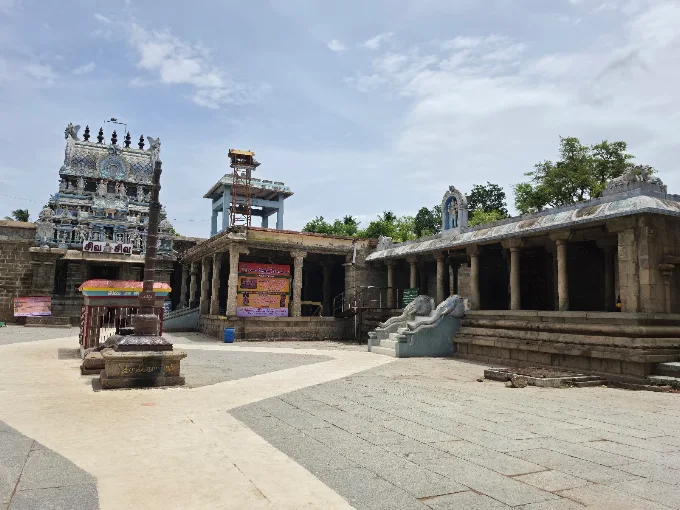
Architecturally, the temple contains a distinctive five-tier Rajagopuram, documented by the official HR&CE temple website. The temple complex combines traditional Dravidian architecture with sculptures and mandapas associated with different historical periods.
The temple's identity therefore rests on several layers: Sangameshwarar worship, the Kooduthurai river confluence, Thevaram heritage, Kongu Nadu pilgrimage traditions, ancestral rituals and living temple worship. For travellers following the Paadal Petra Sthalams, Bhavani offers a particularly distinctive experience because the sacred river landscape is inseparable from the temple's religious identity.
The history of Sangameshwarar Temple at Bhavani is closely connected with the ancient sacred identity of the Kooduthurai river confluence. The place has traditionally been known as Thirunana, and the meeting of the Cauvery and Bhavani rivers, together with the traditionally identified Amirtha river, gave the locality its distinctive religious character. The temple's own HR&CE website identifies the three-river confluence as the central reason for the name Sangameshwarar.
The temple belongs to the long tradition of Tamil Shaivism represented by the Thevaram hymns. Erode District's official tourism page identifies the shrine as one of the 275 Paadal Petra Sthalams and records that Tirugnana Sambandar praised the sacred place as Thirunana. This devotional connection places Bhavani within the historic pilgrimage network of Tamil Nadu's Thevaram temples. Arunagirinathar's association with the place through Tiruppugazh further demonstrates that Bhavani continued to hold an important position in later Tamil devotional traditions.
The present temple is not the product of a single historical period. A Government Museum, Chennai directory of monuments describes the Sangameshwarar Temple as a living Hindu temple and records a 7th-century AD historical period, with architectural and historical associations involving the Pallavas, Cholas and Getti Mudalis. The same government publication notes Pallava-period Dwarapalaka sculptures, sculptural work on the mandapa pillars and representations of Getti Mudali and his wives.
This evidence is important for understanding the temple's architectural history. Rather than attributing the entire present complex to one dynasty, it is more accurate to describe Sangameshwarar Temple as a multi-period sacred complex, whose religious importance is much older than some of its surviving architectural components. Different rulers and local patrons contributed to the development, renovation and embellishment of the temple over time.
The temple's setting at Kooduthurai also influenced its continuing importance. River confluences have long held a special place in Hindu sacred geography, and Bhavani became a destination for pilgrims who combined temple worship with bathing, offerings and ancestral rites. The Bhavani Municipality specifically records the religious importance of the confluence and the performance of traditional parihara rituals at Kooduthurai.
The temple's architectural heritage includes a prominent five-tier Rajagopuram. The official HR&CE website lists the Rajagopuram and identifies the temple as being at the sacred meeting point of the Cauvery, Bhavani and traditionally identified Amirtha river.
In the modern period, Sangameshwarar Temple continues to function as a major pilgrimage centre administered by the Tamil Nadu Hindu Religious and Charitable Endowments Department. The temple maintains regular worship throughout the day, with special arrangements on Amavasya and festival occasions. Its major celebrations include Aadi Perukku, Maha Shivaratri, Navaratri and the Car Festival, with Aadi Perukku being particularly connected to the sacred river confluence.
Thus, the history of Sangameshwarar Temple is best understood through several overlapping layers: an ancient river-confluence pilgrimage centre, a Thevaram Paadal Petra Sthalam, a multi-period architectural monument and a continuously functioning temple. Its location at Kooduthurai remains the defining feature that connects its religious traditions with the geography of Bhavani.
No daily poojas available.
No special rituals available currently.
No festivals available.
Dress Code: Traditional and modest clothing is recommended.
Photography: No
Prasad: Not Available
Prasad Details: Prasadam is available according to temple arrangements.
📍 24.45 km away
📍 45.79 km away
📍 50.47 km away
📍 52.86 km away
📍 93.79 km away

📍 112.17 km away
Stays near Sri Sangameshwarar Temple, Bhavani

📍 Near Kurinji Andavar Temple · 134.6 km
stayStarting from ₹2,000 / night

📍 Near Nachiyar Kovil (Thirunarayur Nambi Temple) · 200.3 km
stayStarting from ₹4,500 / night

📍 Near Kasi Vishwanathar Temple · 1,641.5 km
Starting from ₹1,200 / night


📍 Near Kasi Vishwanathar Temple · 1,641.5 km
Starting from ₹1,200 / night
Discover more temples you may be interested in
You may also like these temples