☰
🛕 Lord Shiva | 📍 Eengoimalai / Mullipadi, Tiruchirappalli, Tamil Nadu
Maragathaleswarar Temple at Thiru Eengoimalai is one of the important ancient Shiva temples of the Kaveri region and one of the Paadal Petra Sthalams celebrated in the Tevaram tradition. The temple is particularly significant because it represents the final Paadal Petra Shiva Sthalam traditionally listed on the northern bank of the Kaveri in Chola Nadu. Thirugnana Sambandar composed a set of ten verses in praise of the deity, making the hill an important destination for devotees following the Tamil Shaiva pilgrimage tradition.
The presiding deity is Maragathaleswarar, also known as Maragathachaleswarar, Maragathanathar and Eengoinathar. The name Maragathaleswarar is associated with maragatham, meaning emerald. The goddess is worshipped as Maragathavalli. The temple's emerald identity is reflected in the traditional description of the Shiva Lingam as having a greenish appearance. Temple tradition also associates the hill with an emerald-bearing fragment of the sacred mountain.
One of the most important legends associated with the hill concerns the traditional contest between Vayu Bhagavan and Adisesha. According to the Sthala Purana, Adisesha encircled the sacred mountain while Vayu attempted to break his hold. During the resulting struggle, portions of the sacred mountain were believed to have fallen at several places. Thiru Eengoimalai is traditionally identified with the place where an emerald-associated portion fell. Because of this tradition, the hill became known as Maragathachalam and Shiva as Maragathaleswarar. This is a religious legend and should be distinguished from geological or archaeological history.
Another distinctive tradition explains the name Eengoimalai. According to the Sthala Purana, Sage Agastya had worshipped Shiva at nearby sacred places and arrived at this hill late in the day. When he found that the temple was about to close, he is said to have assumed the form of a small flying insect or bee, traditionally described using the Tamil word ee, and entered the shrine to worship Shiva. This story is associated with the traditional name Thiru Eengoimalai.
The hill is also closely connected with the worship of Goddess Parvati. Temple tradition identifies the hill with Shiva-Shakti worship, and the shrine of Maragathavalli forms an important part of the complex. The temple is therefore not simply a hilltop Shiva shrine but a sacred landscape in which Shiva and Shakti are worshipped together.
The natural surroundings add considerably to the temple's devotional character. From the hilltop, pilgrims can see the Kaveri landscape and, from certain viewpoints, the Ayyarmalai/Rathnagiriswarar hill temple across the river. The surrounding greenery and the elevated location distinguish Eengoimalai from many of the larger urban temples of the Trichy region.
The temple also has an important literary connection with Nakkirar, who is traditionally associated with the composition of Eengoiy Ezhupathu, a collection of seventy verses praising the sacred hill and its deity. The Tevaram verses of Sambandar similarly describe the natural beauty of the hill, including its vegetation, fragrance and wildlife. These literary references make Eengoimalai valuable not only to pilgrims but also to those interested in classical Tamil religious literature.
Maragathaleswarar Temple stands on Thiru Eengoimalai, a small hill near the Kaveri in the Kulithalai region of present-day Tiruchirappalli district. The temple is traditionally regarded as an ancient shrine, with sources describing it as having a history extending back many centuries. Its importance is particularly evident from its inclusion in the Tevaram corpus and its status as a Paadal Petra Sthalam.
The temple's earliest historical identity is closely connected with Thirugnana Sambandar. Sambandar's Tevaram hymn celebrates the deity and the natural setting of Eengoimalai. The literary evidence is important because it establishes that the sacred centre was already recognised during the early medieval Tamil Shaiva devotional period. The temple is traditionally counted as the 63rd and final Paadal Petra Sthalam on the northern bank of the Kaveri in Chola Nadu.
The hill has also accumulated several sacred names. It is known in different traditions as Eengoimalai, Eengoi Malai, Thiruvinganatha Malai and Shiva-Shakti Malai. The name Maragathachalam is connected with the traditional story of an emerald-associated fragment of the sacred mountain falling at this location. The deity consequently became known as Maragathachaleswarar, or the Lord of Maragatha Hill.
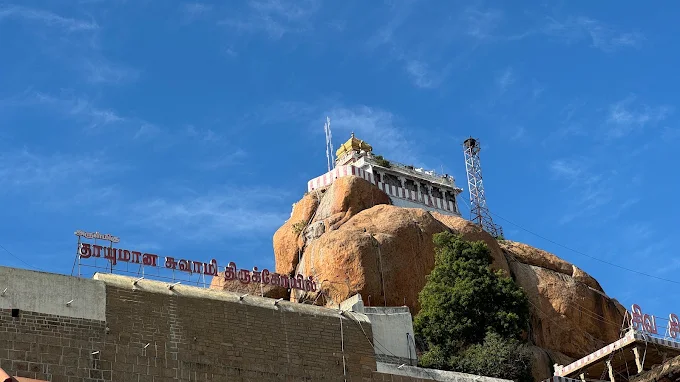
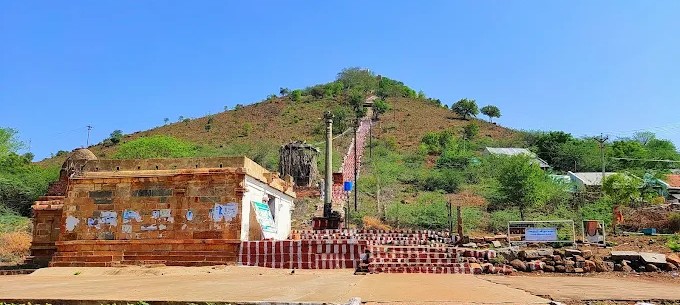
The temple's physical setting is unusual. Unlike the large flatland temples of the Kaveri delta, Maragathaleswarar is positioned on a hilltop and requires pilgrims to climb approximately 500 steps. Historical travel accounts describe the steps as steep and uneven in places. The climb itself forms part of the pilgrimage experience, although the condition of the steps may change over time and should be checked locally.
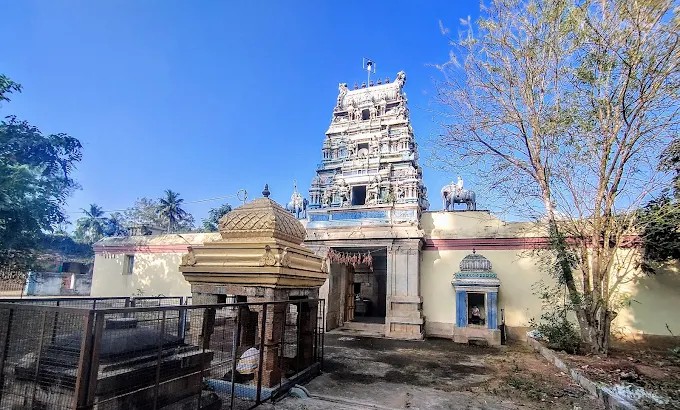
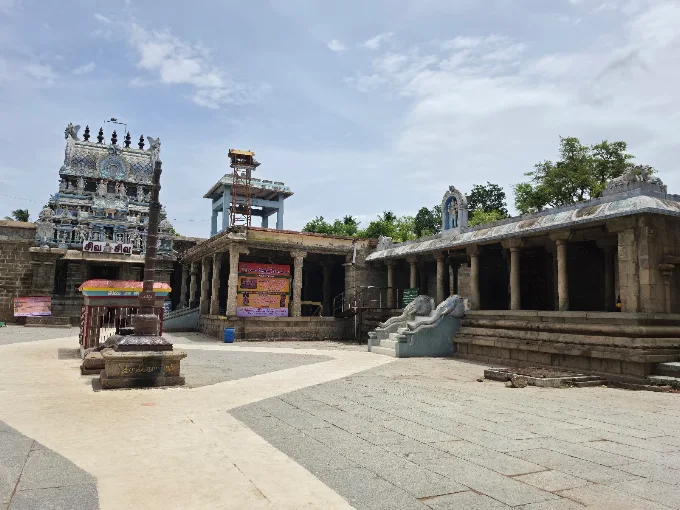
Architecturally, the temple has an east-facing orientation and a three-tiered gopuram. The main shrine is accompanied by a separate shrine for Maragathavalli. Ganesha and Murugan shrines are also present. One notable feature described by temple visitors is the collection of Dakshinamurthy images in different postures associated with the vimana of the main shrine.
The temple's traditional history also connects it with several saints and spiritual figures. Agastya is associated with the hill through the story of entering the shrine in the form of an insect or bee. Nakkirar is traditionally associated with Eengoiy Ezhupathu, while other Shaiva figures are mentioned in local temple traditions. These literary and devotional associations have helped preserve the importance of the hill even though it receives fewer visitors than major urban temples.
The temple is also part of a distinctive three-temple pilgrimage tradition in the Kulithalai region. The three Paadal Petra Shiva temples are Kadambavaneswarar at Kulithalai, Rathnagiriswarar at Ayyarmalai and Maragathaleswarar at Thiru Eengoimalai. Local tradition considers visiting all three on the same day spiritually significant. A traditional sequence places Kulithalai in the morning, Ayyarmalai in the afternoon and Eengoimalai in the evening.
This sequence also makes practical sense because the exposed hill steps at Eengoimalai can become very hot during the middle of the day. A later-day visit provides a more comfortable climbing experience, subject to the temple's actual opening hours.
The temple continues to function as an active place of worship. Festivals traditionally include Panguni Brahmotsavam, Masi Magam, Thai Poosam and special worship on full-moon days. A particularly notable tradition is the belief that sunlight falls directly on the main deity for three days around the Masi Shivaratri period and that the Lingam appears to change colour. This should be described as a temple tradition rather than as a verified physical transformation.
No daily poojas available.
No special rituals available currently.
No festivals available.
Dress Code: Traditional and modest clothing is recommended.
Photography: No
Prasad: Not Available
Prasad Details: Prasadam is available according to temple arrangements.
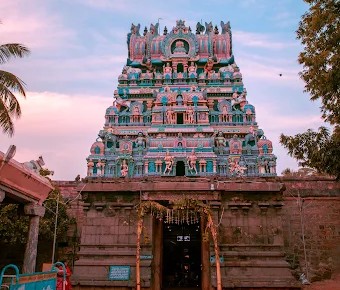
📍 26.36 km away

📍 29.09 km away
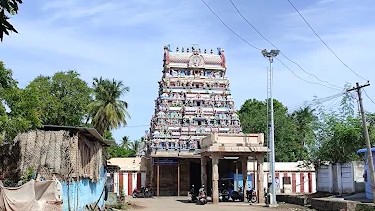
📍 30.13 km away
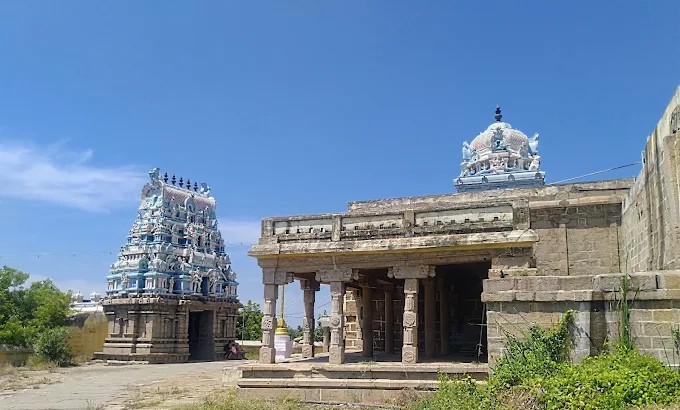
📍 33.07 km away

📍 33.70 km away
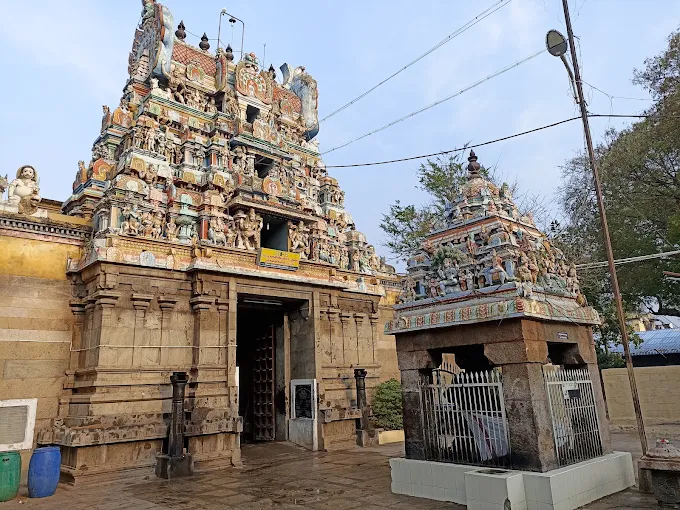
📍 33.76 km away
Stays near Maragathaleswarar Temple

📍 Near Nachiyar Kovil (Thirunarayur Nambi Temple) · 115.2 km
stayStarting from ₹4,500 / night

📍 Near Kurinji Andavar Temple · 129.0 km
stayStarting from ₹2,000 / night

📍 Near Kasi Vishwanathar Temple · 1,666.4 km
Starting from ₹1,200 / night


📍 Near Kasi Vishwanathar Temple · 1,666.4 km
Starting from ₹1,200 / night
Discover more temples you may be interested in
You may also like these temples