☰
🛕 Lord Murugan | 📍 Palani, Dindigul, Tamil Nadu
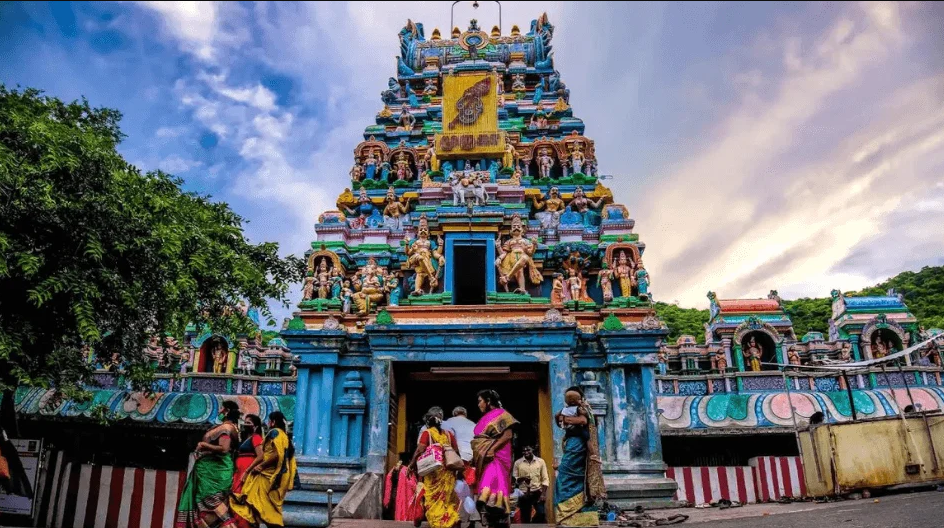
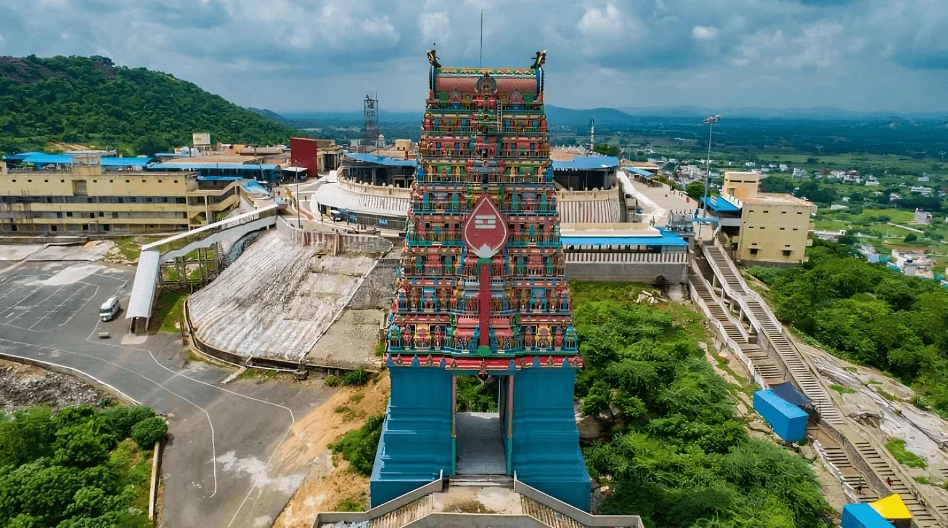
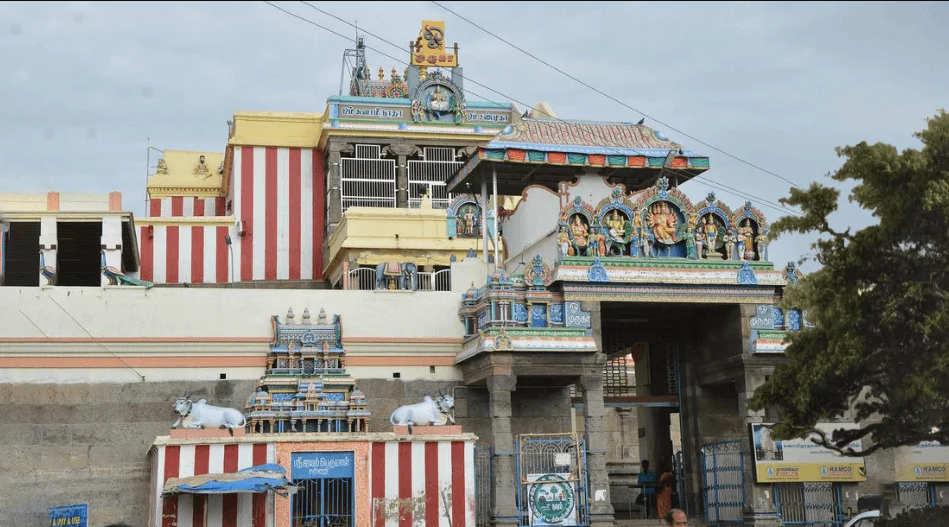
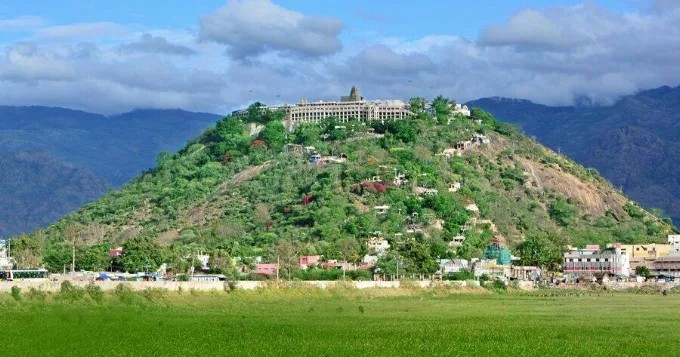
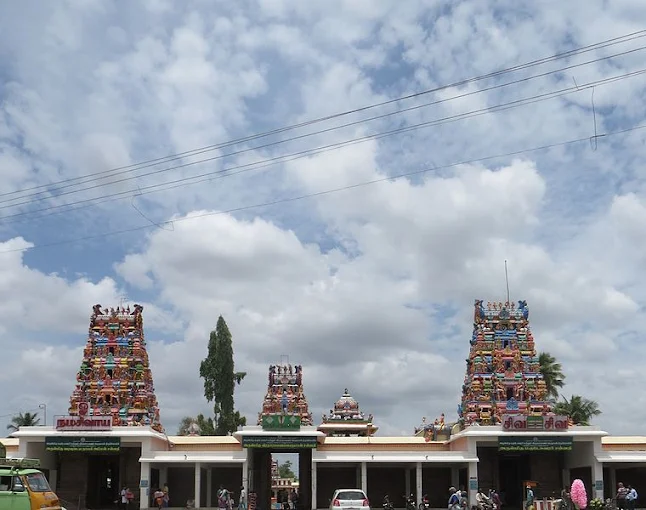
Arulmigu Dhandayuthapani Swamy Temple, situated atop the Sivagiri hill in Palani, Tamil Nadu, is revered as the third of the 'Arupadaiveedu'—the six holy abodes of Lord Murugan. The temple holds exceptional spiritual importance across the global Tamil diaspora and Hindu worship. Unlike the typical regal or warrior representations of Murugan adorned with divine consorts and weaponry, the presiding deity at Palani stands as an ascetic hermit: clad solely in a loincloth (kaupina), shaven-headed, and grasping a staff (dhandam) in his right hand. The name 'Dhandayuthapani' translates to 'the Lord who holds a staff as a weapon,' embodying supreme renunciation, self-control, and the ultimate transcendence of worldly illusion. According to sacred tradition, the divine idol was consecrated by the legendary Siddha master Bogar, using 'Navapashanam'—an esoteric alchemical formulation comprising nine distinct mineral-herbal constituents. Worshippers believe that ablutions (abhishekam) performed over this unique vigraha acquire profound therapeutic and transformative qualities. Palani is also the global epicenter of unique devotional traditions, notably the carrying of the 'Kavadi' and mass barefoot pilgrimages (Padayatra). The holy town is equally famous for its GI-tagged 'Palani Panchamirtham,' an ancient temple offering prepared with plantain, jaggery, honey, ghee, and cardamom without water or chemical preservatives.
The history of Palani blends timeless Puranic folklore with documented medieval South Indian epigraphy. In traditional sacred belief, the origin of Palani traces back to Mount Kailash, where Sage Narada offered the 'Gnana Pazham' (the fruit of wisdom) to Lord Shiva and Goddess Parvati. To determine which of their sons should receive it, a divine contest was proposed: whoever circumambulated the universe first would win the fruit. Murugan mounted his divine peacock to encircle the cosmos, whereas Ganesha astutely circumambulated his parents, stating that they embodied the entire universe, and claimed the fruit. Upon returning and realizing the outcome, an aggrieved young Murugan renounced all celestial luxuries, ornaments, and familial attachments, arriving at the Sivagiri hill to dwell in solitary renunciation. Lord Shiva descended to appease him, proclaiming 'Pazham Nee' ('You yourself are the fruit of wisdom'), from which the town's name 'Palani' is traditionally derived. Another devotional legend credits the arrival of the two hills (Sivagiri and Sakthigiri) to the demon Idumban, who carried them balanced across his shoulders at Sage Agastya's request, thus originating the Kavadi tradition. Siddhar Bogar is believed to have constructed the sanctum and installed the Navapashanam idol prior to entering Jeeva Samadhi in a chamber near the sanctum. Historically and archaeologically, the structural foundations of the temple belong to the early medieval era. The earliest structural additions and regularised rituals are historically attributed to King Cheraman Perumal of the Chera dynasty around the 8th to 9th centuries CE. Over subsequent centuries, stone inscriptions reveal major royal patronage, mandapa constructions, and endowments under the Later Pandyas (notably Jatavarman Sundara Pandyan and Maravarman Kulasekara Pandyan), the Hoysalas, and the Vijayanagara Empire. During the 16th and 17th centuries, the Nayaks of Madurai, alongside regional Palayakarars (Poligars), erected the grand stone flight of steps, monumental mandapams, and temple walls. In modern times, the temple was further developed with the introduction of mechanical haulage winches and aerial ropeways, and it is presently administered under the Hindu Religious and Charitable Endowments (HR&CE) Department of the Government of Tamil Nadu.
Darshan of Lord Dhandayuthapani in his austere hermit form is traditionally believed to inspire mental detachment, temper personal ego, and instill inner peace by reminding devotees of the impermanence of worldly possessions.
Devotees hold a traditional belief that the water, milk, and panchamirtham sanctified over the Navapashanam idol formulated by Siddhar Bogar absorb subtle mineral energies capable of alleviating persistent health ailments.
As the sacred abode where Murugan manifested as the embodiment of absolute truth ('Gnana Pazham'), prayer here is traditionally sought by students and seekers for intellectual clarity and spiritual enlightenment.
Observing vows such as carrying the Kavadi, shaving the head (Mudi Kaanikkai), or undertaking long barefoot walks (Padayatra) is traditionally believed to dissolve bad karma and fulfill sincere family and personal aspirations.
The presence of Dhandayuthapani as a supreme protector holding the staff is believed in devotional lore to remove unseen anxieties, mental distress, planetary afflictions (Doshas), and sudden obstacles in life.
A prestigious evening ritual held daily at around 19:00 (except on major festival days) where the utsava idol of Lord Murugan is taken in a magnificent gold-plated chariot around the hill prakaram.
A sacred evening procession wherein the deity is carried around the hilltop corridor upon a finely sculpted golden peacock mount.
Special abhishekam seva offering where the holy idol receives ablution using the consecrated traditional five-ingredient nectar.
The traditional devotional offering of shaving one's hair at the Devasthanam-run tonsure mandapams at the foothills as an act of absolute surrender.
A traditional offering ritual where a devotee is weighed against sugar, jaggery, coins, grains, or fruits to offer an equal weight as a thanksgiving donation.
Agni Nakshatram marks a 14-day observance during the peak of summer, covering the final seven days of the Tamil month Chithirai and the first seven days of Vaikasi. As part of a tr...
Kandha Sashti is an annual seven-day festival observed in the Tamil month of Aippasi. Religious tradition commemorates Lord Murugan's victory over the demon king Surapadman. The fe...
Karthigai Deepam is celebrated during the Tamil month of Karthigai when the Krittika star coincides with the full moon. Religious tradition holds that the divine light signifies th...
Thai Poosam is the grandest festival celebrated at Palani Dhandayuthapani Swamy Temple, spanning ten days during the Tamil month of Thai. Devotees undertake long barefoot pilgrimag...
Panguni Uthiram is a ten-day major annual festival celebrated in the Tamil month of Panguni. The festival traditionally attracts large numbers of rural pilgrims and farmers who car...
Vaikasi Visakam is a ten-day festival commemorating the birth star of Lord Murugan (Visakam nakshatra in the month of Vaikasi). Lord Muthukumaraswamy and His consorts are carried o...

📍 19.55 km away

📍 22.41 km away
📍 22.58 km away
📍 24.16 km away
📍 71.11 km away
📍 81.50 km away
Stays near Palani Dhandayuthapani Swamy Temple

📍 Near Kurinji Andavar Temple · 22.4 km
stayStarting from ₹2,000 / night
Discover more temples you may be interested in
You may also like these temples