☰
🛕 Lord Murugan | 📍 Thiruchendur, Thoothukudi, Tamil Nadu
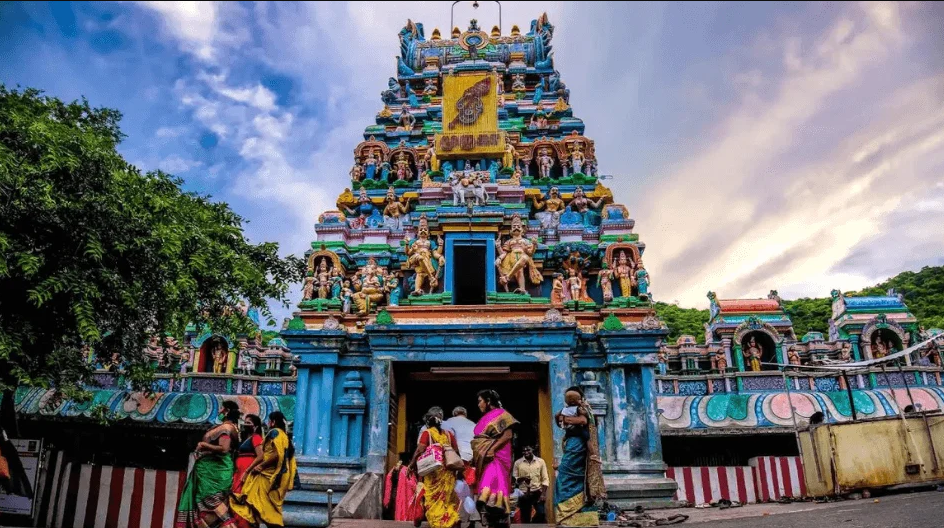
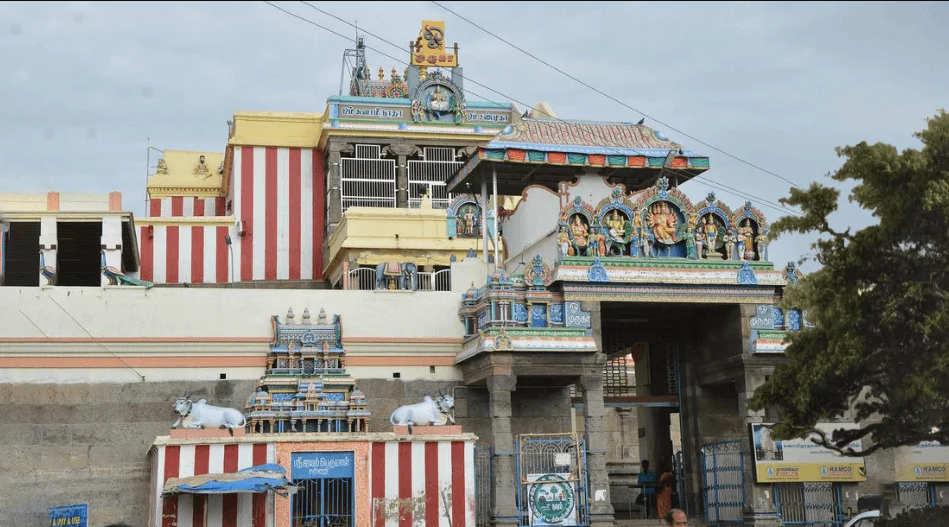
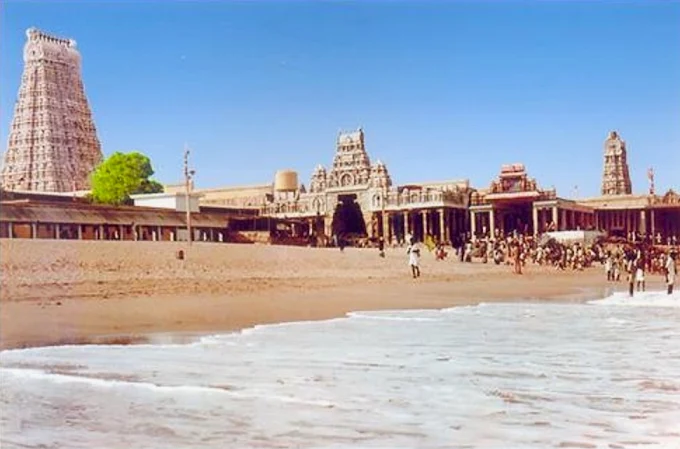
Arulmigu Subramanya Swamy Temple at Thiruchendur is one of the most venerated coastal shrines in India and holds the prestigious rank of being the second of the 'Arupadai Veedu' (six sacred military encampments/abodes) of Lord Murugan. Uniquely among the six abodes—which are otherwise perched atop hills or mounds—Thiruchendur is set directly on the seashore overlooking the Gulf of Mannar (Bay of Bengal). According to the devotional tradition of the Skanda Purana, this is the sanctified spot where Lord Murugan established his camp, waged battle against the asura king Surapadman, and emerged triumphant in the legendary 'Surasamharam'. After the demon king surrendered, Lord Murugan compassionately divided him into two eternal emblems of service: a magnificent peacock (His divine mount/vahana) and a rooster (His battle emblem/dhwaja). Devotionally, the temple is also revered as 'Jayanthipuram' (the town of victory) and 'Tirucheeralaivai'. In the sanctum sanctorum, the primary deity is depicted as a solitary ascetic yogi holding fragrant flowers, engaged in eternal worship of Lord Shiva (enshrined behind Him as the Jagannatha Shivalingam). Furthermore, the complex integrates rock-hewn shrines of Lord Vishnu (Senthil Govindhar) lying in yogic slumber, alongside cave shrines of the Panchalingas, reflecting a sacred harmony between Shaivite and Vaishnavite spiritual traditions. Within a short distance from the saline sea waves lies 'Nazhikkinaru', a natural freshwater spring steeped in sacred lore, where pilgrims take a purification dip before seeking darshan.
Thiruchendur boasts a confluence of ancient literary mentions and verifiable epigraphical history spanning over a millennium. The earliest classical reference to the shrine appears in Sangam literature, notably in Nakkirar's 'Tirumurukarruppatai' (dated circa 2nd–3rd century CE), where it is immortalized as 'Tiruchchiralaivai'—the seashore abode of Murugan where sea waves gently wash the shore. Epigraphically, the oldest surviving stone inscriptions on the premises date back to 875 CE during the reign of the Pandya monarch Varaguna Maran (Varaguna Pandya II), documenting endowments of gold and paddy for temple maintenance and eternal lamps. Subsequent expansions were carried out by the medieval Cholas, Chera rulers, rulers of the Vijayanagara Empire, and the Madurai Nayaks, who contributed to the construction of mandapams and prakarams.
A notable historical event occurred during the mid-17th century when the temple was entangled in colonial trade wars. In 1646–1648 CE, troops of the Dutch East India Company (VOC) occupied the temple premises and converted it into an armed military outpost during hostilities with the Portuguese and the local Nayaks. Upon their eventual evacuation in 1648 under the pressure of Thirumalai Nayak, the Dutch ransacked the temple and seized several bronze processional idols—including those of Lord Shanmugar and Nataraja—mistaking their panchaloha metal alloy for pure gold. As Dutch records and temple chronicles record, while sailing toward Galle in Dutch Ceylon, the ship encountered violent ocean squalls. Fearing divine retribution, the sailors cast the heavy idols overboard into the sea. Around 1653 CE, Vadamalaiappan Pillai, a regional administrator under the Madurai Nayaks, had an inspired dream indicating the location of the submerged idols, signified by a floating lemon and a circling Brahminy kite. Guided by local seafaring divers, the murtis were retrieved intact from the seabed and reinstated into the sanctum with immense public celebration, an event depicted in historic murals in the temple's Shanmuga Vilasam corridor. The magnificent 137-foot nine-tiered western Rajagopuram was erected around the 17th century under the guidance of Desikamurthy Swamigal, strategically facing west due to the eastern shoreline constraints.
Devotional belief holds that worshipping Lord Senthil Andavar, who conquered the demonic forces of Surapadman, grants courage, removes negative influences, and aids individuals in overcoming difficult life obstacles and internal anxieties.
In traditional Tamil astrological practice, Lord Murugan is regarded as the presiding planetary deity of Mars (Angarakan). Pilgrims frequently visit Thiruchendur to perform archana to mitigate afflictions attributed to Sevvai Dosha and Rahu-Ketu placements.
Taking a holy dip in the sea followed by bathing with the freshwater of the miraculous Nazhikkinaru spring is traditionally believed to cleanse negative karmic residues and alleviate physical ailments.
Observing the six-day fasting regimen during Skanda Sashti and offering prayers to Lord Subramanya is widely practiced by devotees with the traditional hope of conceiving children and fostering familial prosperity.
Meditating upon the Lord in His ascetic yogic state within the sanctum, surrounded by the eternal sound of the ocean waves (traditionally likened to the Pranava mantra 'Om'), is believed to nurture inner serenity and spiritual wisdom.
Sacred milk bathing ritual performed for the deity inside the sanctum sanctorum, permitting the ticket holder to view the abhishekam.
Procession of the golden chariot around the temple circumambulatory path carrying the festival deity Jayanthinathar on designated evening slots.
Elaborate archana performed by dedicated Sivacharyas chanting the 1,000 names of Lord Shanmuga with offering of garlands and prasadam.
Special quick queue access pass organized by the HR&CE administration for expedited entry to the inner sanctum.
Vaikasi Visagam commemorates the birth star of Lord Murugan during the Tamil month of Vaikasi (May–June). Large gatherings of devotees visit the seashore shrine to witness extensiv...
A 10-day spring festival conducted in the Tamil month of Chithirai (April–May). The processional deities are brought to the temple's Vasantha Mandapam for special abhishekam ceremo...
Kanda Sashti is the most prominent festival at the Thiruchendur temple, attracting hundreds of thousands of pilgrims. According to Hindu religious belief, this coastal site is wher...
Thai Poosam is observed during the Tamil month of Thai under the Poosam asterism. Devotees commemorate the occasion when Goddess Parvati is believed to have bestowed the Vel (divin...
Masi Brahmotsavam is a major 12-day annual festival celebrated during the Tamil month of Masi (February–March). Historically, it is one of the temple's two principal Brahmotsavams....
Avani Brahmotsavam is a 12-day annual celebration held during the Tamil month of Avani (August–September). It mirrors many rituals of the Masi festival, including the flag hoisting...
📍 78.70 km away
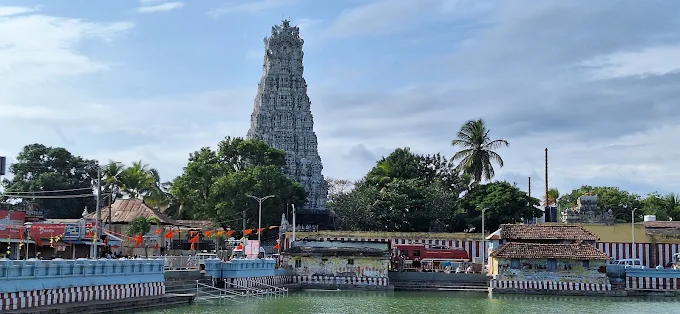
📍 82.21 km away
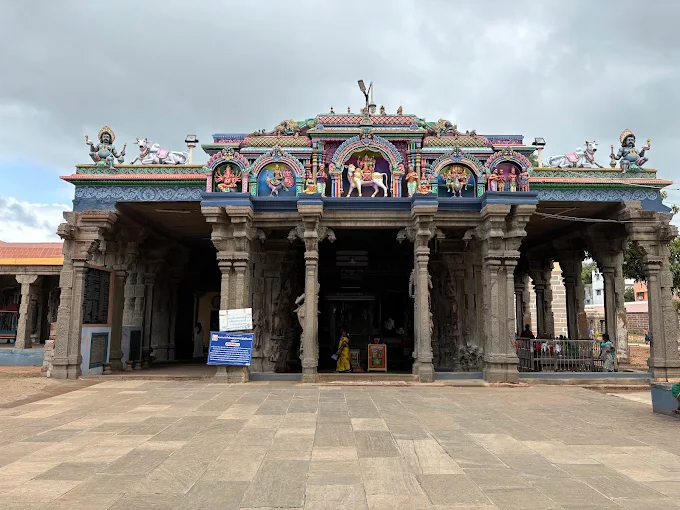
📍 103.74 km away
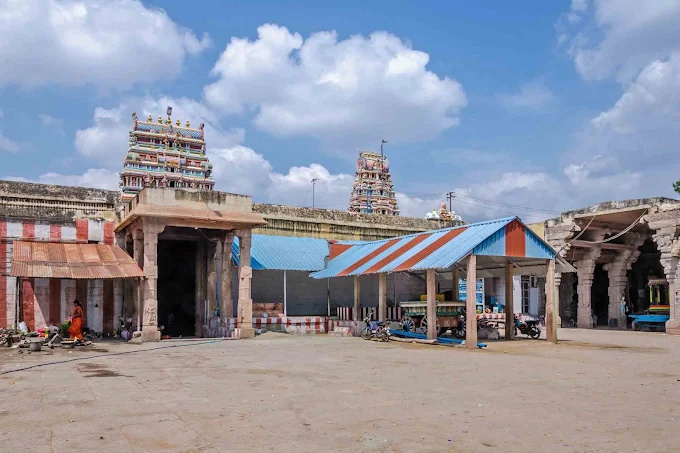
📍 115.39 km away

📍 129.24 km away
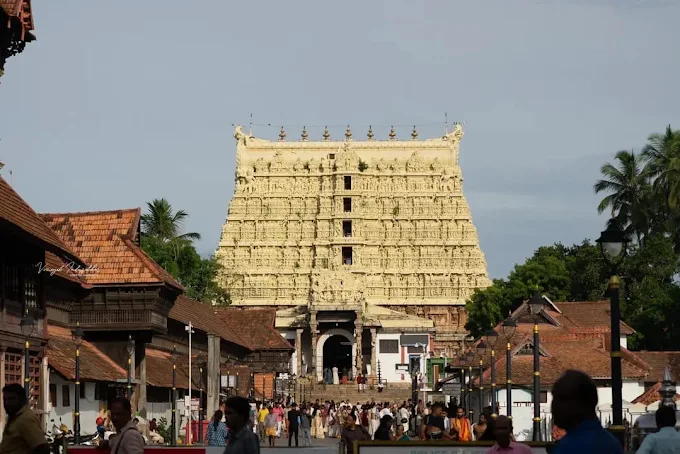
📍 130.36 km away
Stays near Thiruchendur Subramanya Swamy Temple

📍 Near Kurinji Andavar Temple · 206.1 km
stayStarting from ₹2,000 / night
Discover more temples you may be interested in
You may also like these temples