☰
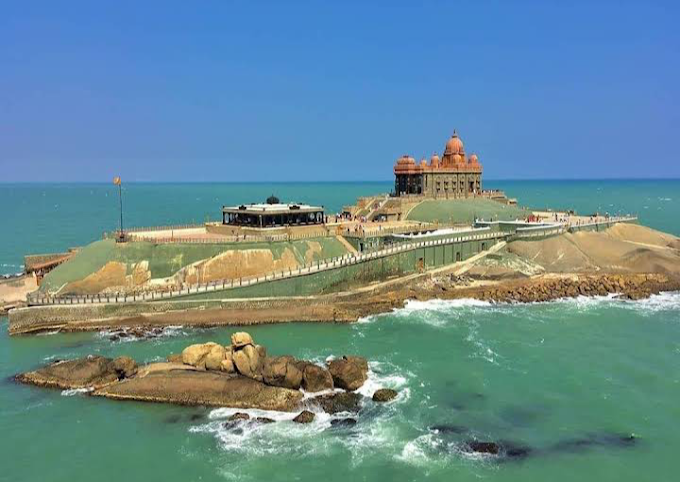
🛕 Lord Devi | 📍 Kanyakumari, Kanyakumari, Tamil Nadu
The Kanyakumari Bhagavathy Amman Temple, venerated as the Sravani (or Sharvani) Shakti Peetha, occupies a spiritually singular geography at the southernmost tip of mainland India, where the Indian Ocean, Arabian Sea, and Bay of Bengal converge at the sacred Triveni Sangam. According to classical Shakta tradition and texts such as the Tantra Chudamani, this holy site marks the spot where the back (prishtha) or spine of Goddess Sati fell following her self-immolation and Lord Shiva's cosmic dance of grief. The presiding deity is worshipped here as Devi Kanya Kumari, the eternal virgin goddess (Bala Bhadra / Bhagavathy), who embodies relentless penance, supreme austerity, and sovereign cosmic energy (tapasya and brahmacharya). Renowned worldwide for her mesmerizing blue-granite idol facing east with a radiant diamond nose-ring—whose blinding brilliance was historically said to have guided or bewildered navigators at sea—the deity stands with a rosary (akshamala) in her hand, perpetual in her meditative prayer. Over millennia, Kanyakumari has remained a focal point of India's spiritual quest, where ancient rishis, Adi Shankaracharya, and modern seekers like Swami Vivekananda performed intense contemplation before commencing their spiritual missions.
The temple of Devi Kanyakumari has an antiquity that spans millennia, documented both in indigenous literature and ancient Greco-Roman travelogues. In ancient Sangam literature (such as Silappatikaram and Manimekalai), the southern cape and the virgin deity at the seashore are repeatedly praised as a sacred boundary protecting the land. The 1st-century CE Greek travelogue 'Periplus of the Erythraean Sea' explicitly records the presence of 'Komari' at the southern tip of India, noting a harbor and a temple dedicated to a virgin goddess where pilgrims practiced ritual bathing and celibacy. Epigraphical records attest that the temple received royal patronage across centuries from the Early Pandyas, Medieval Cholas, and the Venad / Travancore royal dynasties. Chola inscriptions dating from the reign of Rajendra Chola I and Kulottunga Chola I record extensive endowments of land and lamps to 'Kanni-Ambal'. The structural architecture visible today—including the stone mandapas, majestic prakarams, and the granite prakaram wall—was largely reconstructed and expanded between the 10th and 17th centuries under the supervision of the Pandya rulers, Vijayanagara viceroys, and particularly the Travancore kings (under whose royal devaswom board the temple was administered prior to the linguistic reorganisation of states). According to Hindu mythology and local sthala purana, the demon king Banasura had secured a cosmic boon making him invincible to all except an unmarried virgin girl. To rid the three worlds of his tyranny, Parvati manifested as the maiden goddess at the shore. When her arranged marriage to Lord Shiva of Suchindram could not take place before daybreak due to divine intervention by Sage Narada, she pledged eternal celibacy, ultimately slaying Banasura on the seashore on Vijaya Dashami day. Today, the shrine is protected and managed under the Hindu Religious and Charitable Endowments (HR&CE) Department of Tamil Nadu.
According to Shakta tradition, as the Shakti Peetha associated with the spinal cord of the Devi, meditating and offering prayers here is traditionally believed to energize the Muladhara and spinal meridians (Sushumna nadi), aiding spiritual seekers in inward awakening.
Devotees traditionally believe that unmarried individuals facing prolonged delays or astrological doshas in marriage find obstacles removed by offering silk sarees, turmeric, and kumkum to the eternal virgin Bhagavathy.
Tradition holds that praying to Devi Kanyakumari, the vanquisher of the demon Banasura, destroys negative influences, anxiety, and fears while restoring supreme moral strength.
Puranic traditions mention that performing ceremonial bathing in the Alaivai/Sangili Theertham (the holy ocean confluence) washed clean even ancient transgressions, granting spiritual purification and ancestral peace.
Traditional ritual bathing seva performed to the deity with milk, panchamritam, and holy water amidst Vedic chants.
Anointment of fragrant sandalwood paste across the divine form of the Goddess, symbolizing purity and cooling grace.
Sacred offering and feeding of young maiden girls as living representations of the Virgin Goddess.
Chanting of divine Sahasranama and sacred names with flower offerings performed for the welfare of the devotee.
Traditional sweet jaggery-rice preparation prepared according to coastal temple recipes and offered to Bhagavathy as special naivedyam.
Special ceremonial adornment of the goddess with classical gold ornaments and jewels following morning or evening pooja.
No festivals available.
📍 12.73 km away
📍 39.70 km away
📍 47.35 km away
📍 72.99 km away
📍 74.40 km away
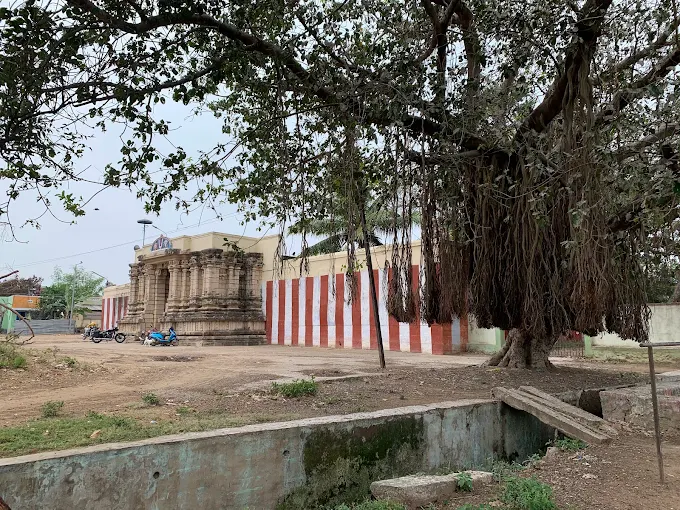
📍 75.17 km away
Stays near Kanyakumari Sravani Shakti Peetha

📍 Near Kurinji Andavar Temple · 240.3 km
stayStarting from ₹2,000 / night
Discover more temples you may be interested in
You may also like these temples