☰
🛕 Lord Devi | 📍 Mysuru, Mysuru, Karnataka
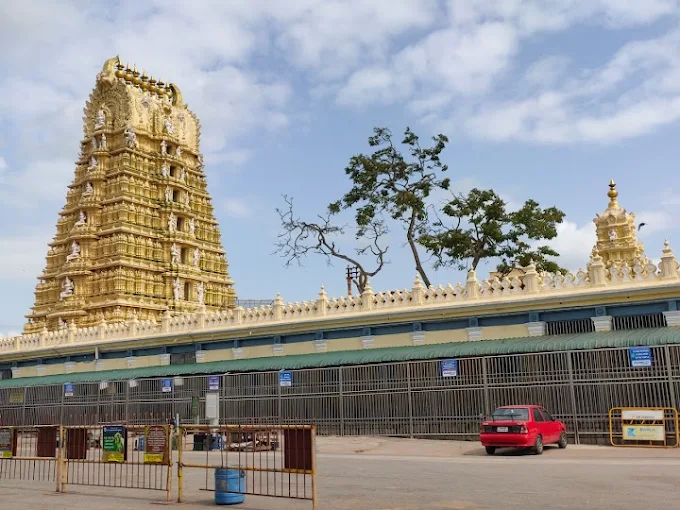
Sri Chamundeshwari Devi Temple, perched atop the scenic Chamundi Hills at an altitude of approximately 1,065 meters (3,489 feet) above sea level, is one of the most prominent Shakti shrines in Southern India. Dedicated to Goddess Chamundeshwari—a ferocious manifestation of Goddess Durga or Shakti—the temple holds exceptional religious, cultural, and royal significance in Karnataka.
According to Hindu sacred tradition, this hilltop is the revered ground where the Goddess vanquished the tyrannical buffalo-headed demon king Mahishasura after an epic battle, thereby protecting the world from adharma. The city of Mysuru derives its historical name 'Mahishooru' (later anglicized to Mysore) directly from this event. In Shakta theology, the temple is traditionally revered as one of the 18 Maha Shakti Peethas (known as Krouncha Peetham), believed to be the holy place where the hair (Kesha) of Devi Sati fell during Shiva's cosmic grief.
Goddess Chamundeshwari is venerated as the 'Nada Devathe' (the guardian State Deity of Karnataka) and was the tutelary family deity (Kuladevata) of the erstwhile Maharajas of Mysore, the Wodeyar dynasty. The temple serves as the spiritual epicenter of the grand Mysuru Dasara festival; on Vijayadashami day, an idol of the Goddess is placed inside a 750-kilogram pure gold howdah (golden ambari) atop a decorated tusker elephant and taken in a majestic procession through the streets of Mysuru, witnessed by pilgrims and visitors from across the globe.
The history of the Chamundeshwari Temple encompasses a blend of ancient dynastic heritage and royal Wodeyar patronage spanning over eight centuries.
1. Early Period & Hoysala Era: Epigraphical records demonstrate that Chamundi Hill (historically called Mahabaladri or Mabbala Theertha) was a revered sacred site prior to the 12th century. The earliest stone temple on the hill is the adjacent Sri Mahabaleshwara Temple, where stone inscriptions record land and monetary grants by Hoysala King Vishnuvardhana dating to 1128 CE. A smaller primary shrine dedicated to Goddess Chamundeshwari is believed to have been established during this Hoysala period.
2. Vijayanagara Influence: With the expansion of the Vijayanagara Empire across Southern Karnataka in the 15th and 16th centuries, the hilltop shrine received extended patronage and structural improvements, enhancing its standing as a major regional pilgrimage site.
3. Wodeyar Dynasty Patronage: When the Wodeyar rulers established the Kingdom of Mysore in 1399 CE, they adopted Goddess Chamundeshwari as their guardian deity. In 1659 CE, Maharaja Dodda Devaraja Wodeyar commissioned the construction of 1,000 stone steps ascending the hill, making it accessible to walking pilgrims. During the same period, he commissioned the monolithic Nandi bull carved out of a single black granite boulder at roughly the 700th step. Standing 16 feet high and 25 feet wide, adorned with carved bells and garlands, it remains one of the largest Nandi monoliths in India.
4. 19th-Century Expansion: The temple attained its current grandeur during the reign of Maharaja Mummadi Krishnaraja Wodeyar (Krishnaraja Wodeyar III). In 1827 CE, he extensively renovated the sanctum, commissioned the imposing seven-tiered Dravidian-style Rajagopuram crowned with seven golden finials (kalashas), and established ritual endowments. He also gifted the sacred lion vehicle (Simhavahana) in 1843 CE and installed statues of himself and his three queens inside the sanctum precincts.
5. Modern Administration: Today, the temple is administered by the Sri Chamundeshwari Temple Development Authority under the Hindu Religious Institutions and Charitable Endowments (Muzrai) Department of the Government of Karnataka.
Devotees traditionally worship Goddess Chamundeshwari seeking divine courage, fortitude, and victory over chronic life hardships, inspired by her mythological victory over the demon Mahishasura.
In traditional Shakta belief, praying to Devi Chamundeshwari is thought to offer powerful psychic protection against malefic influences, drishti (evil eye), fear, and negative energies.
According to traditional Vedic astrological customs, participating in Kumkumarchana and Abhisheka at this Shakti Peetha helps alleviate adverse planetary influences, particularly Rahu, Ketu, and Mars doshas.
Pilgrims devoutly offer sarees and archana for the well-being of their families, seeking the divine mother's blessings for good health, abundance, and domestic peace.
The sacred ambiance of Chamundi Hill inspires inner purification, helping seekers cultivate emotional balance, spiritual focus, and mental calm through genuine surrender.
Special sacred bath performed to the Goddess using the five holy nectars—milk, curd, honey, ghee, and sugar—accompanied by Vedic chanting.
Special single-cycle Rudrabhisheka seva conducted in the inner sanctum with consecrated waters and archana.
Elaborate eleven-cycle sacred abhisheka performed by the temple priests for special blessings and removal of obstacles.
Traditional offering where devotees submit a pure silk saree (minimum 6 meters with intact blouse piece) five days in advance to adorn the Goddess on a scheduled date.
Evening ritual seva where the utsava murti of Goddess Chamundeshwari is seated on an intricately decorated silver chariot and pulled around the temple prakara by devotees.
No festivals available.
📍 137.01 km away
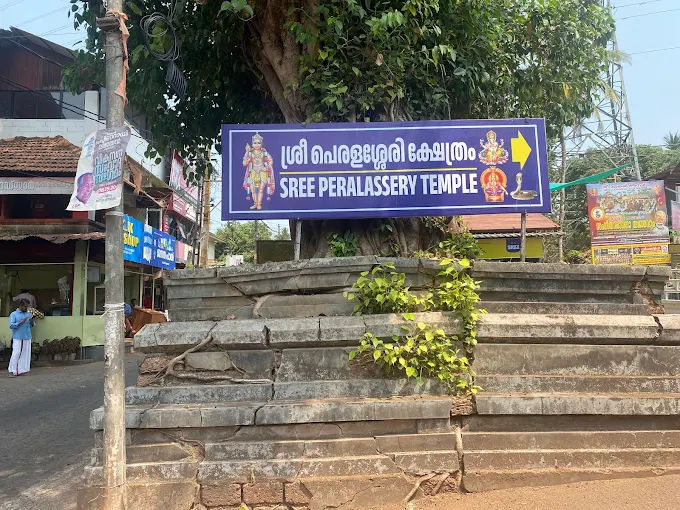
📍 137.81 km away
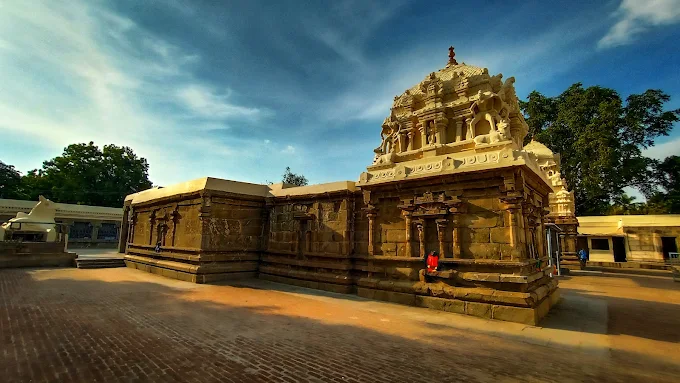
📍 141.64 km away
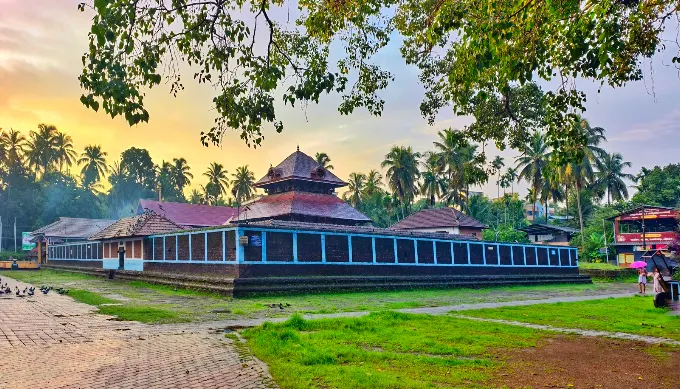
📍 144.09 km away
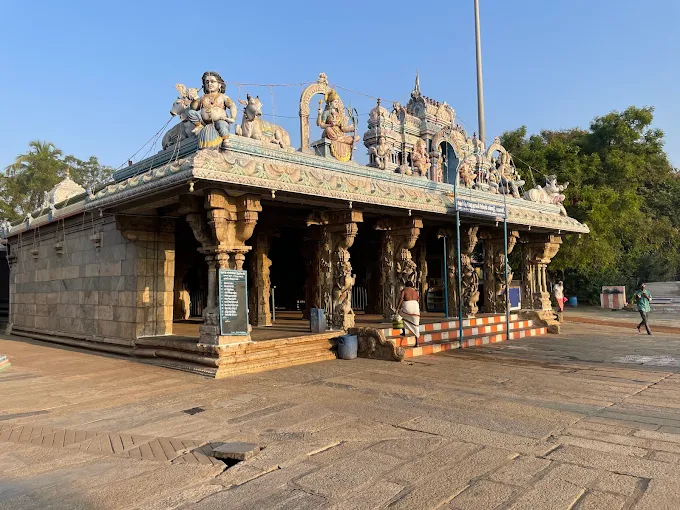
📍 144.24 km away
📍 152.52 km away
Stays near Mysuru Chamundeshwari Devi Temple

📍 Near Kurinji Andavar Temple · 243.0 km
stayStarting from ₹2,000 / night
Discover more temples you may be interested in
You may also like these temples