☰
🛕 Lord Devi | 📍 Amarkantak region, Anuppur, Madhya Pradesh
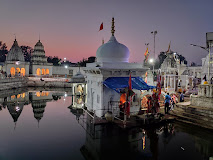
Kalmadhav Shakti Peetha, situated in the holy hill town of Amarkantak in the Anuppur district of Madhya Pradesh, is revered in Shakta tradition as one of the 51 sacred Shakti Peethas. According to traditional belief and texts such as the Tantra Chudamani, this holy site marks the spot where the left buttock (vama nitamba) of Goddess Sati fell after her mortal remains were severed by Lord Vishnu's Sudarshan Chakra to pacify the cosmic sorrow and destructive fury of Lord Shiva following the Daksha Yajna. At this sanctified shrine, the Divine Mother is venerated as Devi Kali (also addressed as Kalmadhava or Kalmadhavi), embodying primordial energy, spiritual transformation, and liberation from worldly delusion, while Lord Shiva is worshipped as Bhairava Asitanga (the dark-limbed guardian deity).
Amarkantak holds an exceptional place in Hindu sacred geography, famously titled 'Teerthraj' (the King of Pilgrimages), where the Vindhya and Satpura mountain ranges meet amid the dense sal forests of the Maikal hills. It is uniquely blessed as the source of two great sacred rivers: the Narmada, which flows westward, and the Son (Shone), which flows eastward. Regional pilgrimage tradition often links Amarkantak to two complementary Shakti Peethas located in close proximity—the Shondesh/Narmada Udgam Peetha (associated with Sati's right buttock) and Kalmadhav (associated with her left buttock, traditionally connected to the rugged cliffs and springs near Sonmuda where the Son river takes birth). Devotees believe that undertaking pilgrimage to Kalmadhav and performing circumambulation and prayers here confers profound spiritual strength, dispels negative energies and fear of mortality, and cleanses accumulated karmic impurities.
The history of Kalmadhav Shakti Peetha and the sacred plateau of Amarkantak encompasses a rich interplay of ancient scriptural lore and documented archaeological heritage. In Puranic tradition, Amarkantak is glorified as an eternal abode of divine tapasya, visited by revered sages such as Bhrigu, Vyasa, and Kapila. Popular local legends ascribe mythological antiquity to the shrines here, claiming lineages that date back to ancient solar dynasty rulers like Emperor Mandhata; however, such claims belong to sacred devotion and folklore rather than chronologically verifiable history.
From a historically documented standpoint, the architectural and cultural prominence of Amarkantak blossomed between the 10th and 12th centuries CE under the reign of the Kalachuri dynasty of Tripuri (modern Tewar near Jabalpur). Illustrious Kalachuri monarchs, notably King Karna (Lakshmikarna, r. 1041–1073 CE), were ardent Shaivite and Shakta patrons who commissioned numerous intricately carved sandstone temples across the Amarkantak valley. These shrines reflect the mature Nagara and Kalachuri architectural traditions, characterized by sanctum-towers (shikharas), sculpted niches depicting matrikas and river goddesses, and monumental mandapas.
In subsequent centuries, the region came under the stewardship of the Baghel kings of Rewa and later the Bhonsle Maratha rulers of Nagpur, who constructed stone tanks, protective boundaries, and pavillions around the sacred river sources and Devi shrines. During the 18th century, the revered Maratha queen Maharani Ahilyabai Holkar of Indore contributed significantly to the preservation and renovation of temples and pilgrim facilities throughout the Amarkantak pilgrimage circuit. Today, the temples of Amarkantak are protected and maintained through collaborations involving local temple trusts, the Archaeological Survey of India (for designated Kalachuri monuments), and the Madhya Pradesh state administration.
Devotees traditionally worship Maa Kali at this Peetha to overcome irrational fears, anxiety, and perceived malefic influences, seeking her fierce protective mantle.
Pilgrims believe that offering sincere prayers and aartis at this consecrated Shakti Peetha brings auspicious blessings that help fulfill righteous desires and intentions.
Performing abhishekam to Bhairava Asitanga and archana to Devi Kali is believed in regional tradition to alleviate severe planetary adversities, including Saturn and Rahu afflictions.
Taking a sacred dip in the origin waters of Amarkantak followed by darshan at Kalmadhav is regarded in Hindu tradition as a powerful means to cleanse accumulated karmic impurities.
Being situated in Teerthraj Amarkantak, contemplation at this Peetha is traditionally believed to aid spiritual seekers in dismantling ego and advancing along the path of liberation.
A sacred Vedic ritual involving ceremonial bathing of the Shiva Lingam (Bhairava Asitanga) with milk, honey, curd, and holy river waters accompanied by chanting of the Sri Rudram. Priests perform it on behalf of devotees; dakshina is discretionary unless booked via special seva counters.
Elaborate recitations of the Devi Mahatmyam (Durga Saptashati) conducted especially during Chaitra and Sharad Navratri, culminated by an oblation ritual (hawan) for community welfare and spiritual protection.
A traditional Shakta practice performed predominantly during the Navratri festival, where young girls representing manifestations of the Divine Mother are ceremonially venerated, offered clothing, prasad, and gifts.
A special worship offering of one thousand sacred names and Bilva/kumkum leaves to invoke the divine blessings of Mother Narmada and the supreme Shakti at the Amarkantak holy confluence.
An annual eight-day fair organized in Amarkantak surrounding the festival of Mahashivratri. Devotees assemble across the sacred temple complexes and kunds of Amarkantak to worship...
Celebrated annually on Shukla Paksha Saptami in the Hindu month of Magha, this festival commemorates the appearance of the Narmada River at its holy source in Amarkantak. Conducted...
A traditional annual religious fair and holy bathing event held on Makar Sankranti. Marking the transition of the sun into Capricorn, large congregations of pilgrims visit the sacr...
Celebrated twice a year during the Chaitra (spring) and Ashwin/Sharad (autumn) lunar cycles, Navratri is a major period of worship at Kalmadhav Shakti Peetha. The nine-day observan...
📍 292.12 km away
📍 305.89 km away

📍 314.53 km away
📍 319.67 km away
📍 319.72 km away
📍 320.62 km away
Stays near Amarkantak Kalmadhav Shakti Peetha

📍 Near Kurinji Andavar Temple · 1,455.2 km
stayStarting from ₹2,000 / night
Discover more temples you may be interested in
You may also like these temples