☰
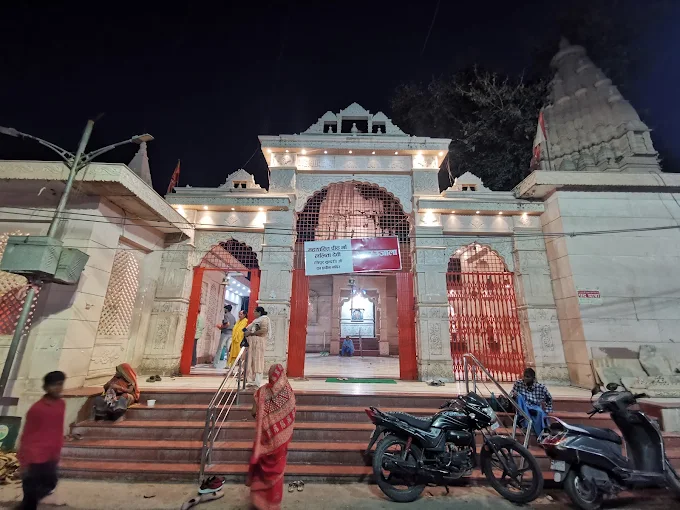
🛕 Lord Devi | 📍 Prayagraj, Prayagraj, Uttar Pradesh
Maa Lalita Devi Temple, situated in the historic Meerapur locality of Prayagraj, Uttar Pradesh, is revered as one of the 51 sacred Shakti Peethas. According to Hindu traditional belief, when Lord Vishnu deployed his Sudarshan Chakra to divide the mortal remains of Goddess Sati—thereby releasing Lord Shiva from his grief-stricken cosmic dance of dissolution (Rudra Tandava)—the fingers of the Goddess's right hand descended at this holy spot. In sacred Shakta tradition, Prayag is hailed as the domain where the Mother resides in her benevolent yet supremely potent form as Maa Lalita (Tripurasundari), with Lord Shiva providing eternal guardianship in the form of Bhairava Bhava (Laliteshwar Mahadev).
Lalita Devi Temple holds a preeminent place in the spiritual landscape of Prayagraj, forming a revered trinity of Shakta shrines in the city alongside Alopi Shankari Devi and Kalyani Devi. A defining theological characteristic of the sanctum is that the divine feminine energy is venerated simultaneously across three cosmic aspects—Maha Kali, Maha Lakshmi, and Maha Saraswati. These are manifested in the inner sanctum as three sacred pindis (stone emblems) adorned with sanctified silver facial masks. Local belief also maintains that the invisible subterranean Saraswati River flows beneath the shrine, touching the feet of the Divine Mother. Completing a pilgrimage to the Triveni Sangam—the confluence of Ganga, Yamuna, and Saraswati—is traditionally held to find its spiritual culmination only when the devotee receives the darshan and blessings of Maa Lalita Devi.
The antiquity of Prayag as a paramount pilgrimage center and Shakti Peetha is documented across ancient Puranic literature, including the Matsya Purana, the Padma Purana, and the Devi Bhagavata Purana, where the city is celebrated as Teerthraj (the King of Pilgrimage Sites) and the abode of Goddess Lalita ('Lalita Prayage'). According to regional sacred tradition, the holy hermitage of Maharishi Bharadwaj was located in Prayagraj, where the sage worshipped Goddess Lalita Devi for spiritual realization. Sacred lore also connects the site to the Treta and Dvapara Yugas, recording that Lord Rama paid homage here during his exile, and later the Pandavas visited during their vanavasa to seek the blessings of the Divine Mother.
From a recorded architectural and historical perspective, the modern temple complex stands in Meerapur on the banks of the Yamuna River, reflecting successive layers of repair and reconstruction undertaken by local patron families and ascetic lineages. The sanctum's superstructure and surrounding layout are conceived around the geometric principles of the sacred Sri Yantra, rising to an imposing height of approximately 108 feet. A major renovation and structural refurbishment of the mandir was carried out in 1987, modernizing the circumambulatory corridors and auxiliary shrines while preserving the ancient core.
Beyond the central sanctum housing the three sacred pindis of the Goddess, the temple precinct encompasses several associated shrines, notably a dedicated sanctum for Laliteshwar Mahadev featuring a rare mercury (parad) Shiva Linga, alongside pavilions dedicated to Sankat Mochan Hanuman, Shri Ram Darbar, Radha Krishna, and the Navagrahas. It is important to distinguish this Meerapur shrine from another revered Lalita Devi Shakti Peetha in Uttar Pradesh situated at Naimisharanya (Sitapur district), as well as from the local Alopi Shankari temple in Prayagraj, which has its own distinct traditions.
Devotees traditionally believe that sincere prayers to Maa Lalita Devi, the sovereign mother of compassion and beauty, fulfill heartfelt worldly and spiritual desires.
Worship of the combined shaktis of Mahakali, Mahalakshmi, and Mahasaraswati is believed to shield devotees from unforeseen dangers, negative energies, and long-standing distress.
Because the deity embodies Saraswati and higher spiritual knowledge, students and seekers visit the shrine to pray for intellect, clarity of thought, and mastery in learning.
Pilgrims hold the devotional conviction that worshipping at this Shakti Peetha after taking a holy bath at the Triveni Sangam cleanses sins and earns profound spiritual merit.
The presence of dedicated shrines for Laliteshwar Mahadev and the Navagrahas within the temple precinct provides traditional remedies for astrological doshas and planetary imbalances.
Elaborate Vedic havan and recitation of the Durga Saptashati performed during the nine nights of Navratri for peace, protection, and prosperity; scheduled through the temple priests.
Special sacred chanting of the 1,000 names of Goddess Lalita accompanied by vermilion (kumkum) offerings, performed especially on Fridays and during auspicious tithis.
Special adornment rituals of the three sanctum pindis in the distinctive alankaras of the Navadurga over the nine days of Chaitra and Sharad Navratri.
Ceremonial bathing of the consecrated parad (mercury) Shiva Linga with panchamrita, sacred water, and bilva leaves, performed especially on Mondays and during Shravan.
No festivals available.
📍 100.28 km away

📍 118.15 km away
📍 119.46 km away
📍 119.59 km away

📍 119.63 km away
📍 119.90 km away
Stays near Prayagraj Lalita Devi Shakti Peetha

📍 Near Kurinji Andavar Temple · 1,749.2 km
stayStarting from ₹2,000 / night
Discover more temples you may be interested in
You may also like these temples