☰
🛕 Lord Shiva | 📍 Varanasi, Varanasi, Uttar Pradesh
Kaal Bhairav Temple, situated in the Visheshwarganj locality of Varanasi (Uttar Pradesh), is revered as one of the most sacred and formidable shrines of Lord Shiva in India. Lord Kaal Bhairav is honored across Hindu tradition as the 'Kotwal of Kashi'—the supreme judicial magistrate, divine police chief, and eternal guardian of the holy city. According to timeless Kashi lore, Lord Vishwanath entrusted the governance, security, and spiritual maintenance of Kashi to Kaal Bhairav. Consequently, traditional pilgrimage protocol dictates that no spiritual journey to Varanasi is deemed complete without visiting Kaal Bhairav first to register one's presence ('Haziri') and seek divine sanction to reside in or depart from the city.
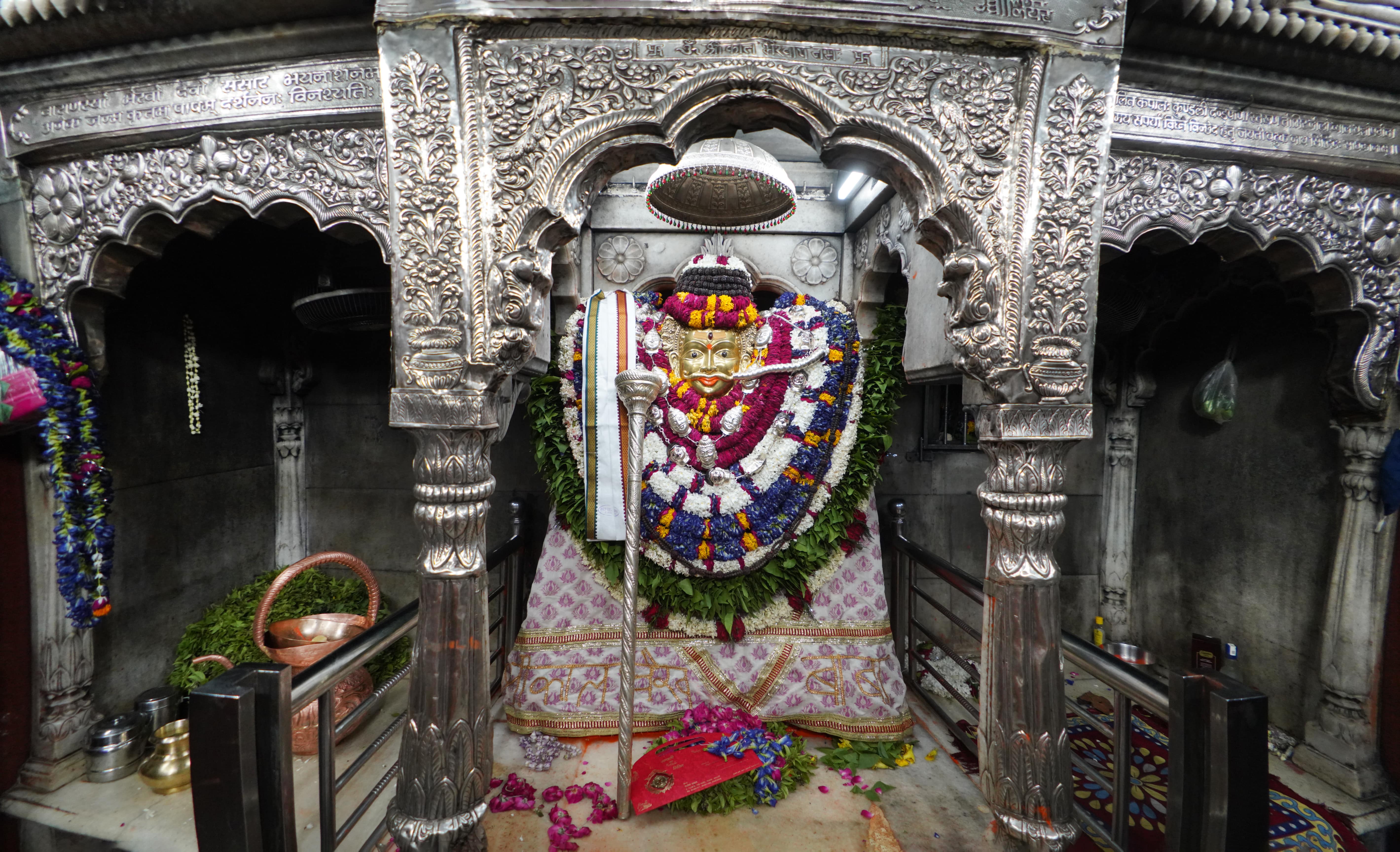
The sanctum enshrines an iconic representation of the deity whose fierce full form remains covered under ornate brocade fabrics, revealing only a silver-coated face adorned with garlands of fresh marigold and hibiscus. The deity holds a trident ('trishul') and is traditionally depicted seated upon his vahana (a dog). The theological significance of Kaal Bhairav addresses the twin dimensions of 'Kaal'—signifying both inexorable Time and Death. The deity personifies the dissolution of ego, worldly illusions, and spiritual lethargy. In Shakta and Shaiva metaphysics, the shrine also acts as the protector (Kshetrapala) of the Kashi Vishalakshi and Manikarnika Shakti Peetha traditions. A unique traditional belief associated with the shrine is 'Bhairavi Yatana'—the understanding that souls leaving their bodies in Kashi have their remaining karmic debits resolved through Bhairava’s stern gaze before Lord Shiva bestows ultimate liberation ('Tarak Mantra' and 'Moksha'). Devotees flock to the shrine to seek protection from malefic planetary influences (especially Saturn and Rahu), ancestral afflictions, malevolent energies, and premature death.
The history of the Kaal Bhairav Temple operates across two distinct domains: ancient Puranic theology and recorded medieval architectural developments. Scripturally, the temple traces its origin to the Kashi Khanda of the Skanda Purana, the Shiva Purana, and the Kurma Purana. According to legend, a contest of supremacy arose between Brahma and Vishnu, wherein Brahma claimed ultimate lordship over the cosmos with his fifth head uttering boastful remarks. In response, Lord Shiva manifested the fierce being Kaal Bhairav from his brow to humble Brahma's ego. Bhairava severed Brahma's fifth head with the nail of his left thumb. However, because decapitating Brahma incurred the terrible sin of 'Brahmahatya' (killing a creator/Brahmin), the severed skull adhered permanently to Bhairava's hand.
As a wandering ascetic carrying the skull (a Kapalika penance), Bhairava traveled across the three worlds, yet the skull remained attached. It was only when he crossed into the sacred threshold of Varanasi that the sin of Brahmahatya dissipated, and the skull detached and fell to the earth. This sacred spot was commemorated as 'Kapal Mochan Tirtha'. Enraptured by the sanctity of Kashi, Lord Shiva commanded Bhairava to reside permanently in the city as its guardian magistrate ('Kotwal') to absolve sins, punish transgressors, and grant spiritual clearance to all seekers.
From an architectural and recorded historical perspective, the original ancient shrines in the northern sector of Varanasi were subjected to widespread destruction during the military campaigns of the Delhi Sultanate (particularly under the Ghurids in the late 12th century) and subsequent Mughal rule. The present brick-and-stone temple complex was reconstructed around the mid-17th century CE. Historical records attribute its revival to the Maratha resurgence, which actively renovated and rebuilt sacred Shaiva sites across Varanasi. The temple displays quintessential late-medieval north Indian temple architecture with a modest rectangular hall, a heavily decorated sanctum door, intricate stone carvings, and surrounding sub-shrines dedicated to Kshetrapal Bhairav, Lord Ganesha, and the Nine Planets (Navagrahas).
Devotees traditionally worship Kaal Bhairav to conquer chronic phobias, internal anxiety, and psychological distress, believing the Lord bestows unshakeable courage.
According to devotional belief, the sanctified black thread (Bhairav Kavach) and mustard oil lamp offerings shield individuals and families from occult afflictions, black magic, and malicious glances.
Traditional Vedic astrology holds that propitiating Kaal Bhairav pacifies adverse planetary transit effects, particularly of Shani (Saturn), Rahu, and Ketu.
Puranic lore asserts that standing before the Kotwal of Kashi cleanses spiritual impurities, cuts through intellectual pride, and accelerates spiritual progress toward liberation.
Traditional custom requires seeking Kaal Bhairav's grace as the city's divine guardian, ensuring safe travel, successful completion of the pilgrimage, and divine patronage.
Devotees light earthen lamps filled with pure mustard oil outside the inner sanctum to dispel dark energies, eliminate fear, and appease Saturnine astrological influences.
A consecrated sacred black thread blessed at the deity's lotus feet is tied on the wrist or around the neck by the temple priest to serve as a lifelong protective talisman against the evil eye.
A traditional ritual where temple priests gently sweep devotees with a blessed whisk of peacock feathers accompanied by secret Bhairava protection mantras to banish spiritual lethargy and afflictions.
A special offering booked directly with temple priests for elaborate floral decoration, silver crown ornament adornment, and bespoke archana on special days like Sundays, Tuesdays, and Ashtami.
The annual Him Shringar is an adornment ritual held in the inner sanctum during the holy month of Shravan (Sawan). Priests arrange large blocks of ice around the deity to replicate...
Hariyali Shringar is an annual monsoon floral adornment festival celebrated in the Bhadrapada/Shravan season. The deity and inner sanctum of Kaal Bhairav Temple are elaborately dec...
Annakut Mahotsav is celebrated on the day after Diwali (Kartik Shukla Pratipada) at Kaal Bhairav Temple in Varanasi. On this day, the deity is adorned in special festive Shringar,...
Kaal Bhairav Jayanti marks the appearance day of Kaal Bhairav, the fierce manifestation of Lord Shiva reverenced as the 'Kotwal' (guardian commander) of Varanasi. According to regi...

📍 0.39 km away
📍 0.92 km away
📍 0.95 km away

📍 6.09 km away
📍 119.90 km away

📍 183.69 km away
Stays near Kaal Bhairav Temple, Varanasi

📍 Near Kurinji Andavar Temple · 1,775.0 km
stayStarting from ₹2,000 / night
Discover more temples you may be interested in
You may also like these temples