☰
🛕 Lord Shiva | 📍 Thirukovilur / Tirukoilur, Kallakurichi, Tamil Nadu
Veerateeswarar Temple at Thirukovilur is one of the important Shiva temples of the historic Nadunadu region of Tamil Nadu. The temple is particularly significant because it belongs to the Ashta Veeratta Sthalas, the group of eight sacred Shiva temples traditionally associated with eight celebrated acts of divine valor. At Thirukovilur, the tradition connects Shiva's heroic manifestation with the destruction of Andhakasura, the demon associated with darkness and ignorance. The Kallakurichi District Administration identifies this shrine as one of the eight Veeratta temples and as the 11th Shiva temple of Nadunadu praised in Thevaram hymns.
The presiding deity is worshipped as Veerateeswarar, while the Goddess is known as Periyanayagi and Shivanandavalli. The festival form is identified by the district administration as Anthakashuvatha Moorthy, reflecting the temple's connection with the Andhakasura episode. The shrine stands on the southern side of the Thenpennai River, giving the temple an important riverside setting within the historic town of Thirukovilur.
The temple has a particularly strong connection with Tamil Saiva devotional literature. Tirugnana Sambandar, Appar and Sundarar are associated with Thevaram hymns praising the Lord here. This places Veerateeswarar Temple within the important network of Paadal Petra Sthalams, making it significant not only as a place of worship but also as part of the literary and pilgrimage heritage of Tamil Shaivism.
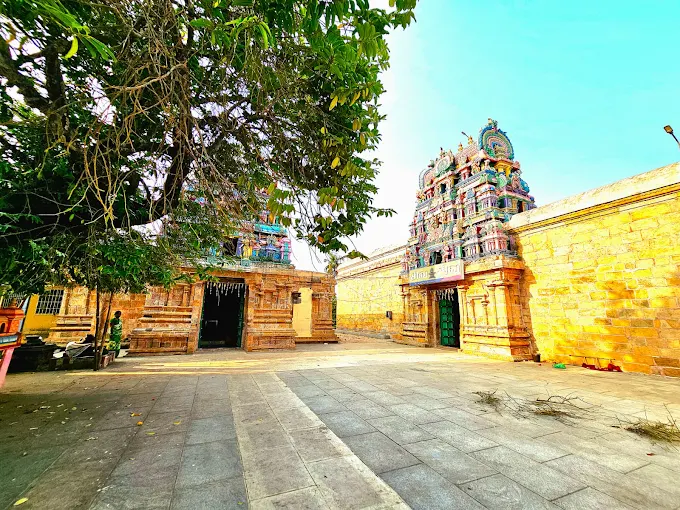
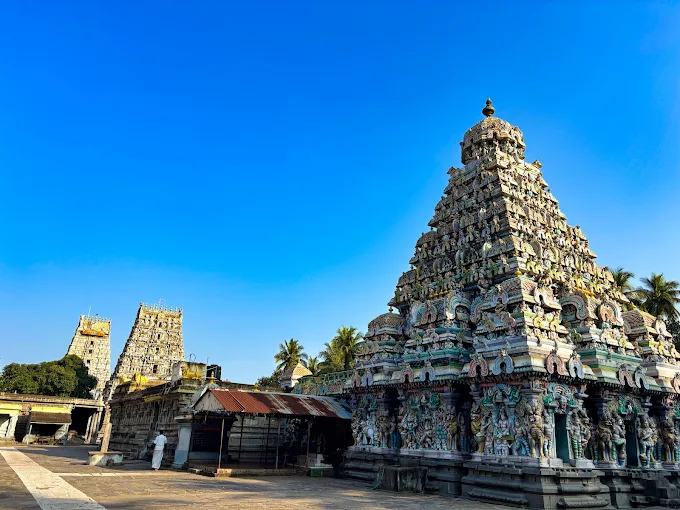
The temple complex reflects traditional Dravidian temple planning. It is enclosed by substantial granite walls and contains separate sacred spaces associated with Veerateeswarar and Periyanayagi. The temple is noted for its two three-tiered Rajagopurams, along with shrines and images associated with Vinayaka, Murugan, Durga, Dakshinamurthy, Chandikeswara, Nataraja, Somaskanda and Andhakasura Murthy.
The spiritual symbolism of the temple is especially connected with the overcoming of ignorance. The name Andhaka is interpreted in the local temple tradition as darkness, while the destruction of Andhakasura represents the removal of darkness and the movement toward spiritual knowledge. The district administration's account also associates the episode with the manifestation of 64 Bhairavas and the protection of the sacred space.
For pilgrims, Veerateeswarar Temple can therefore be understood through three interconnected identities: an Ashta Veeratta Sthalam, a Thevaram Paadal Petra Shiva temple, and an important sacred centre on the banks of the Thenpennai River. These layers make Thirukovilur particularly valuable for devotees undertaking a Nadunadu Shiva pilgrimage or planning an Ashta Veeratta Sthalam circuit.
The sacred identity of Thirukovilur is considerably older than the present temple structures. The Kallakurichi District Administration records the historical names of the place as Anthakapuram and Thirukkaivelur, reflecting the area's long association with the Veerateeswarar shrine and the Andhakasura tradition. The temple is situated in the historic town of Thirukovilur beside the Thenpennai River.
The earliest layer of the temple's religious history is preserved through the Thevaram tradition. Tirugnana Sambandar, Appar and Sundarar are associated with hymns praising Veerateeswarar. Because of this devotional connection, the temple became part of the sacred network of Paadal Petra Sthalams. The survival of these hymns gives the shrine a documented place in the medieval Tamil Saiva devotional tradition, independent of later architectural developments.
The principal sthala-purana is centred on Andhakasura. According to the temple tradition, Parvathi once playfully covered Shiva's eyes, representing the Sun and Moon, and the resulting darkness took the form of a demon. This being became known as Andhaka. Shiva fought Andhaka and struck him with a club. Because every drop of the demon's blood was believed to generate another demon, Parvathi collected the blood while Shiva created 64 Bhairavas to prevent further multiplication. The district administration presents this episode as the origin of the temple's association with Andhakasura and also interprets it symbolically as the destruction of ignorance.
The existing temple complex displays the characteristics of traditional South Indian Dravidian architecture. Sources describe substantial granite enclosure walls and two parallel sacred structures, each associated with a three-tiered Rajagopuram. The Veerateeswarar shrine has an ardha-mandapa and mukha-mandapa leading toward the sanctum, while the Periyanayagi shrine has its own associated sacred enclosure. The complex also contains several subsidiary shrines and images connected with Shaiva worship.
Some secondary sources describe the present masonry temple as having Chola-period origins, traditionally placing its construction around the 10th century. This dating should be treated as a traditional or secondary-source attribution rather than as a definitive archaeological construction date unless supported by a specific inscriptional study. The important point for the MandirVaas record is that the temple's religious history clearly predates many of its later architectural layers, with its Thevaram association providing an important historical link to medieval Tamil Shaivism.
The temple's historical importance continued through its worship traditions, festivals and maintenance as a living shrine. Major observances include Maasi Magam, Karthigai Somavaram and the Manickavasagar festival, along with Shivaratri, Karthigai Deepam and other Shaiva festivals. The temple continues to function as a place of worship and pilgrimage within Thirukovilur.
Today, Veerateeswarar Temple represents the meeting of Tamil devotional literature, local sacred tradition, riverside geography and Dravidian temple architecture. Its identity as an Ashta Veeratta Sthalam gives it a distinct place within Shiva pilgrimage circuits, while the hymns of Sambandar, Appar and Sundarar connect the shrine to the wider sacred landscape of Tamil Nadu.
No daily poojas available.
No special rituals available currently.
No festivals available.
📍 22.49 km away
📍 31.28 km away
📍 31.87 km away
📍 48.88 km away

📍 81.37 km away
📍 82.52 km away
Stays near Sri Veerateeswarar Temple, Thirukovilur

📍 Near Kurinji Andavar Temple · 269.0 km
stayStarting from ₹2,000 / night
Discover more temples you may be interested in
You may also like these temples