☰
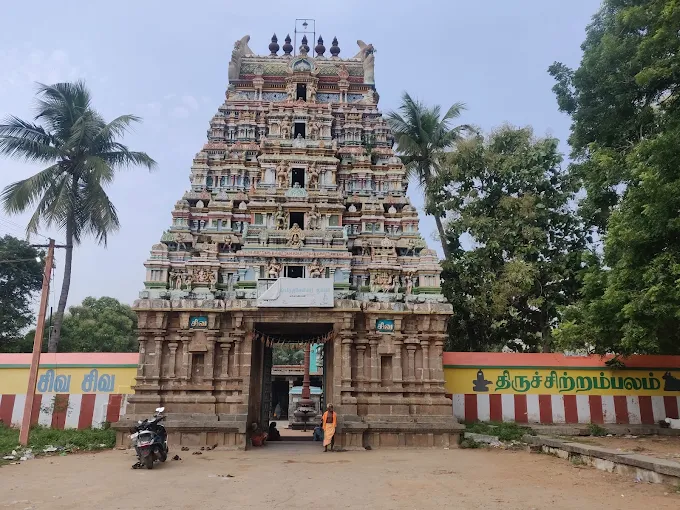
🛕 Lord Shiva | 📍 Thirunavalur, Kallakurichi, Tamil Nadu
Sri Bhakthajaneswarar Temple at Thirunavalur is one of the important ancient Shiva temples of Tamil Nadu and one of the 276 Paadal Petra Sthalams revered in the Tamil Shaiva canon. The presiding deity is Lord Shiva, worshipped as Bhakthajaneswarar, with the additional names Thirunavaleeswarar and Jambunatheswarar. The Goddess is worshipped as Manonmani Amman, also associated with the names Sundaranayaki and Navalambikai in temple tradition.
The temple's greatest historical and devotional distinction is its close association with Sundaramurthy Nayanar, or Sundarar, one of the 63 Nayanmars. Thirunavalur is traditionally regarded as Sundarar's birthplace, making the temple and the surrounding sacred landscape especially important in the history of Tamil Shaivism. Sundarar praised Bhakthajaneswarar in Thevaram hymns, and the temple is therefore part of the sacred pilgrimage network of the 276 Thevaram temples. A shrine depicting Sundarar with his two consorts is also found within the temple complex.
The name Thirunavalur is traditionally connected with the sacred Naaval/Jambu tree. Temple tradition describes Shiva as having manifested in a sacred grove of Naaval trees, giving the place its identity. The Naaval tree is regarded as the temple's Sthala Vriksham. This traditional account should be understood as part of the temple's religious heritage rather than as an independently established historical event.
One of the unusual features of this temple is its combination of Shaiva and Vaishnava imagery. A separate shrine for Ranganatha is present within the second precinct. Temple tradition also connects the shrine with a story in which Vishnu worshipped Shiva before assuming the Narasimha form to defeat Hiranyakashipu. This is a sacred legend rather than a historically documented event.
The temple has several distinctive sculptural and ritual features. Sources describe a standing form of Dakshinamurthy, which is an unusual iconographic feature, along with shrines for Vinayaka, Murugan, Durga, Chandikeswara and the Navagrahas. The complex also contains a shrine for the 63 Nayanmars and other traditional Shaiva images.
The temple is also associated in local tradition with Sukra/Venus worship and prayers connected with marriage and family harmony. Temple traditions say that Sukra worshipped Shiva here, and devotees therefore visit the temple for Sukra-related parihara worship. Such parihara beliefs belong to Hindu religious tradition and should not be presented as scientifically established effects.
Another remarkable feature is the temple's solar alignment. During several days in March, sunlight is traditionally reported to fall directly upon the Shiva Lingam in the sanctum. This creates a distinctive example of the relationship between temple orientation, seasonal sunlight and ritual architecture.
The temple's annual celebrations include Sundarar Janana festival during Aavani, Sundarar Guru Pooja during Aadi, and the Chithirai temple-car festival. These festivals preserve the strong connection between Thirunavalur and the life and devotional legacy of Sundarar.
The history of Bhakthajaneswarar Temple at Thirunavalur extends across several layers of Tamil religious and architectural history. The sacred site is traditionally associated with the ancient name Thirunavalur and with the Jambu or Naaval tree. Temple tradition holds that Shiva manifested in a sacred Naaval grove, giving rise to the name of the place. Such accounts belong to the temple's Sthala Purana and devotional tradition and should be distinguished from archaeological evidence.
The temple's strongest historical connection is with Sundaramurthy Nayanar, one of the 63 Nayanmars and one of the principal Tamil Shaiva poet-saints. Thirunavalur is traditionally identified as Sundarar's birthplace. His parents, Sadayanar and Isaignaniyar, are associated with the local Shaiva tradition, and Sundarar's hymns to Bhakthajaneswarar place the temple within the canonical Thevaram tradition. The temple is therefore counted among the 276 Paadal Petra Sthalams.
The historical inscriptions provide evidence for the temple's importance during the medieval period. Records associated with the reign of Parantaka Chola I mention temples that existed at Thirunavalur, including a shrine identified with Rajaditta Isvarattu Mahadevar, which is associated with the present Bhakthajaneswarar temple. Inscriptions also indicate that an earlier brick-built structure was subsequently converted or developed into a stone temple.
The temple complex contains inscriptions and architectural elements associated with successive periods of Chola history. Records are also connected with Rashtrakuta Krishna III, whose conflict with the Cholas is linked to the historical episode surrounding the death of Rajaditya at the Battle of Takkolam. Later inscriptions from the reigns of Rajaraja Chola I, Kulothunga Chola I and Rajendra Chola III further demonstrate the continuing importance of the site.
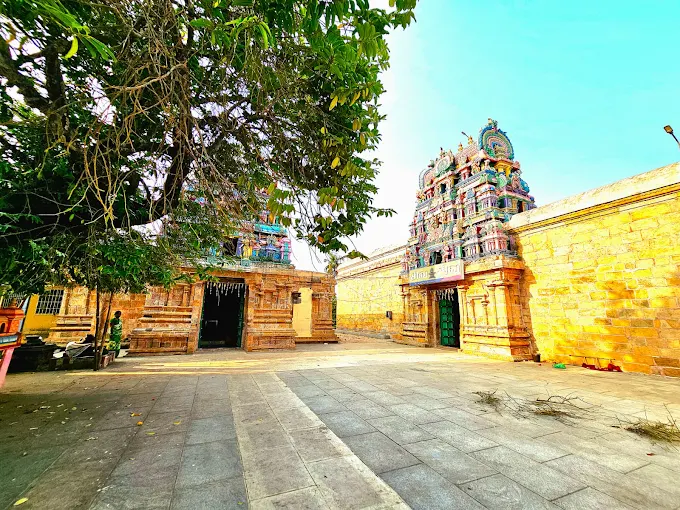
The present architectural complex is not necessarily the product of one single construction period. Sources describe additions and modifications associated with different ruling dynasties, while the existing masonry structure is generally associated with a later period, including substantial work attributed to the 16th century. The temple has concentric granite enclosures, a south-facing entrance tower and an east-facing central shrine. The sanctum and associated mandapas display features such as yali friezes, kumudam mouldings, Bhuta figures and dancing figures.
The temple contains a number of important shrines beyond the main sanctum. These include Manonmani Amman, Vinayaka, Murugan, Durga, Chandikeswara and the Navagrahas. A separate Ranganatha shrine represents an important Vaishnava presence within the otherwise Shaiva complex. The shrine of Sundarar, shown with his two consorts, further strengthens the connection between the physical temple and the Nayanmar tradition.
Traditional accounts also preserve stories connecting the temple with the four Yugas, Sukra and Vishnu's Narasimha manifestation. These stories are valuable parts of the temple's religious heritage but should be presented as traditional Sthala Purana narratives, rather than as independently verified historical events.
The temple continues to maintain a living ritual tradition. The Tamil Nadu HR&CE department currently records opening hours of 6:00 AM–12:00 PM and 4:00 PM–8:00 PM, with daily worship and special services. The temple's major celebrations include Sundarar Janana festival, Sundarar Guru Pooja and the annual Chithirai temple-car festival.
Thus, the history of Bhakthajaneswarar Temple is particularly valuable because it brings together Sangam/early sacred-place traditions, Nayanmar devotional history, medieval Chola inscriptions, later architectural development and a continuing living temple tradition.
No daily poojas available.
No special rituals available currently.
No festivals available.
📍 17.35 km away
📍 31.28 km away
📍 33.25 km away
📍 51.26 km away

📍 59.91 km away

📍 61.60 km away
Stays near Shri Bhakthajaneswarar Temple, Thirunavalur

📍 Near Kurinji Andavar Temple · 268.3 km
stayStarting from ₹2,000 / night
Discover more temples you may be interested in
You may also like these temples