☰
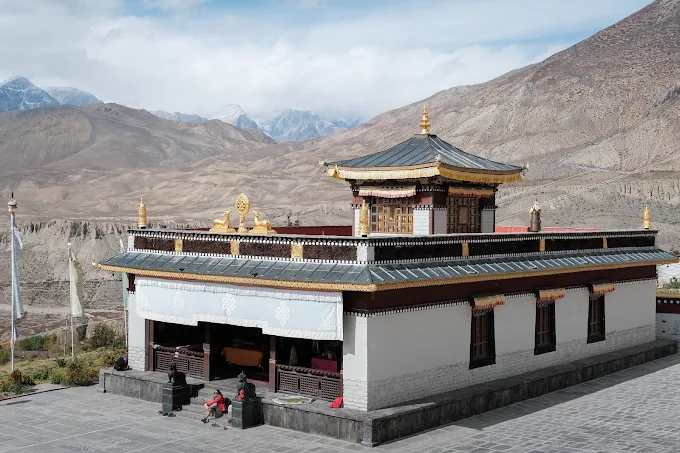
🛕 Lord Devi | 📍 Muktinath, Ranipauwa, Mustang, Gandaki Province, Nepal
Muktinath Gandaki Chandi Shakti Peetha is one of the most venerated high-altitude pilgrimage sites in the Himalayas, revered at the convergence of Shaktism, Vaishnavism, and Tibetan Buddhism. In Shakta tradition, it is recognized among the 51 sacred Shakti Peethas. According to the Shakta scriptures, when Lord Shiva performed the celestial dance of grief carrying the immolated body of Sati Devi and Lord Vishnu severed her limbs with the Sudarshana Chakra, the Goddess's right cheek (Ganda-sthala) or forehead fell in this sacred Himalayan region along the Gandaki River basin. The residing Mother is worshipped as Gandaki Chandi (the fierce mother who removes all obstacles and hardships), accompanied by Bhairava manifested as Chakrapani (the wielder of the discus).
Spiritually integrated within the same sacred sanctuary is Muktinath ('The Lord of Liberation'), celebrated in Vaishnava traditions as one of the 108 Divya Desams (revered as Thiru Salagramam, the only earthly Divya Desam situated outside modern India) and one of the eight self-manifested shrines (Svayam Vyakta Kshetras). The adjacent Kali Gandaki river is revered worldwide as the exclusive source of sacred Shaligram shilas (ammonite fossils embodying Lord Vishnu). Outside the central sanctum, the complex features 108 freezing stone water spouts carved in the form of bull heads (Muktidhara) and two sacred ponds (Mukti Kunda and Saraswati Kunda). Close to the main shrine stands the Jwala Mai (flame goddess) temple, where an eternal natural flame burns perpetually over a subterranean spring, symbolizing the sacred convergence of earth, fire, and water. For Tibetan Buddhists, the sanctum is revered as Chumig Gyatsa ('Hundred Waters') and an abode of 21 Taras and Dakinis, creating a rare and harmonious sanctuary of universal transcendence.
The sacred history of the Muktinath and Gandaki basin spans several millennia, characterized by ancient scriptural mentions, medieval pilgrimage routes, and documented Himalayan dynastic patronage. In Puranic literature—including the Varaha Purana (Muktinatha Mahatmya), Skanda Purana, Bhagavata Purana, and Shiva Purana—the Gandaki river valley is extensively chronicled as the Shalagrama Kshetra. Classical legends recount that after Lord Vishnu assumed the form of Jalandhara to break the demon king's invincibility through the chastity of his wife Vrinda, she cursed Vishnu to turn into stone; in expiation, Vishnu underwent rigorous penance in the high Himalayas of Muktinath and attained liberation ('Mukti') from the curse, sanctifying the stones of the Gandaki River as Shaligramas.
In the Tamil Vaishnava tradition, the 8th-9th century poet-saints Periyalvar and Thirumangai Alvar sang songs of praise (Mangalasasanam) for 'Salagramam', describing the snow-bound Himalayan refuge even when physical pilgrimage over the treacherous mountain passes was extraordinarily difficult. In the Tibetan Buddhist tradition, the 8th-century tantric master Guru Rinpoche (Padmasambhava) meditated here while travelling towards Tibet, consecrating the site as one of the 24 Tantric power centres (Pithas).
Historically, the Muktinath valley sat on the ancient trans-Himalayan salt-trade and pilgrimage trail connecting Northern India, Mustang, and Tibet. The physical temple seen today, built in the traditional Nepalese pagoda architectural style, was constructed around 1815 CE under the patronage of Queen Subarna Prabha Devi, the wife of King Rana Bahadur Shah of Nepal. Uniquely, the temple ritual custody reflects deep centuries-old interfaith harmony: while traditional Hindu priests (Bahun/Brahmins) conduct the opening and closing aartis, the inner sanctum is continuously attended during the day by Buddhist nuns (Jhumas/Aanis) belonging to the local Tibetan Buddhist lineage, making it an extraordinary living monument of shared Himalayan heritage.
According to ancient Vaishnava and Shakta belief, visiting Muktinath and praying with pure devotion frees the soul from the cyclical bondage of birth, death, and rebirth (Samsara).
Devotees traditionally believe that passing under the 108 ice-cold water spouts and taking a dip in the sacred ponds washes away past negative karmas and cleanses the subtle body.
Devotional tradition holds that Goddess Gandaki Chandi, as an incarnation of fierce protective grace, dispels insurmountable hurdles, court litigations, and malevolent spiritual influences.
Performing tarpanam and ancestral rituals along the Kali Gandaki basin and Muktinath is believed to bring peace to departed ancestors and relieve familial Pitru Dosha.
The high Himalayan stillness combined with the sacred presence of the eternal flame at Jwala Mai fosters profound inner calm, meditation capabilities, and spiritual awakening.
Traditional purification ritual where pilgrims bathe sequentially beneath all 108 stone water spouts and immerse themselves in the Mukti and Saraswati Kundas accompanied by personal sankalpa.
Special ritual abhishekam and prayer offered to the sacred ammonite Shaligram stones representing Lord Vishnu and Devi Gandaki, performed with holy basil leaves and milk.
Devotional lighting of mustard oil or ghee lamps at the Jwala Mai natural flame temple, invoking the cosmic unity of earth, water, and fire.
Special ancestral liberation ceremony traditionally performed at the confluence of the Kali Gandaki and Johong Khola rivers in Kagbeni en route to Muktinath.
Yartung is an ancient regional Himalayan festival celebrated immediately around Janai Purnima in Ranipauwa at the base of the Muktinath Temple complex. Marking the close of the sum...
Chaite Dashain is the spring Shakta observance celebrated during Chaitra Shukla Ashtami across Nepal. Devotees visit the Gandaki Chandi shrine to offer special oblations and worshi...
Bada Dashain is Nepal's most revered Hindu festival, holding paramount spiritual importance at Muktinath in its identity as the Gandaki Chandi Shakti Peetha. The shrine is revered...
Celebrated on the full moon day of Baisakh, Buddha Jayanti honors the birth, enlightenment, and parinirvana of Gautama Buddha. Because Muktinath is equally revered by Tibetan Buddh...
Janai Purnima, observed on the Shravana Purnima full moon, is one of the most prominent annual pilgrimage gatherings at the Muktinath Temple complex. Thousands of Hindu pilgrims un...
📍 190.19 km away

📍 278.76 km away
📍 307.65 km away
📍 308.66 km away
📍 395.01 km away

📍 397.93 km away
Stays near Muktinath Gandaki Chandi Shakti Peetha

📍 Near Kurinji Andavar Temple · 2,170.0 km
stayStarting from ₹2,000 / night
Discover more temples you may be interested in
You may also like these temples