☰
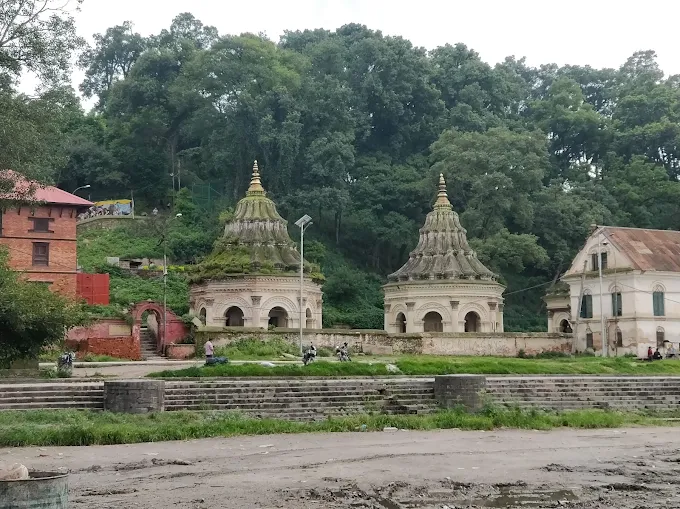
🛕 Lord Devi | 📍 Kathmandu, Kathmandu, Nepal
Kathmandu Guhyeshwari Temple is revered as one of the 51 sacred Shakti Peethas in Hindu tradition. According to the Puranic narrative found in scriptures like the Devi Bhagavata Purana and Shiva Purana, following Goddess Sati's self-immolation at the Daksha Yajna, Lord Shiva carried her lifeless body across creation in profound sorrow. To preserve universal order, Lord Vishnu released the Sudarshana Chakra to dismember her body; the parts fell across the sacred geography of the subcontinent. At this site on the banks of the holy Bagmati River, Sati's knees (Janu Peetha) or, according to alternate esoteric Shakta traditions, her secret pelvic region (Guhya) are believed to have fallen. The Sanskrit term 'Guhya' signifies 'secret', 'esoteric', or 'concealed', personifying Goddess Guhyeshwari (often identified with Guhyakali and Mahamaya) as the hidden, supreme consciousness that sustains existence. Uniquely, the inner sanctum does not house an anthropomorphic stone idol; rather, the divine presence is venerated in an aniconic subterranean sacred spring, covered by a flat silver and gold-plated Kalash (sacred urn) and floral yantra. Positioned about one kilometre east of the world-famed Pashupatinath Temple, Guhyeshwari forms an inseparable spiritual duality with Pashupati (Shiva), representing the primordial unity of Shiva (pure consciousness) and Shakti (dynamic cosmic energy). By long-standing custom, pilgrims visiting Pashupatinath pay obeisance to Goddess Guhyeshwari to complete their spiritual journey. The shrine is equally revered in Newar Vajrayana Buddhism, where the deity is honoured as a manifestation of Vajravarahi (Vajrayogini), exemplifying the profound syncretism of the Kathmandu Valley.
While devotional tradition dates the spiritual sanctity of the Guhyeshwari Peetha to the mythical Satya Yuga, tangible archaeological and architectural history reflects extensive development during the Malla era of Nepal. The current pagoda-style temple and courtyard layout were established and renovated in 1654 CE (Nepal Sambat 774) by the celebrated ruler of Kathmandu, King Pratap Malla. Historical inscriptions on the site state that King Pratap Malla rebuilt the shrine under the spiritual guidance of his royal tantric preceptor, Lambakarna Bhatta. The king dedicated several artistic ornaments, established regular Guthi (traditional socio-religious trusts) endowments, and instituted formalized worship patterns. Subsequent rulers of the Shah Dynasty, including King Rana Bahadur Shah in the late 18th century, as well as prime ministers of the Rana regime, carried out repairs, contributed gold plating to the spire, and added stone pavilions. Architecturally, Guhyeshwari exemplifies indigenous Newar architectural genius. It features a spacious open quadrangle paved with stone tiles, surrounded by rest halls (dharamsalas) and shrines dedicated to Bhairava and attendant deities. The central shrine possesses tiered Newari sloping roofs with gilded copper finishes, intricate wood-carved toranas, and protective guardian sculptures. Ritual administration at the temple has historically been maintained under the Guthi Sansthan of Nepal. The hereditary daily tantric rites (Nitya Puja) are conducted by Newar priests belonging to the Karmacharya clan following the Sarvamnaya Tantra, while Vedic ceremonies and seasonal festival rituals are performed by Rajopadhyaya Brahmins, preserving unbroken ritual continuity over centuries.
Devotees believe that meditating upon Goddess Guhyeshwari, the embodiment of esoteric knowledge, awakens subtle spiritual awareness and removes inner ignorance.
Traditional faith holds that the fierce, protective grace of Guhyakali shields devotees from malevolent influences, fears, and psychic obstacles.
Women traditionally offer sindoor (vermilion) and red vastra at the shrine, praying for domestic well-being, cordial marital relationships, and the good health of their spouses.
Pilgrims invoke the divine mother's presence at the sacred spring to seek solace, fortitude, and release from deep-rooted emotional disturbances.
Traditional ritual offering of vermilion powder, red cloth, flowers, and sweets upon the sacred silver Kalash receptacle in the sanctum by devotees seeking family well-being.
Elaborate multi-day Shakta ceremonies, secret tantric Havana rituals, and traditional Newar Guthi offerings conducted during the autumn Dashain festival.
An annual ceremonial festival occurring in Margashirsha where sacred symbols and procession palanquins travel between Guhyeshwari, Pashupatinath, and Hanuman Dhoka.
Special tantric and Vedic recitations of the Devi Mahatmyam / Chandi Path conducted on monthly Ashtami tithis for planetary relief and spiritual protection.
No festivals available.
📍 122.86 km away
📍 190.19 km away
📍 328.34 km away

📍 328.44 km away
📍 343.82 km away

📍 353.35 km away
Stays near Kathmandu Guhyeshwari Shakti Peetha

📍 Near Kurinji Andavar Temple · 2,109.7 km
stayStarting from ₹2,000 / night
Discover more temples you may be interested in
You may also like these temples