☰
🛕 Lord Vishnu | 📍 Thiruvellarai, Tiruchirappalli, Tamil Nadu
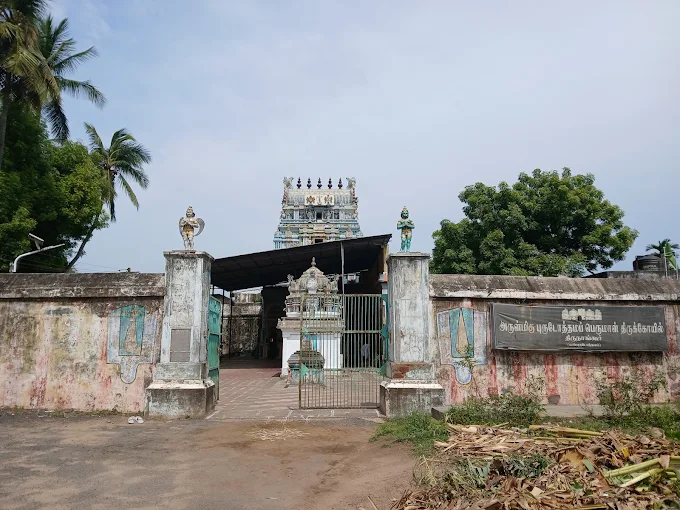
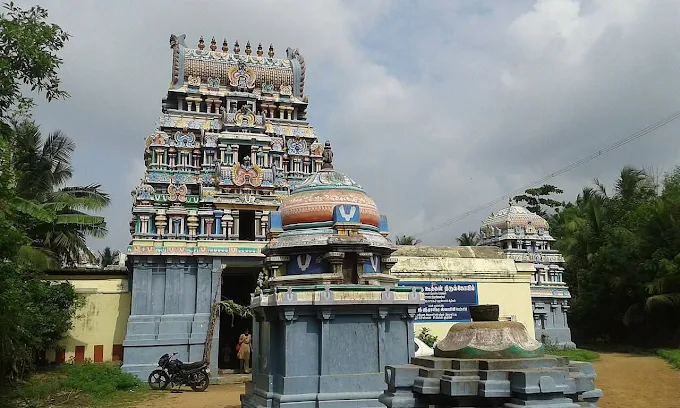
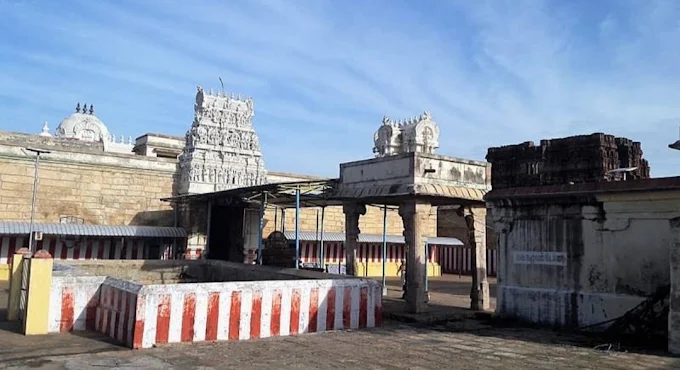
Thiruvellarai Sri Pundarikakshan Perumal Temple, situated on an elevated white granite hillock (Vellarai or Swethagiri) approximately 27 km north of Tiruchirappalli, is revered as the 4th among the 108 Divya Desams celebrated in Sri Vaishnava tradition. In sacred lore, this temple is revered as 'Adi Rangam' or 'Boologa Vaikuntham' and is traditionally believed to predate the famous Sri Ranganathaswamy Temple at Srirangam. The presiding deity is Lord Pundarikakshan ('the lotus-eyed Lord' or Senthamaraikkannan), in a standing posture facing east, accompanied by His consort Goddess Lakshmi, worshipped as Shenbagavalli (Moolavar) and Pankajavalli (Utsavar). The shrine is immortalized in the hymns of the Alvar saints, Periyalvar and Thirumangai Alvar, within the Naalayira Divya Prabandham.
Architecturally and spiritually, Thiruvellarai possesses features rarely seen together in any other temple. The pathway to the sanctum sanctorum includes 18 stone steps representing the 18 chapters of the Bhagavad Gita, followed by four steps symbolizing the four Vedas, and five steps denoting the Pancha Bhootas (five elements). Devotees enter through two distinct solstice entrances: the Uttarayana Vaasal, open during the Sun's northern transit (Thai to Aani / mid-January to mid-July), and the Dakshinayana Vaasal, open during the southern transit (Aadi to Margazhi / mid-July to mid-January). Inside the sanctum sanctorum, cosmic entities Surya and Chandra are sculpted in human form performing chamara seva (fanning the Lord), while Garuda and Adisesha are uniquely depicted in human form attending the Lord. Thiruvellarai is also historically significant as the birthplace of the revered Acharya Uyyakkondar, a premier disciple of Acharya Nathamuni who played a crucial role in the dissemination of the Nalayira Divya Prabandham.
The recorded history of Thiruvellarai spans over twelve centuries, substantiated by rich epigraphical, architectural, and literary evidence. Epigraphically, the site was an important religious centre under the Pallava dynasty during the 8th and 9th centuries CE. The temple complex houses two ancient rock-cut cave shrines excavated into the granite hill, featuring classical early medieval bas-relief carvings of Lord Narasimha and Lord Varaha. Inscriptions carved inside the caves date to the regnal years of Pallava monarch Nandivarman II (c. 732–796 CE) and his successor Dantivarman (c. 796–847 CE). Located just southwest outside the temple fortification is the famous 'Swastika Well' (Marpidugu Perunginaru / Nalu Moolai Keni), excavated between 800 and 805 CE during Dantivarman's 4th–5th regnal years by chieftain Kamban Araiyan of Alambakkam. This four-armed stepwell was designed ingeniously to afford visual privacy to bathers descending each arm, and was later renovated in the 13th century during the reign of the Hoysala ruler Vira Ramanatha by a Kumbakonam merchant named Uyyaneri Kaattinaan.
Subsequent dynasties made significant contributions to the expansion and endowment of the temple complex. Chola epigraphs—including an 8th regnal year inscription of Madhurantaka Uttama Chola (978 CE) and records of Rajaraja Chola I—refer to the shrine as 'Periya Sri Koyil' of Thiruvallarai within Pachil Kurram of Rajaraja Valanadu. Further additions of mandapams, granite outer ramparts, and secondary shrines were sponsored by the Later Pandyas, the Hoysalas of Dvarasamudra, the Vijayanagara Empire, and the Madurai Nayaks. The temple's colossal Rajagopuram at the northern approach remains partially constructed; epigraphists and local historians associate this incomplete tower with the abrupt cessation of architectural patronages during 16th-century wars and political transitions in the Nayak era.
In traditional religious history and puranic legend, the genesis of the temple is traced to Treta Yuga and King Sibi Chakravarthy. According to the Sthala Purana, King Sibi, ancestor of Lord Rama, chased an elusive white boar that vanished into a subterranean ant-hill on the hillock. Sage Markandeya, who was in penance nearby, instructed the king to perform ksheerabhishekam (milk offering) at the site. Upon doing so, Lord Vishnu revealed Himself and commanded the king to construct a temple and settle 3,700 Vedic scholars. When one person died during transit, the Lord Himself assumed human guise as a devotee named Pundarikakshan to complete the count. Religious lore also holds that Lord Shiva in his manifestation as Thiruppainjeeli Gneeliwaneswarar worshipped here to attain expiation.
Devotees traditionally believe that praying at the temple's sacred Balipeetam, performing Balipeeta Thirumanjanam, and offering sweet Pongal nivedhanam blesses childless couples with offspring.
Because the cosmic luminaries Surya and Chandra are enshrined in human form within the sanctum performing seva to Lord Pundarikakshan, worshippers believe visiting the shrine mitigates planetary afflictions and astrological doshas.
Revered as an Uthama Kshetram and associated with the purity of the white rock (Vellarai), traditional faith holds that praying to Lord Pundarikakshan washes away persistent sins and grants spiritual elevation and final liberation (Moksha).
The presence of Adisesha and Garuda together in human worship postures within the sanctum is traditionally believed to dissolve enmities, dispel deep-seated fears, and restore peace within family life.
A celebrated thanksgiving and vow ritual where holy abhishekam is performed at the temple Balipeetam and sweet Pongal is offered as nivedhanam, predominantly sought by couples praying for progeny.
Special ceremonial sacred ablution performed for the Utsava deities of Lord Pundarikakshan and Goddess Pankajavalli on auspicious star days and Ekadasi.
A sacred offering of worship reciting the 1,000 names of Lord Vishnu with Tulsi leaves, performed on behalf of devotees seeking spiritual and familial prosperity.
The major annual temple chariot festival in the Tamil month of Panguni (March–April), noted for centuries-old community dining traditions and grand public processions.
No festivals available.
📍 3.63 km away
📍 7.28 km away

📍 8.71 km away

📍 9.04 km away
📍 9.58 km away
📍 10.69 km away
Stays near Thiruvellarai Pundarikakshan Perumal Temple

📍 Near Kurinji Andavar Temple · 151.4 km
stayStarting from ₹2,000 / night
Discover more temples you may be interested in
You may also like these temples