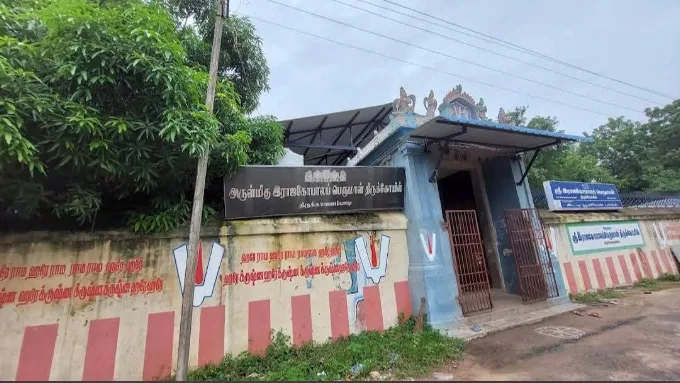
☰
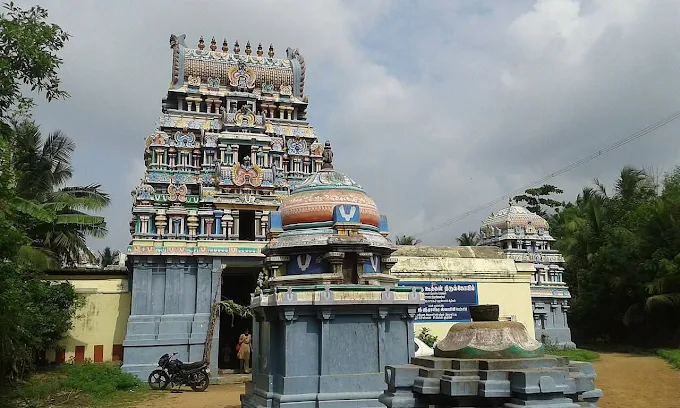
🛕 Lord Vishnu | 📍 Thirunangur, Mayiladuthurai, Tamil Nadu
Thiru Arimeya Vinnagaram (also revered as the Sri Kudamudakoothan Perumal Temple) is one of the 108 Divya Desams celebrated in Sri Vaishnavism, situated in the heritage village of Thirunangur in Mayiladuthurai district, Tamil Nadu. It belongs to the celebrated group of eleven Thirunangur Tirupatis (Thirunangur Ekadasa Divya Desams). The temple is consecrated to Lord Vishnu, venerated here as 'Kudamudakoothan' (or Kudamaadu Koothan), and His divine consort Lakshmi, worshipped as 'Amrutha Kadavalli' (Amirtagadavalli). The name 'Arimeya Vinnagaram' literally translates to the sacred celestial abode (Vinnagaram) where Lord Hari (Ari) resides (Meviya). According to sacred Vaishnava tradition, Lord Vishnu appeared in this Kshetram dancing with pots ('Kuda Koothu'), a folkloric dance form associated with Lord Krishna celebrating the destruction of Banasura, expressing ecstatic divine grace. In the sanctum sanctorum, the Moolavar is uniquely sculpted in a seated posture ('Irundha Thirukkolam') facing east, with His foot placed over a pot of butter. Because the presiding deity is sculpted out of sudai (a traditional stucco mixture of mortar, herbs, and burnt clay) rather than hard granite, direct water abhishekams are strictly avoided; only sacred herbal oil applications (Thailakkappu) are performed on the Moolavar. The processional deity (Utsavar) is worshipped as Chaturbhuja Gopalan, a four-armed manifestation of Krishna. The temple is intimately glorified by the poet-saint Thirumangai Azhwar, who composed ten soul-stirring hymns (Pasurams) praising the deity's supreme compassion and cosmic prowess in destroying afflictions and guiding spiritual seekers towards righteousness.
Historically, the temple forms an essential segment of the Chola-era Vaishnava sacred landscape in the Cauvery delta region. The original stone structures and inscriptions associated with the Thirunangur complex date between the 9th and 12th centuries CE during the reign of the Medieval Cholas, with further patronages, renovations, and expansions contributed by Vijayanagara monarchs and local chieftain dynasties. The temple exhibits classical Dravidian temple architecture characterized by a three-tiered Rajagopuram at the entrance, a compact sanctum crowned by the 'Uchasrunga Vimanam' (also recorded as Ucharoorunga Vimanam), and surrounding prakara corridors housing shrines for the Azhwars and Rama-Sita. Distinct from these epigraphical and architectural timelines, the temple possesses profound traditional puranic legends. As per the regional Sthala Purana common to the Thirunangur circuit, Lord Shiva performed the fierce Rudra Tandavam here after the sacrificial immolation of Dakshayani; from His agitated locks, eleven aspects of Rudra emerged. To pacify Shiva's cataclysmic wrath and balance the cosmic order, Lord Vishnu descended in eleven discrete divine forms across Thirunangur, establishing the 11 holy abodes. Another prominent traditional legend connects this shrine with Sage Uthanga (Uttanka Maharishi), who underwent rigorous penance here. Pleased by his unyielding devotion and guru-bhakti, Lord Krishna appeared to Uthanga Maharishi in His cosmic form and granted the divine boon that the sage would find sanctifying water whenever sought, sanctifying the local pushkarani known as Kodi Theertham or Amrudha Theertham.
According to traditional devotional faith, worshipping Sri Kudamudakoothan Perumal with sincere prayers helps devotees gain freedom from mounting debts, financial distress, and economic struggles.
Devotees traditionally believe that the seated Lord with His foot resting gracefully on a butter pot dispels malefic influences, shields the worshipper against adversaries, and clears obstacles in life.
Traditional belief holds that having darshan of Kudamudakoothan Perumal alongside Goddess Amrutha Kadavalli fosters peace, mutual affection, and auspicious prosperity in the household.
As celebrated by Thirumangai Azhwar, meditating on Lord Hari at Arimeya Vinnagaram cleanses accumulated negative karmas (Ari meaning the dispeller of sins) and guides the soul towards moksha.
A sacred ritual of applying sanctified herbal oil over the moolavar deity; because the presiding deity is of sudai (burnt clay/mortar) construction, regular water abhishekams are avoided and Thailakkappu is performed traditionally.
Sacred ceremonial bath (Thirumanjanam) performed with milk, curd, honey, and sanctified herbal waters strictly for the bronze processional deity on auspicious days like Ekadashi, Swathi, and monthly star days.
The annual flag-bearing festival in the Tamil month of Thai where the utsavar ascends the Garuda Vahanam alongside deities of all 11 Thirunangur Tirupatis during Thirumangai Azhwar's Mangalasasana Utsavam.
No festivals available.
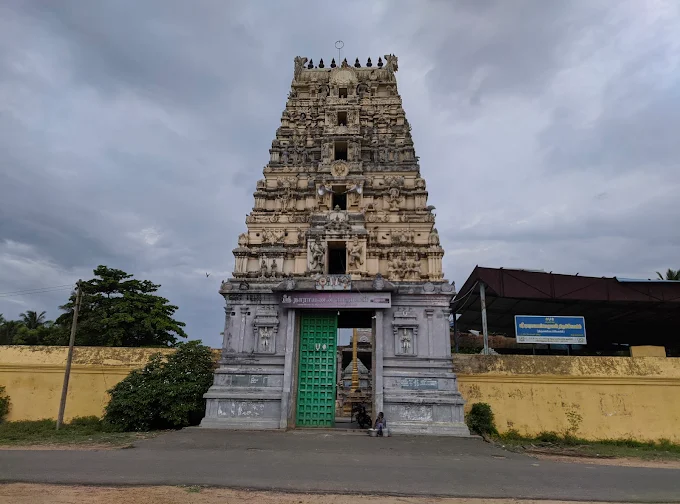
📍 0.25 km away
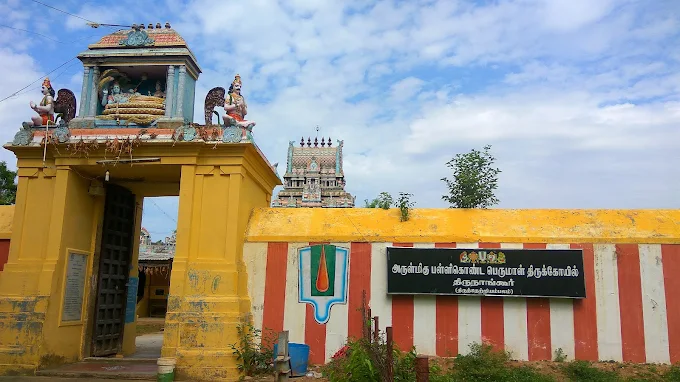
📍 0.25 km away
📍 0.40 km away
📍 0.46 km away
📍 0.56 km away
📍 0.66 km away
Stays near Thiru Arimeya Vinnagaram Kudamudakoothan Perumal Temple

📍 Near Kurinji Andavar Temple · 270.9 km
stayStarting from ₹2,000 / night
Discover more temples you may be interested in
You may also like these temples