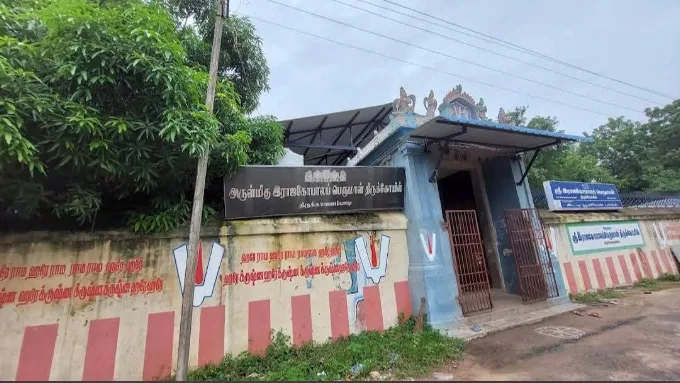
☰
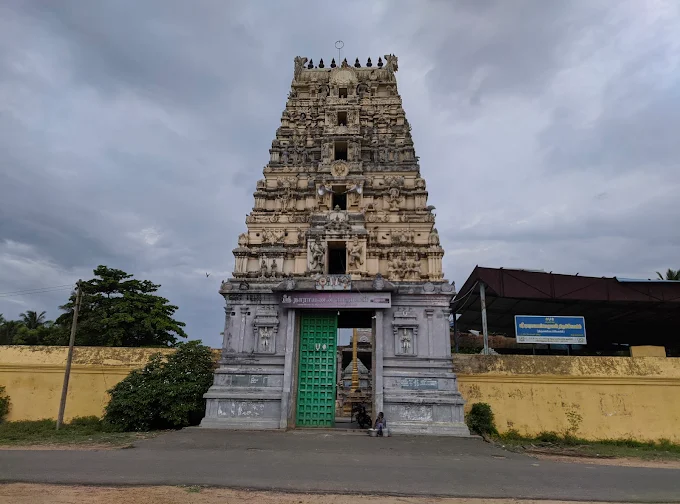
🛕 Lord Vishnu | 📍 Thirunangur, Mayiladuthurai, Tamil Nadu
Thiru Manimada Koil (also known as Sri Narayana Perumal Temple or Thirumanimadam) is one of the revered 108 Divya Desams, celebrated in the 8th-century Nalayira Divya Prabandham by Thirumangai Alvar. Located in Thirunangur near Sirkazhi in Tamil Nadu's Mayiladuthurai district, it is part of the famous Thirunangur Tirupathis cluster of eleven sacred Vaishnavite shrines. The presiding deity is worshipped as Sri Narayana Perumal (or Badri Narayana Perumal / Nanda Vilakku Perumal) alongside His divine consort Goddess Pundarikavalli Thayar (Pundareekavalli). The deity is depicted in a majestic seated posture (veetrirundha thirukkolam) facing east beneath the Pranava Vimanam, holding the sacred conch and discus. According to regional sthala purana, Lord Vishnu manifested here in the form of Nara-Narayana, mirroring the divine revelation at the Himalayan shrine of Badrinath. Devotees traditionally consider darshan here equivalent to visiting Badrinath. Thirumangai Alvar venerated the Lord here as 'Nanda Vilakku'—an imperishable, ever-glowing divine lamp of wisdom (Swayam Prakasha Jnanam) ensconced in a jeweled mansion (Manimadam). Historically, the temple serves as the focal hub for the famed Thirunangur 11 Garuda Sevai festival held annually in the Tamil month of Thai, where the Utsava deities of all eleven Thirunangur shrines assemble on Garuda mounts to bestow mangalasasanam together.
The temple of Thiru Manimada Koil showcases Dravidian temple architecture characteristic of the Cauvery delta region. Its recorded literary history dates back at least to the early medieval period (circa 8th–9th century CE), as evidenced by the verses of Thirumangai Alvar in the Nalayira Divya Prabandham (Periya Thirumozhi 3.8). While the core stone structures reflect later Chola, Nayaka, and local hereditary chieftain patronage, the sacred site has endured as a pivotal center of Sri Vaishnavism for over a millennium. Architecturally, the temple features a five-tiered Rajagopuram at its eastern entrance, fronted by the sacred temple pushkarini named Indra Theertham (and Rudra Theertham). Inside, the sanctum houses the large stone moolavar of Narayana Perumal flanked by Sridevi and Bhudevi, alongside utsava murtis including Sri Alatharkariyan and Badri Narayanan. According to religious tradition, the origin of the eleven Thirunangur shrines is rooted in the legend of Daksha Yajna. After the self-immolation of Sati, a grief-stricken Lord Shiva performed the fierce Rudra Tandavam. With each fall of His matted locks, eleven manifestations of Rudra emerged. Fearing cosmic dissolution, the celestials pleaded with Lord Vishnu to intervene. Vishnu appeared before Shiva, whose rage subsided; at Shiva's supplication to pacify each Rudra form, Vishnu manifested in eleven distinct transcendental forms across Thirunangur. Tradition holds that the form of Badrinath Narayana manifested at Manimada Koil. During the medieval period, the temple was further consecrated by the Sri Vaishnava acharya parampara, being traditionally linked to Thirukoshtiyur Nambi and Swami Ramanuja.
Devotees traditionally believe that worshipping Narayana Perumal as the 'Nanda Vilakku' (imperishable eternal flame) dispels intellectual darkness and blesses worshippers with higher spiritual wisdom and mental clarity.
Traditional Vaishnavite belief holds that worshipping Lord Nara-Narayana at this holy Kshetram confers the spiritual fruits equal to undertaking the arduous pilgrimage to Himalayan Badrinath.
Pilgrims hold the devotional faith that bathing in the temple pushkarini (Indra Theertham) and praying here helps nullify long-standing sins and planetary impediments.
According to traditional lore, as the Lord manifested to pacify the cosmic anger of Lord Shiva, praying here is believed to bring peaceful resolution to conflicts and foster domestic harmony.
Annual festival held on the day following Thai Amavasya, where the presiding and utsava deities of all eleven Thirunangur Divya Desams assemble on Garuda vahanas at Thirumanimada Koil to receive Thirumangai Alvar's mangalasasanam.
Special sacred bath ritual performed for the Utsava deities with milk, honey, curd, and fragrant waters on Ekadashi, Swathi, or special festival occasions based on devotee requests.
Chanting of the thousand sacred names of Lord Vishnu (Vishnu Sahasranama) by temple bhattars seeking blessings for the spiritual and material welfare of devotees.
No festivals available.
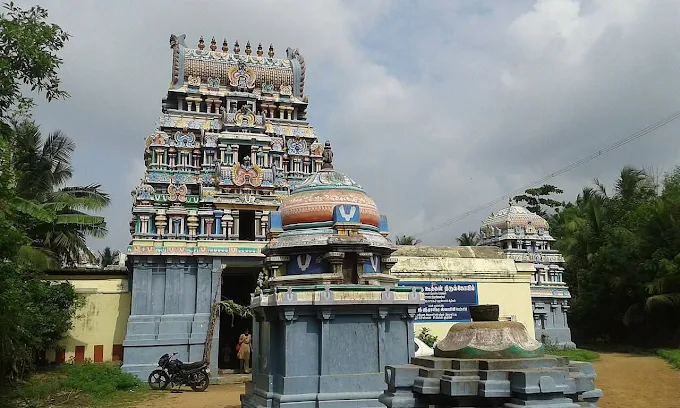
📍 0.25 km away
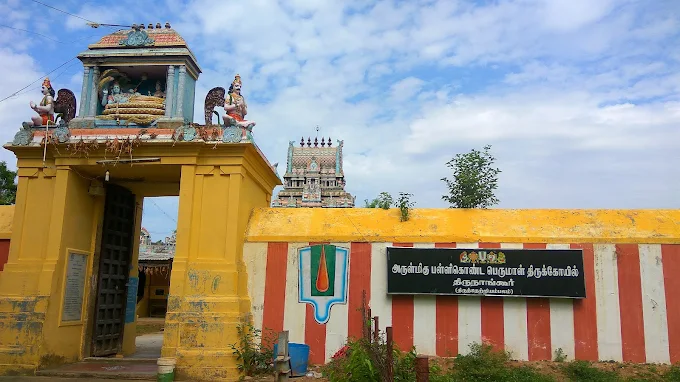
📍 0.29 km away
📍 0.53 km away
📍 0.58 km away
📍 0.69 km away
📍 0.85 km away
Stays near Thiru Manimada Koil Narayana Perumal Temple

📍 Near Kurinji Andavar Temple · 270.6 km
stayStarting from ₹2,000 / night
Discover more temples you may be interested in
You may also like these temples