☰
🛕 Lord Vishnu | 📍 Kapisthalam, Thanjavur, Tamil Nadu
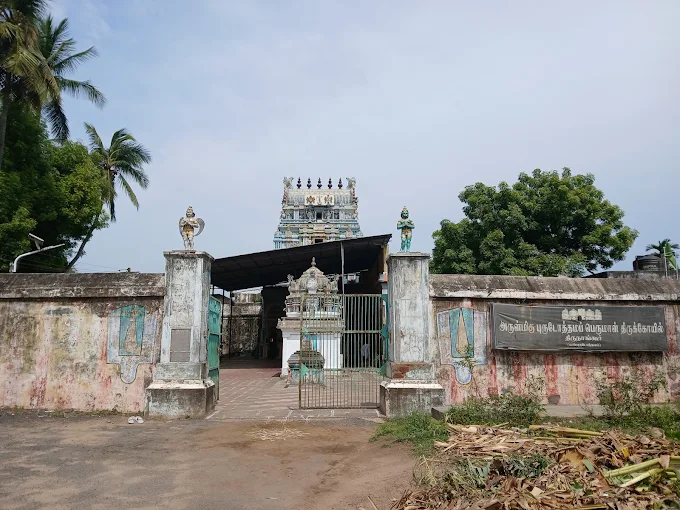
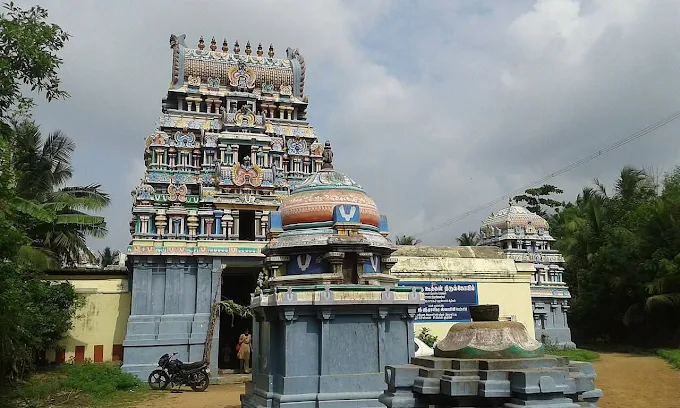
Sri Gajendra Varadha Perumal Temple at Kapisthalam (historically known as Thirukkavithalam) is revered as the 9th Divya Desam in the traditional list of 108 sacred Vaishnavite shrines canonized by the Alvars. Situated between the sacred Cauvery and Kollidam rivers in Thanjavur district, the temple is one of the celebrated 'Pancha Krishna Kshetras' (along with Thirukannapuram, Thirukannamangai, Thirukannangudi, and Thirukovilur), as the reclining deity is revered in intimate affection as 'Aatrangarai Kannan' (Krishna reclining on the riverbank). According to temple lore, it is uniquely renowned as a Divya Desam where Lord Vishnu manifested His grace to two animal souls—Gajendra the elephant and the crocodile—as well as granting darshan to Anjaneya (Lord Hanuman) and Sage Parasara. The presiding deity, Gajendra Varadhar, reposes serenely in the Bhujanga Sayanam posture (reclining on the serpent bed of Adisesha) facing east under the sacred Gaganakruthi Vimanam. His divine consort is worshipped as Goddess Ramamanivalli (also affectionately called Potramaraiyaal / Shenbagavalli). Saint Thirumazhisai Alvar sung a profound hymn in the Nalayira Divya Prabandham extolling this deity, declaring that meditating upon the Lord resting on the riverbank keeps away Yama (the deity of death), burning distress, and adverse karma.
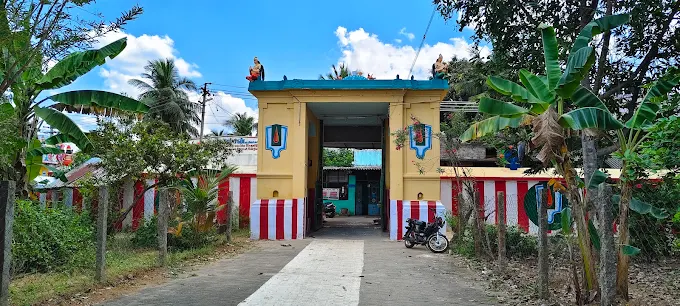
Historically, the core stone sanctum of Sri Gajendra Varadha Perumal Temple is believed to have been founded during the late Medieval Chola era around the 9th to 10th centuries CE, situated in the fertile agrarian heartland of the Chola empire. Inscriptions and architectural elements indicate subsequent renovations and expansions during the Vijayanagara Empire and under the Thanjavur Nayaks in the 16th and 17th centuries, with minor embellishments during the Maratha period. The temple is built according to Dravidian architecture, featuring a brick-and-granite outer circumambulatory wall, a five-tiered Rajagopuram at the eastern entrance, a spacious hall leading to the sanctum sanctorum, and separate shrines for Thayar, the Alvars, Garuda, and Yoga Narasimha.
In religious tradition and temple mythology (Sthala Purana), the temple is closely tied to the iconic Gajendra Moksha episode from the Srimad Bhagavatam. King Indradyumna, a devout devotee of Vishnu, was once deeply absorbed in meditation and failed to offer customary respect to Sage Durvasa (or Sage Agastya in alternate retellings). The affronted sage cursed him to be born as an elephant named Gajendra. When the repentant king pleaded for forgiveness, the sage prophesied that his devotion would persist and that Lord Vishnu Himself would liberate him. Meanwhile, a Gandharva named Hoohoo was cursed by Sage Agastya to become a predatory crocodile living in the temple pond (Kabila Theertham). When Gajendra stepped into the water to pluck lotus blossoms for Lord Vishnu's worship, the crocodile seized his leg in an unbreakable death grip. After years of struggling, as his energy waned, the elephant lifted a lotus with his trunk and surrendered with the agonizing cry, 'Aadimoolame!' Lord Vishnu arrived swiftly atop Garuda, hurled His Sudarshana Chakra to slay the crocodile, and granted salvation (moksham) to both souls. Furthermore, tradition holds that Lord Hanuman (Kapi) performed penance here to obtain the darshan of Lord Rama, thus lending the town the name 'Kapisthalam' (abode of the monkey).
In Hindu tradition, calling out 'Aadimoolame' at this shrine is believed to invoke the swift, protective intervention of Lord Vishnu, just as He rushed to protect the elephant Gajendra from imminent danger.
Based on Saint Thirumazhisai Alvar's Mangalasasanam pasuram, meditating on the reclining Lord of Kapisthalam is traditionally believed to insulate the devotee from the fear of Yama (death), karmic afflictions, and negative speech.
Devotees traditionally worship Gajendra Varadar as a remedial prayer destination (Prarthana Sthalam) to neutralize Rahu Dosha and find relief from lingering planetary afflictions.
Because King Indradyumna and Hoohoo the Gandharva were both delivered from ancient rishi curses at this sacred spot, devotees believe prayers here help dissolve ancestral curses and negative spiritual inheritances.
Worshipping Goddess Ramamanivalli (Potramaraiyaal) alongside Gajendra Varadhar is traditionally believed to foster domestic harmony, eradicate financial distress, and bring spiritual peace.
The annual flagship ritual enacted during the Tamil month of Aadi (on Aadi Pournami), where Lord Vishnu's intervention to save Gajendra the elephant is dramatically re-enacted at the temple tank.
Ceremonial holy ablution performed for the Utsava deities with sanctified water, milk, curd, honey, and herbal powders on special asterisms and festive days.
Chanting of the 1008 divine names of Lord Vishnu with offerings of sacred tulsi leaves and flowers for the fulfillment of devotee prayers.
Offering of fragrant sacred tulsi garlands to Gajendra Varadha Perumal with individual family sankalpam.
No festivals available.

📍 2.30 km away

📍 5.24 km away
📍 5.74 km away
📍 6.36 km away
📍 6.96 km away

📍 7.06 km away
Stays near Kapisthalam Gajendra Varadha Perumal Temple

📍 Near Kurinji Andavar Temple · 208.6 km
stayStarting from ₹2,000 / night
Discover more temples you may be interested in
You may also like these temples