☰
🛕 Lord Shiva | 📍 Thiruvanaikaval, Tiruchirappalli, Tamil Nadu
Jambukeswarar Temple at Thiruvanaikaval is one of the most important Shiva temples in Tamil Nadu and occupies a distinctive place in the sacred geography of the Kaveri region. The temple is famous as the Appu Sthalam, the Pancha Bhoota shrine representing the element of Water. Shiva is worshipped here as Jambukeswarar, while Goddess Parvati is worshipped as Akhilandeswari. The temple stands on Srirangam Island, between the Kaveri and Kollidam rivers, creating a sacred landscape shared with the great Vaishnava centre of Srirangam. The official HR&CE temple description specifically identifies Thiruvanaikaval as the Water or Appu Pancha Bhoota Sthalam.
The greatest physical and spiritual distinction of the shrine is the water associated with the sanctum. The Jambukeswarar Lingam is traditionally known as the Appu Lingam, and water is said to naturally seep or spring around the Lingam within the sanctum. This continuing presence of water is central to the temple's identity as the Water element among the five Pancha Bhoota Sthalams. The temple therefore represents Shiva not merely through a symbolic association with water, but through a living ritual environment in which water remains an essential part of the shrine's sacred character.
Another extraordinary feature is the relationship between Jambukeswarar and Akhilandeswari. According to temple tradition, Parvati came to Thiruvanaikaval in the form of Akhilandeswari and performed penance for Shiva. She is said to have created a Lingam from water beneath the sacred Jambu tree and worshipped it. Shiva eventually appeared before her and imparted Shiva Gnana Upadesa. The traditional orientation of the two shrines reflects this sacred teaching: Akhilandeswari faces east while Jambukeswarar faces west. Because of this association, Thiruvanaikaval is also regarded as an important Upadesa Sthalam.
The temple is also a major Paadal Petra Sthalam. Unlike some shrines associated with only one Tevaram saint, the official HR&CE temple information states that Thiruvanaikaval was praised by all three of the principal Tevaram saints — Thirugnana Sambandar, Appar and Sundarar. This gives the temple an especially prominent place within Tamil Shaiva devotional literature and makes it an essential destination for pilgrims following the 275 Paadal Petra Sthalams.
The name of the temple is traditionally connected with the Jambu tree, the Indian rose apple or naval tree. The sacred grove associated with the tree is an important part of the temple's identity. The temple is also connected with the famous story of the elephant and spider, in which two Shiva ganas are believed to have been born as an elephant and a spider because of a curse. Both worshipped Shiva at this sacred place, but their methods of worship differed. The elephant performed ablution with water, while the spider protected the Lingam with its web. Their conflict and eventual liberation are preserved in the temple's sthala tradition.
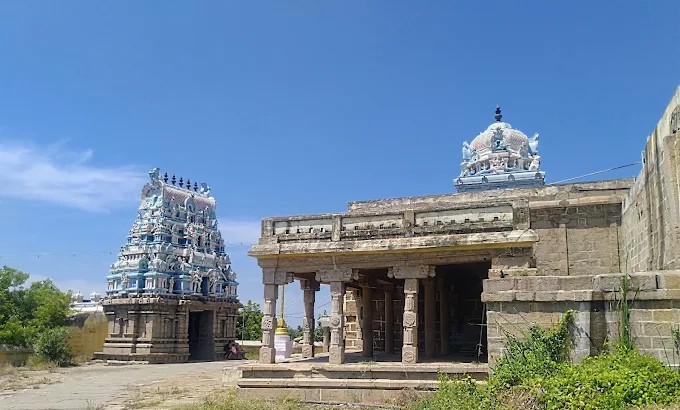
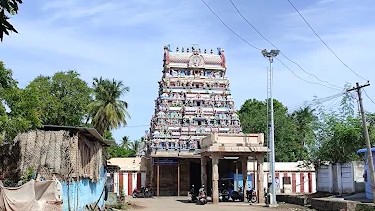
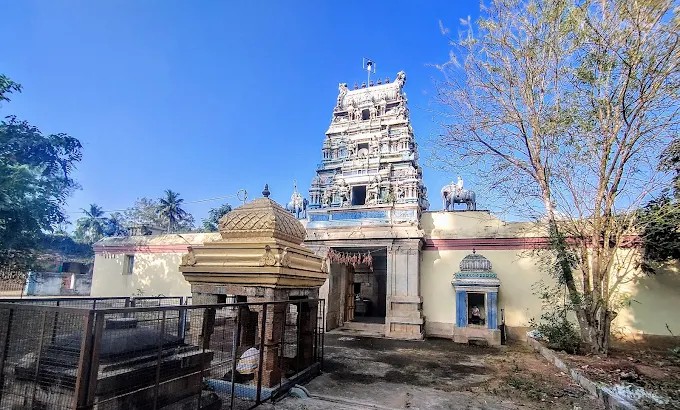
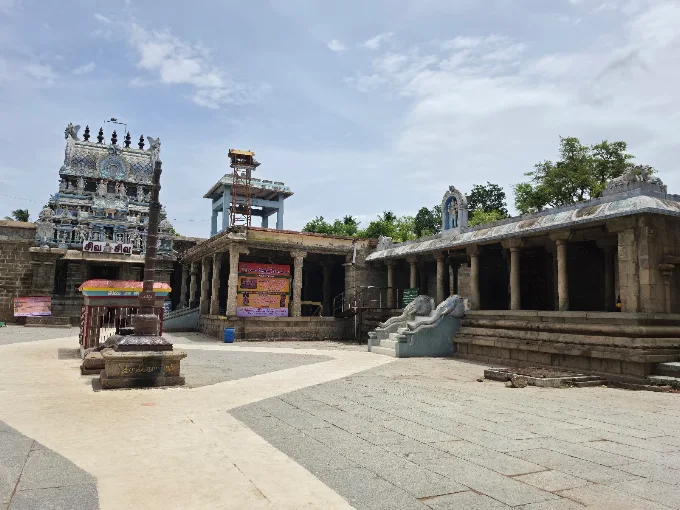
The temple's five large enclosures, numerous gopurams, mandapams and extensive sacred spaces make it one of the remarkable temple complexes of the Tiruchirappalli region. The official HR&CE records also list numerous subsidiary shrines, including Akhilandeswari, Jambukeswarar, Ganesha, Anjaneya, Dakshinamurthy, Murugan, Mahalakshmi and several other deities.
The history of Jambukeswarar Temple is deeply connected with the ancient sacred and political landscape of the Kaveri region. The temple is located at Thiruvanaikaval on Srirangam Island, an important settlement between the Kaveri and Kollidam rivers. Its history combines early Chola traditions, medieval inscriptions, later royal patronage and a continuous Shaiva worship tradition.
The temple is traditionally associated with Kochengot Chola (Kochengannan), an early Chola ruler remembered in Shaiva tradition as one of the Nayanmars. The tradition connects him with the construction of numerous Madakkovils, temples designed with elevated or specially protected sanctums. The Jambukeswarar shrine is traditionally included among these temples. The elephant-and-spider legend is also connected with Kochengannan: the spider of the earlier birth is traditionally said to have been reborn as the Chola king and constructed the shrine in a form that prevented an elephant from entering the sanctum. This is a religious tradition rather than a modern archaeological conclusion.
The temple's architectural history, however, extends far beyond one ruler. The present complex represents centuries of construction, renovation and expansion. Chola inscriptions and later architectural additions demonstrate the continuing importance of the shrine. The large complex includes multiple enclosures, mandapams, gopurams and subsidiary shrines, reflecting the gradual development of the temple as a major pilgrimage centre.
The temple is particularly famous for its five prakarams. The outer sacred enclosure is traditionally associated with the Vibuthi Prakaram, an enormous enclosure wall. The temple complex has several major gopurams, and the official HR&CE records currently list seven principal towers, including the Western Rajagopuram, Sundarapandiyan Gopuram, Aryapadal Gopuram and other towers.
The sanctum of Jambukeswarar has a distinctive physical character because of the presence of water. The Lingam is associated with the Appu element, and the underground water source is an essential part of the temple's sacred identity. This makes the shrine architecturally and ritually different from many other Shiva temples where the sanctum remains completely dry.
The history of the Akhilandeswari shrine is equally important. Temple tradition associates the Goddess with Parvati's penance and Shiva's instruction. Another important tradition connects the temple with Adi Shankara, who is believed to have installed Sri Chakra forms in the earrings, or Tatankas, of Akhilandeswari to establish her in a peaceful form. This is a religious tradition associated with the temple rather than an independently established archaeological date.
Jambukeswarar's importance in Tamil religious history is also demonstrated by the Tevaram hymns. The official HR&CE temple profile explicitly states that the shrine was praised by Thirugnana Sambandar, Appar and Sundarar. This establishes its place among the Paadal Petra Sthalams and shows that the shrine was already an important centre of Shaiva worship in the early medieval devotional period.
The temple has continued to develop as an active religious institution. Its official HR&CE records list numerous subsidiary shrines, including Jambukeswarar, Akhilandeswari, Vinayagar, Anjaneya, Dakshinamurthy, Murugan, Mahalakshmi and other deities. The presence of so many shrines reflects the growth of the temple complex over several centuries.
The temple remains a major pilgrimage centre today. The official HR&CE website currently lists opening hours of 6:00 AM–1:00 PM and 3:00 PM–9:00 PM from Monday to Thursday, while Friday to Sunday it is listed as open continuously from 6:00 AM to 9:00 PM. The published puja schedule includes Ushakkala, Kalasandhi, Uchikala, Sayarakshai and Arthajama worship.
Thus, the history of Jambukeswarar Temple is not simply the story of an ancient Chola shrine. It is the history of a living temple that combines early Chola tradition, medieval Tamil Shaiva literature, centuries of architectural development, the Akhilandeswari worship tradition and the unique sacred presence of water within the sanctum.
No daily poojas available.
No special rituals available currently.
No festivals available.
Dress Code: Traditional and modest clothing is recommended.
Photography: No
Prasad: Not Available
Prasad Details: Prasadam is available according to temple arrangements.

📍 0.18 km away

📍 2.00 km away
📍 3.09 km away
📍 4.38 km away

📍 4.70 km away
Stays near Jambukeswarar Temple

📍 Near Nachiyar Kovil (Thirunarayur Nambi Temple) · 83.3 km
stayStarting from ₹4,500 / night

📍 Near Kurinji Andavar Temple · 149.5 km
stayStarting from ₹2,000 / night

📍 Near Kasi Vishwanathar Temple · 1,670.2 km
Starting from ₹1,200 / night


📍 Near Kasi Vishwanathar Temple · 1,670.2 km
Starting from ₹1,200 / night
Discover more temples you may be interested in
You may also like these temples