☰

🛕 Lord Shiva | 📍 Thiruvettakudy, Karaikal, Puducherry
Thiruvettakudy Sundareswarar Temple, also known as Sri Thirumeniazhagarswamy Temple, is an important Shaiva pilgrimage centre in Thiruvettakudy of Karaikal District, Puducherry. The presiding deity is Lord Shiva, worshipped as Sundareswarar or Thirumeniazhagar, with Goddess Soundarya Nayaki, also known as Shantha Nayaki. The temple is one of the Paadal Petra Sthalams, the group of sacred Shiva temples praised in the Tevaram hymns of the Nayanmar saints. The Karaikal district administration specifically lists Thiruvettakudy among the four sacred places in Karaikal associated with the Saivite saints.
The temple's greatest religious importance comes from its connection with Saint Tirugnanasambandar. The shrine is included among the Shiva temples glorified in the Tevaram tradition, giving it a special place in Tamil Saiva devotional history. The temple is also associated with Saint Tirunavukkarasar according to local temple traditions and descriptions. This combination of sacred geography and Tamil devotional literature makes Thiruvettakudy an important destination for devotees following the Paadal Petra Sthalam circuit.
A distinctive feature of the temple is its association with the Kiratarjuneeyam episode of the Mahabharata. According to the traditional temple legend, Arjuna undertook severe penance to obtain the powerful Pasupatastra weapon. Lord Shiva appeared before him in the form of a hunter, or Kirata, and tested Arjuna's courage and devotion. After the encounter, Shiva revealed his divine identity and blessed Arjuna. This hunter form of Shiva is closely connected with the name and traditional identity of Thiruvettakudy. The legend should be understood as a sacred temple tradition rather than as an independently verified historical event.
The name Thiruvettakudy is traditionally connected with this hunting episode. “Vettai” refers to hunting and “Kudy” refers to a settlement or village. The temple's iconography also preserves this association. The processional deity Vedamurthy is described in temple sources in the form of a hunter, while Murugan is represented as a young hunter carrying a bow and arrow. These unusual representations give the temple a distinctive visual and devotional character.
The temple is also connected with a tradition concerning Tirugnanasambandar. According to the sthala tradition, Sambandar regarded the sacred ground of Thiruvettakudy as so holy that he avoided walking across it and sang his hymns from a distance. This story expresses the exceptional sacred status attributed to the site within the Tamil Shaiva tradition.
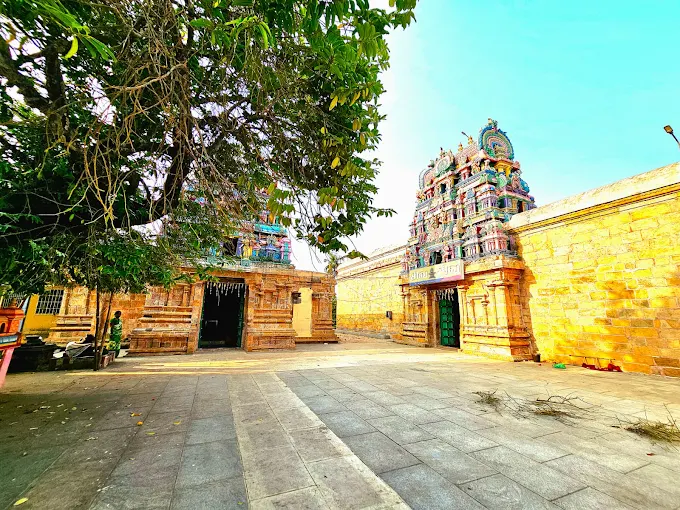
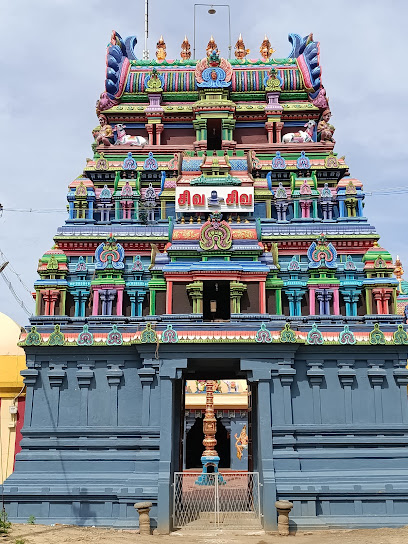
Architecturally, the temple has a traditional Dravidian temple layout with an east-facing main shrine and a prominent gopuram. The Karaikal district's historical description records a 45-foot-tall gopuram. Within the prakara are shrines associated with Ganapati, Chandikeswara, Durga, Ayyanar, Surya and Chandra, while shrines for Subramania, Punnaivana-nathar and Mahalakshmi are also recorded behind the main sanctum.
Another distinctive tradition occurs during the Tamil month of Panguni. Temple accounts state that from approximately the 7th to the 13th day of Panguni, sunlight falls directly upon the Shiva Lingam. This annual solar alignment is an important feature for visitors interested in temple architecture, astronomy and traditional sacred design.
The temple also hosts Masi Magam celebrations and special Shiva worship, while Mahashivratri and Tirukarthikai are among its other important observances. Its location near the Karaikal coast also gives it a distinctive place within the pilgrimage landscape of the region.
For MandirVaas, Thiruvettakudy should therefore be presented as a Paadal Petra Sthalam with a strong Kiratarjuneeyam tradition, distinctive hunter-form iconography, Tamil Saiva literary heritage and notable temple architecture.
Thiruvettakudy Sundareswarar Temple is one of the historic Shiva temples of the Karaikal region and is traditionally counted among the Paadal Petra Sthalams. The Karaikal district administration records Thiruvettakudy as one of the four places in the Karaikal region visited by the Saivite Nayanmars and associated with Tevaram hymns. This gives the temple an important place in the medieval Tamil Shaiva devotional landscape.
The temple's historical identity is closely connected with the name Sri Thirumeniazhagarswamy Temple. The presiding deity is Sundareswarar, while the goddess is Soundarya Nayaki. The temple is east-facing and has a traditional temple complex with a gopuram, prakara, mandapam and multiple subsidiary shrines. Historical descriptions of the site record a gopuram approximately 45 feet in height.
The exact date of the temple's original construction is not firmly established in the official sources consulted. Some temple-information sources describe the shrine as being 1,000–2,000 years old, while the available government tourism sources focus more on its religious and architectural significance than on assigning a precise foundation date. Therefore, MandirVaas should describe it as an ancient historic temple with an early Shaiva literary tradition, rather than publishing an exact construction year without stronger archaeological evidence.
The temple's strongest historical-literary connection is its association with the Tevaram tradition. Tirugnanasambandar's hymns preserve the importance of the shrine within Tamil Shaivism. The Karaikal district administration specifically identifies Thiruvettakudy as one of the four Karaikal sacred sites praised by the Nayanmars. This literary record makes the temple particularly important for pilgrims following the Paadal Petra Sthalam tradition.
The sthala tradition of the temple is connected with the Kiratarjuneeyam episode of the Mahabharata. According to the traditional account, Shiva appeared before Arjuna in the form of a hunter and tested him before granting him the Pasupatastra. This tradition is reflected in the temple's religious imagery. Vedamurthy is associated with the hunter form, and Murugan is depicted as a young hunter carrying a bow and arrow. These features give Thiruvettakudy an unusual iconographic identity among Shiva temples.
The temple complex contains several subsidiary shrines. Historical descriptions record shrines for Ganapati, Chandikeswara, Durga, Ayyanar, Surya and Chandra, while Subramania, Punnaivana-nathar and Mahalakshmi are also associated with the complex. The presence of these shrines demonstrates the development of the temple as a living religious centre rather than simply as a single-deity shrine.
Another notable tradition is the annual solar illumination of the Shiva Lingam. During a period in the Tamil month of Panguni, sunlight is traditionally said to fall directly on the Lingam. Such solar-alignment traditions are found at several historic South Indian temples and are an important feature for visitors interested in the relationship between sacred architecture and the movement of the sun.
The temple's religious calendar includes Masi Magam, Mahashivratri and Tirukarthikai. Masi Magam is particularly important in the Karaikal region, where several historic temples participate in coastal religious traditions. The temple's association with the hunter form of Shiva and the local Masi Magam observance adds to its regional cultural importance.
Today, Thiruvettakudy remains a living Shaiva pilgrimage centre and an important part of Karaikal's religious heritage. Its significance is preserved through daily worship, festivals, Tevaram tradition, temple architecture and the continuing remembrance of its Kiratarjuneeyam sthala tradition.
No daily poojas available.
No special rituals available currently.
No festivals available.

📍 5.66 km away

📍 7.41 km away

📍 10.34 km away
📍 11.10 km away

📍 11.72 km away

📍 11.96 km away
Stays near Sri Sundareswarar Temple, Thiruvettakudy

📍 Near Kurinji Andavar Temple · 269.8 km
stayStarting from ₹2,000 / night
Discover more temples you may be interested in
You may also like these temples