☰
🛕 Lord Vishnu | 📍 Thirunageswaram, Thanjavur, Tamil Nadu
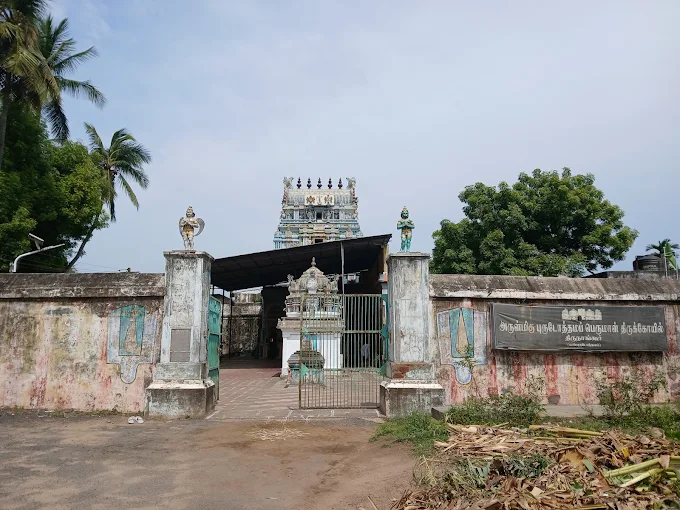
Arulmigu Oppiliappan Temple (also revered as Thiruvinnagar or Uppiliappan Temple) is situated at Thirunageswaram near Kumbakonam in Tamil Nadu, India. It is recognized as one of the 108 Divya Desams—the sacred abodes of Lord Vishnu glorified in the Nalayira Divya Prabandham by early Vaishnava saint-poets (Alvars), including Poigai Alvar, Peyalvar, Nammalvar, and Tirumangai Alvar. The temple holds paramount theological stature in Sri Vaishnavism, where Lord Oppiliappan (Venkatachalapathy) is regarded as the elder brother of Lord Venkateswara of Tirupati, earning this sacred sthalam the revered epithet 'Then Tirupati' (Southern Tirupati). Devotees believe that vows made to Tirupati Venkateswara can be fulfilled here if one is unable to travel to Tirumala.
The principal theological essence of the shrine is manifested in the divine name 'Oppiliappan'—which bears two intertwined meanings. Deriving from 'Oppu-Illa-Appan', it signifies the Lord who has no equal or peer. Simultaneously, 'Uppili-Appan' translates to the Lord without salt. According to traditional sthala purana, Sage Markandeya performed rigorous penance desiring Goddess Lakshmi as his daughter and Lord Vishnu as his son-in-law. When Lakshmi manifested under a Tulasi bush as a young maiden (Bhumidevi), Lord Vishnu approached the sage in the guise of an elderly brahmin seeking her hand. Markandeya hesitated, protesting that his daughter was too young and unskilled in cooking, not even knowing how to add salt to food. The Lord pledged to happily accept any food prepared by her without salt ('Uppu illa pandam'). To this day, in strict adherence to this divine vow, no salt is ever added to any naivedyam (sacred food offering) prepared inside the temple kitchen. Miraculously, devotees traditional affirm that the prasadam tastes naturally complete and delectable despite the absolute absence of salt.
In the sanctum sanctorum, Lord Oppiliappan stands majestically facing east, accompanied by Bhumidevi kneeling to His right in 'mandi-ittu vanangum kolam' (semi-seated worshipful posture) and Sage Markandeya seated to His left performing kanya daanam. A distinguishing iconographic hallmark of the Moolavar is the Charama Shloka diamond inscription on the Lord's right palm pointing toward His holy lotus feet: 'Maam Ekam Sharanam Vraja' ('Surrender unto Me alone'), directly imparting the supreme assurance of refuge from the Bhagavad Gita.
The recorded epigraphical and architectural history of the Oppiliappan Temple spans more than a millennium, reflecting substantial royal patronage under the Medieval Cholas, the Vijayanagara Empire, and the Thanjavur Nayaks. Inscriptions dating from the late 8th century and continuing through the reigns of imperial Chola monarchs—most notably Rajaraja Chola I (reigned 985–1014 CE) and Rajendra Chola I (reigned 1012–1044 CE)—document extensive endowments of land, gold, and perpetual lamps (nandavilakku) dedicated to the presiding deity of Thiru Vinnagar, recorded under variations such as Thiruvinnagarappan and Vinnagar Perumal.
Epigraphical evidence highlights that the surrounding region of Thirunageswaram and Kumbakonam was an important religious and agrarian hub during the Chola era. While the sanctum sanctorum and core stone base retain early Chola architectural signatures, the temple underwent comprehensive expansion and structural transformations over successive centuries. Historical records indicate that the original wooden primary image was replaced with a durable black granite carving in earlier historical periods, ensuring lasting preservation. During the 16th and early 17th centuries, under the patronage of the Vijayanagara Empire and Thanjavur Nayak rulers—principally Achuthappa Nayak (1560–1614 CE) and Raghunatha Nayak (1600–1634 CE)—the temple's prominent minister-statesman Govinda Dikshitar contributed significantly to the enlargement of the shrines, mandapams, and corridors.
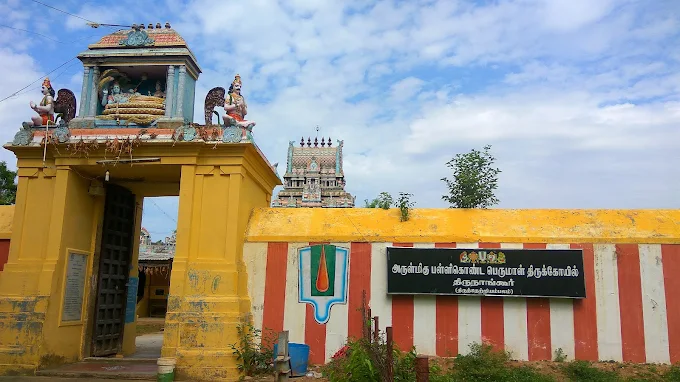
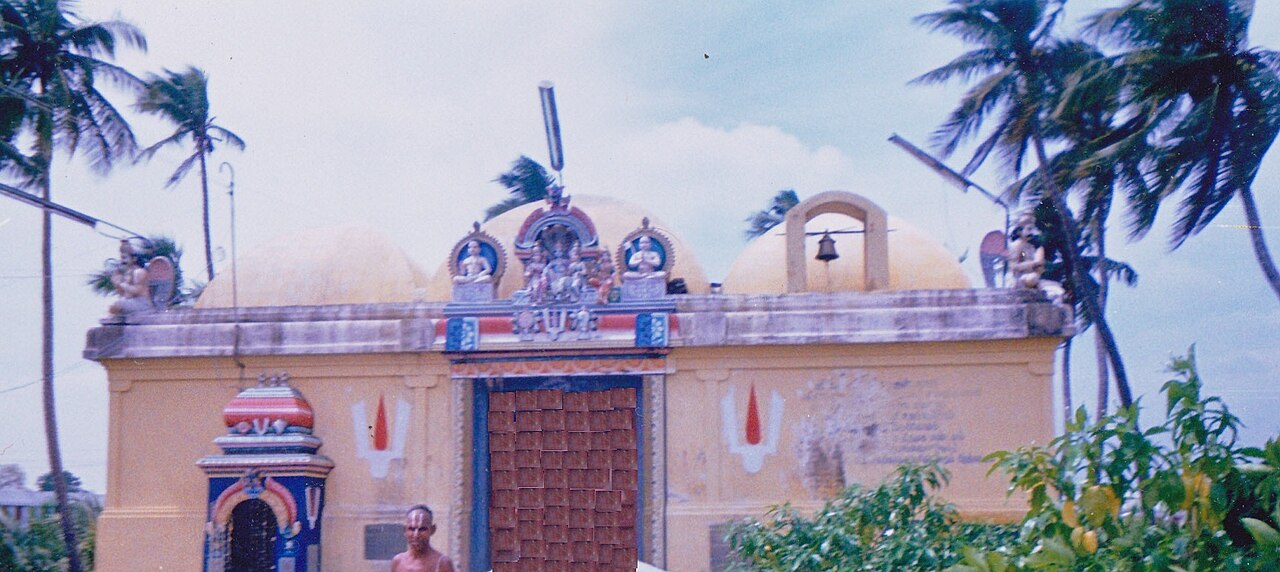
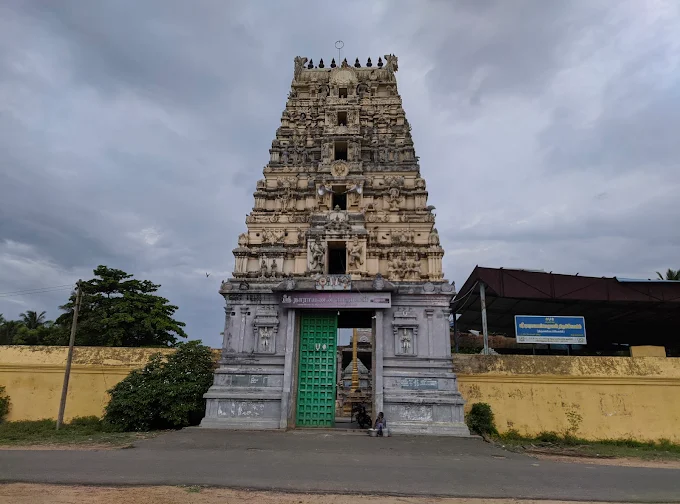
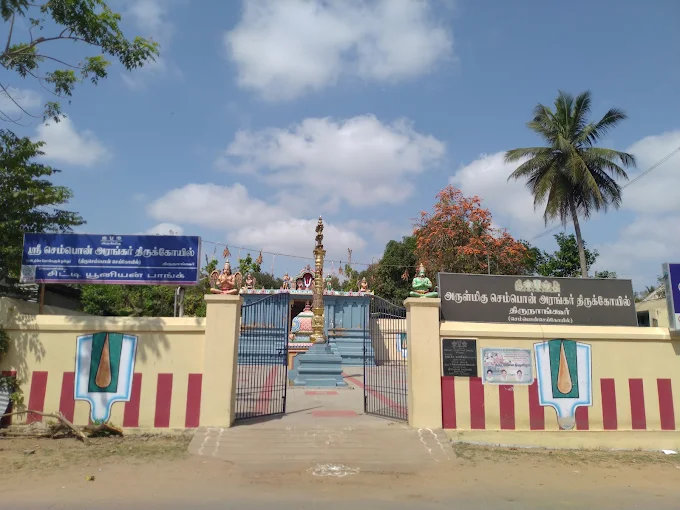
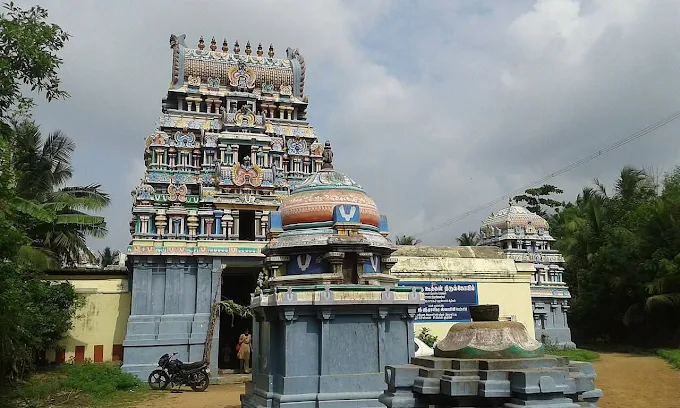
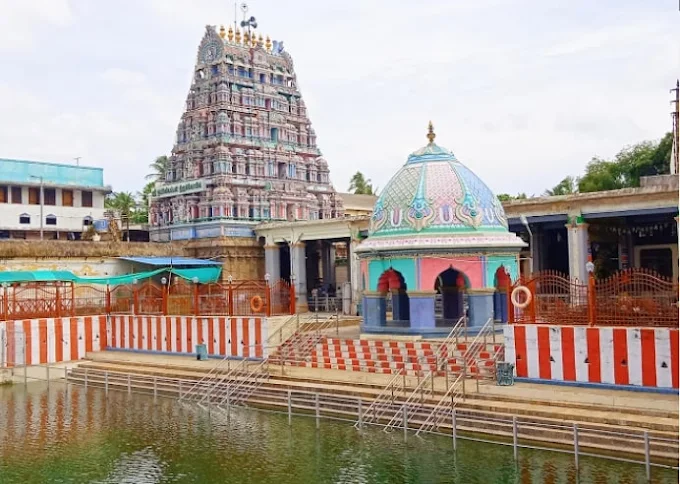
The structural layout features a five-tiered Rajagopuram (gateway tower) on the eastern entrance, rising to approximately 130 feet, enveloped within high stone compound walls. The temple complex houses spacious pillared mandapams, a circumambulatory prakaram, and shrines dedicated to the various manifestations of Perumal: Ponnappan, Maniappan, Muthappan, and Ennappan, in addition to dedicated sannidhis for Sri Desikan, Sri Ramanuja, and the Alvars. Adjacent to the complex lies the sacred temple tank, the Ahoraatra Pushkarini, celebrated in traditional lore. Today, the administration, festivals, and ongoing conservation of this ancient monument are overseen by the Hindu Religious and Charitable Endowments (HR&CE) Department of the Government of Tamil Nadu.
Devotees traditionally worship Lord Oppiliappan and Bhumidevi to cultivate mutual tolerance, understanding, and enduring harmony in married life, inspired by the Lord's unconditional acceptance of Bhumidevi.
As Lord Oppiliappan is revered as the elder brother of Tirupati Sri Venkateswara, devotees who cannot undertake the journey to Tirumala believe they can fulfill their heartfelt prayers and vows at this shrine.
Childless couples and individuals facing life obstacles participate in Thirumanjanam and light ghee lamps during Thiruvonam (Sravanam) star days, seeking auspicious divine grace.
The presiding deity's hand inscription directly displays the Charama Shloka promise of liberation ('Maam Ekam Sharanam Vraja'), offering deep solace and spiritual sanctuary to spiritual seekers surrender to Him.
A celebrated monthly ritual conducted on the auspicious Sravanam (Thiruvonam) star day commemorating the divine appearance and wedding of the deities, where special pujas are performed alongside the lighting of the massive Aganda Deepam (everlasting lamp) and Vaal Deepam.
The sacred ceremonial ablution (abhisheka bath) performed for the procession deity (utsava murti) using holy waters, milk, curd, honey, and sanctified fragrant herbs in line with Vaikhanasa Agama rites.
Special procession seva organized during Brahmotsavam periods (Panguni, Purattasi, and Aipasi) where Lord Oppiliappan is mounted on the golden Garuda Vahanam and taken around the four Mada streets.
A grand traditional offering of an enormous mound of cooked salt-free rice and varieties of sweets and delicacies made to the Lord at the climax of the annual Panguni Brahmotsavam car festival.
No festivals available.

📍 0.39 km away

📍 2.74 km away

📍 2.94 km away

📍 3.51 km away

📍 4.27 km away

📍 4.52 km away
Stays near Oppiliappan Venkatachalapathy Temple

📍 Near Kurinji Andavar Temple · 227.0 km
stayStarting from ₹2,000 / night
Discover more temples you may be interested in
You may also like these temples