☰
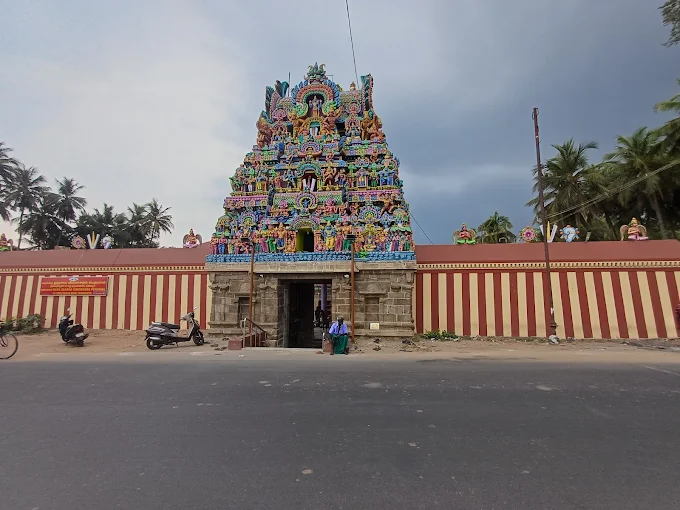
🛕 Lord Vishnu | 📍 Thirukandiyur, Thanjavur, Tamil Nadu
Sri Hara Saabha Vimocchana Perumal Temple in Thirukandiyur is one of the revered 108 Divya Desams celebrated in the Sri Vaishnava tradition, classified among the sacred shrines of Chola Nadu. The temple is glorified in the Nalayira Divya Prabandham by the 8th-century saint Thirumangai Azhwar with ten devotional verses in his Periya Thirumozhi. The temple's primary divine identity is embodied in its distinctive name: 'Hara' denotes Lord Shiva, 'Saabham' means curse, and 'Vimocchana' signifies absolute liberation or redemption. According to sacred sthala purana, when Lord Shiva decapitated the arrogant fifth head of Lord Brahma, the severed skull (kapala) remained miraculously affixed to Shiva's palm, afflicting him with the grievous sin of Brahmahatya Dosha. Destined to wander as a mendicant (Bhikshatana) until the vessel was filled to overflowing, Lord Shiva finally received divine alms from Goddess Mahalakshmi at Uthamar Kovil. He then journeyed to Thirukandiyur, where he immersed himself in the temple tank and worshipped Lord Vishnu, whereupon the clinging skull finally detached from his hand, granting him complete absolution. The holy tank thus earned the renown of Kapala Moksha Pushkarani. The temple is celebrated as a 'Pancha Kamala Kshetram' because five fundamental components are intimately associated with the sacred lotus (Kamala): the holy site (Kamala Kshetram), the temple sacred tank (Kamala Pushkarani), the vimanam atop the sanctum (Kamalakruthi Vimanam), the processional deity (Sri Kamalanathan), and the divine consort (Sri Kamalavalli Nachiyar). Thirukandiyur is also revered as a rare 'Mummoorthi Kshetram' or Trinity site, highlighting the divine interaction of Brahma, Vishnu, and Shiva. Adjacent to this Divya Desam stands the ancient Brahma Sirakandeeswarar Temple, creating a unified pilgrimage landscape where both Saivite and Vaishnavite legends harmoniously intersect. The presiding deity, Lord Hara Saabha Vimocchana Perumal, bestows grace in a majestic standing posture (Nindra Thirukkolam) facing east, having revealed His divine form to Sage Agastya, King Mahabali, Chandra (the Moon God), and Sage Bhrigu.
The historical origins of Sri Hara Saabha Vimocchana Perumal Temple reflect layers of dynastic patronage in the fertile delta between the Kaveri, Kudamurutti, and Vennar rivers. While Vaishnava traditions and the Brahmanda Purana ascribe the temple's antiquity to the Treta Yuga—recounting that Emperor Mahabali and Lord Shiva established the early shrine—epigraphical and architectural evidence dates the foundation of the structural stone temple to the Medieval Chola era, specifically the late 8th to 9th centuries CE. Thirumangai Azhwar, the vibrant warrior-saint who lived during this era, extensively documented Thirukandiyur in early Tamil devotional literature, attesting to its active religious prominence during the Pallava-Chola transition period.
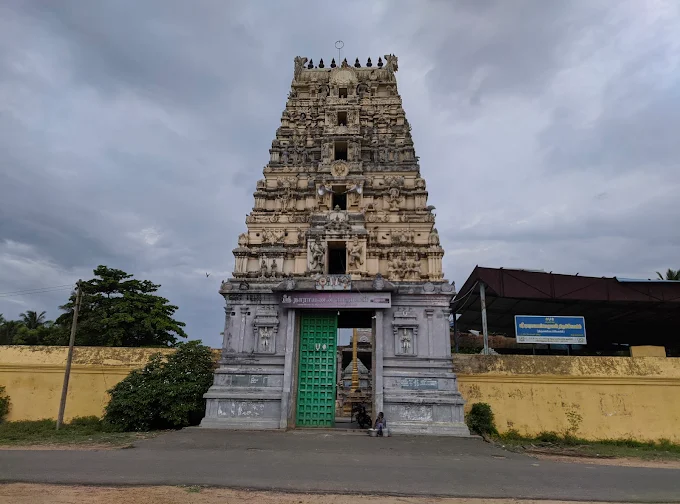
Architecturally, the temple showcases classical Dravidian features, centered around a compact layout spanning approximately one acre. It is enclosed by substantial granite prakaram walls that house shrines for the presiding deity, Goddess Kamalavalli Nachiyar, Santhana Gopalan, Navaneetha Krishna, Lakshmi Narasimha, Chakratalwar, Andal, and the Vaishnavite Alwars and Acharyas, notably Swami Vedanta Desika. A noteworthy architectural curiosity is the Lakshmi Narasimha shrine, situated directly back-to-back behind the Chakratalwar sannidhi. The temple entrance is marked by a majestic five-tiered Rajagopuram facing east, and the sanctum is crowned by the rare circular or octagonal Kamalakruthi Vimanam symbolizing an open lotus.
Over the subsequent centuries, the temple received sustained structural additions and maintenance during the rule of the Vijayanagara Empire and the Nayaks of Thanjavur and Madurai. Historical accounts record that neighboring separate sanctums dedicated to Brahma and Saraswati fell into disrepair during regional disturbances, leading to their sculptural icons being preserved within the adjacent Kandeeswarar temple complex. In modern times, the temple underwent comprehensive restorations and consecrated Kumbhabhishekam ceremonies under the spiritual direction of celebrated Vaishnavite pontiffs: in 1984 under the aegis of 44th Jeeyar of Srirangam Srimad Andavan Ashramam, Sri Thirukkudanthai Vedanta Ramanuja Mahadesikan, and in 2003 under Sri Ranga Ramanuja Mahadesikan. Today, the temple is protected, administered, and conserved under the Hindu Religious and Charitable Endowments (HR&CE) Department of the Government of Tamil Nadu.
Rooted in the foundational belief that Lord Shiva Himself obtained relief from Brahmahatya Dosha here, devotees traditionally pray at this temple seeking release from persistent life obstacles, ancestral curses, and debilitating doshas.
Devotional faith holds that praying to Lord Hara Saabha Vimocchana Perumal brings profound calm, alleviating internal guilt, grief, and long-standing psychological burdens.
According to temple tradition, Chandra (the Moon God) was partly relieved of his curse after worshipping here; hence, devotees with afflicted lunar placements (Chandra Dosha) regularly offer worship for astrological remedies.
Pilgrims visit the sub-shrine of Sri Santhana Gopalan within the prakaram to pray for marital harmony, the well-being of lineage, and the blessing of children.
As a sanctified Mummoorthi Kshetram where the sacred histories of Shiva, Brahma, and Vishnu converge, worshipping here is believed to cultivate spiritual broad-mindedness and divine grace.
Traditional holy ablution of the Utsava deities performed using sanctified water, milk, curd, honey, sandal paste, and coconut water, observed on festival occasions, Ekadasi, and special birth stars.
Devotional offering involving the chanting of the thousand sacred names of Lord Vishnu accompanied by sacred tulasi leaves for family prosperity and relief from afflictions.
Grand festive procession during the annual ten-day Panguni Brahmotsavam (March-April) where Lord Kamalanathan is mounted in regal splendour upon the divine Garuda vahana.
Major winter celebration during the Tamil month of Margazhi featuring the opening of the Paramapada Vasal (Gateway to Heaven) accompanied by special alankaram and purappadu.
Annual purification festival conducted in the Tamil month of Aipasi (October-November) featuring elaborate homams, sanctification rituals, and the offering of pavithra garlands.
No festivals available.

📍 0.16 km away

📍 2.17 km away

📍 2.41 km away

📍 3.02 km away

📍 3.24 km away
📍 3.66 km away
Stays near Thirukandiyur Hara Saabha Vimocchana Perumal Temple

📍 Near Kurinji Andavar Temple · 190.0 km
stayStarting from ₹2,000 / night
Discover more temples you may be interested in
You may also like these temples