☰
🛕 Lord Vishnu | 📍 Therazhundur, Mayiladuthurai, Tamil Nadu
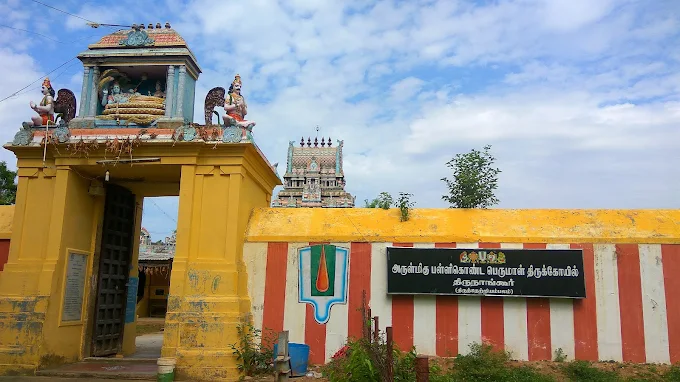
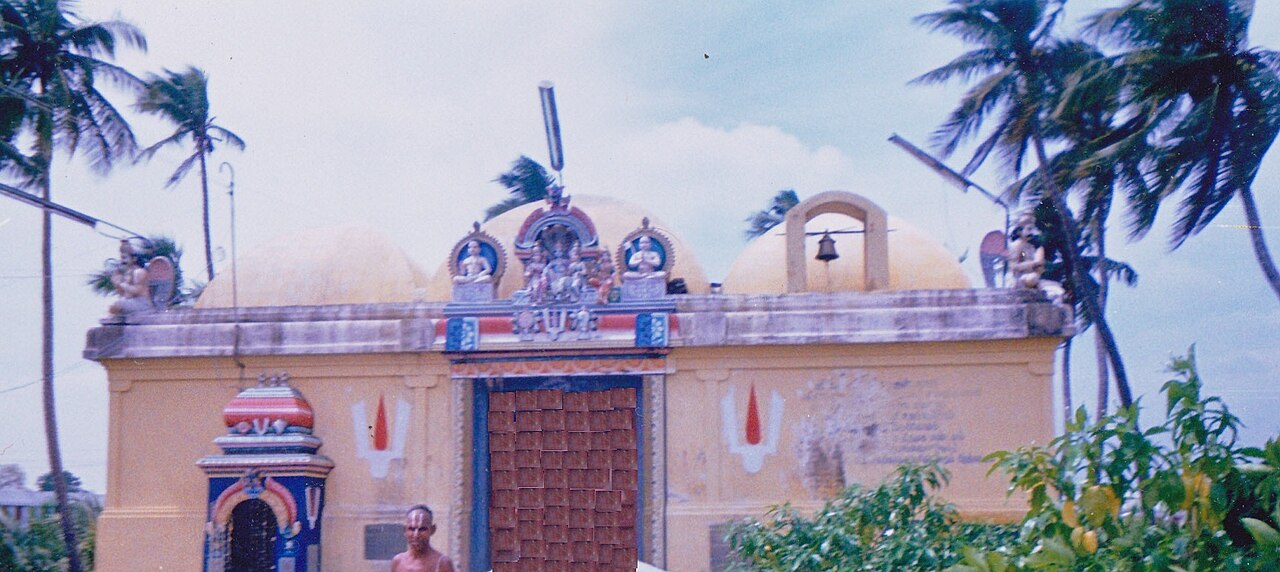
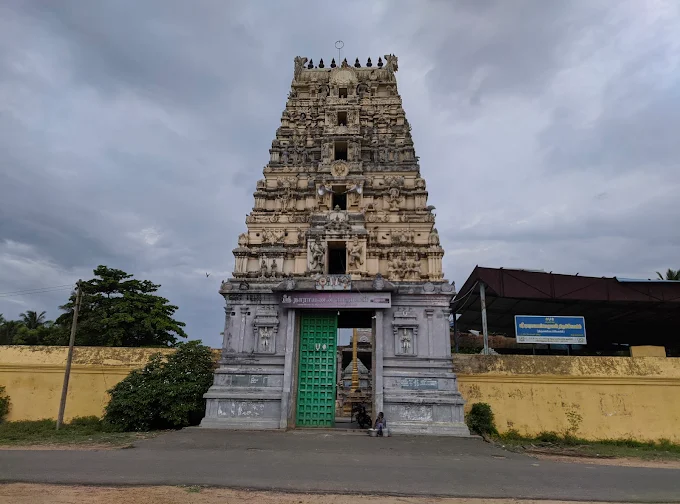
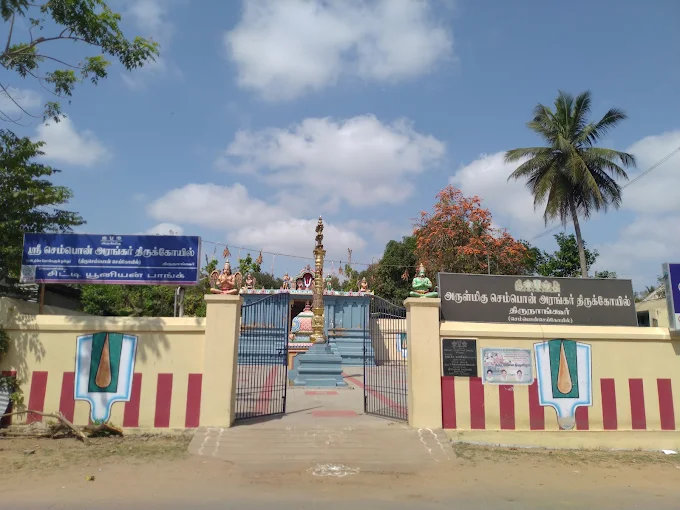
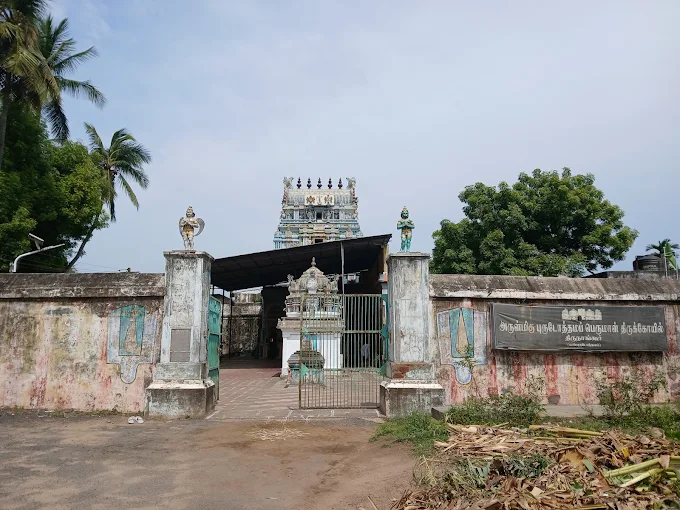
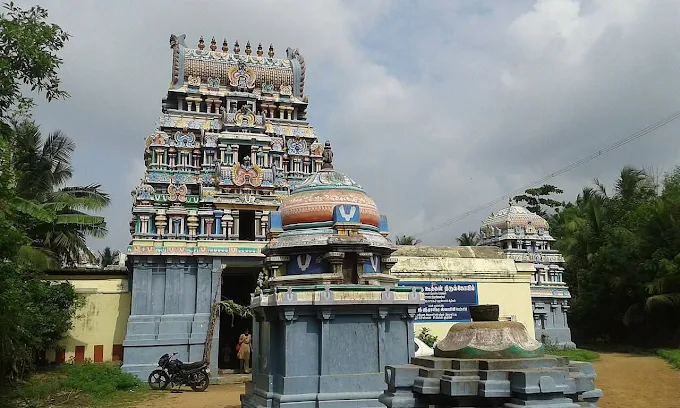
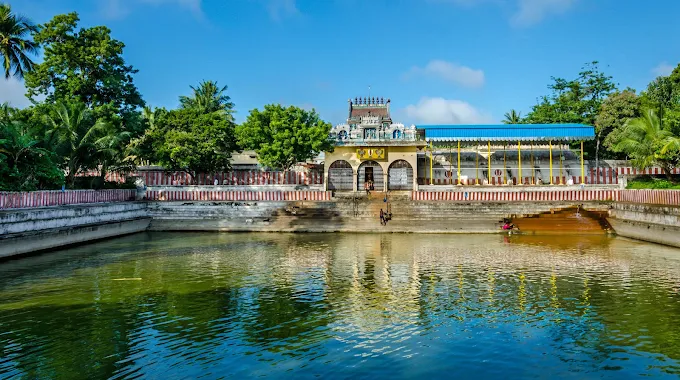
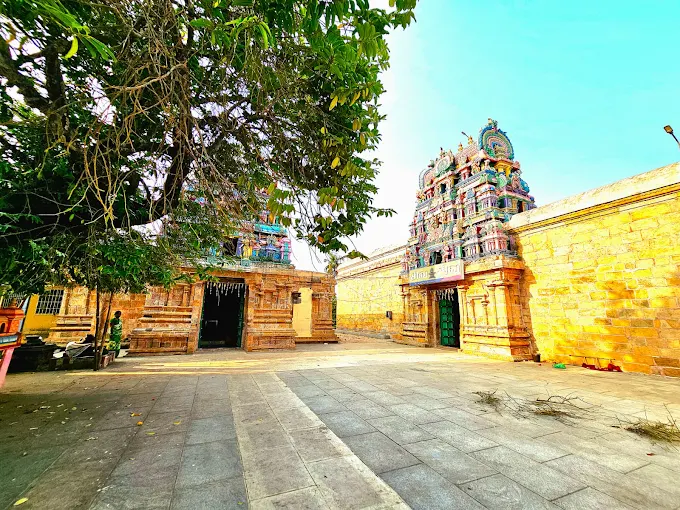
Sri Devaadi Raja Perumal Temple (also reverently known as Sri Aamaruviappan Temple) at Therazhundur is one of the 108 Divya Desams, glorified as the 23rd holy shrine in the ancient Chola Kingdom by Thirumangai Alvar, who poured out his devotion across 45 sacred pasurams in the Nalayira Divya Prabandham. The temple also holds an esteemed status as one of the Pancha Krishnaranya Kshetrams (alongside Thirukannapuram, Thirukannangudi, Thirukannamangai, and Kapisthalam), dedicated to divine manifestations associated with Lord Krishna. The sanctum sanctorum houses a majestic 10-to-12-foot-tall Salagrama stone icon of the presiding deity, Sri Devaadi Raja Perumal, standing gracefully under the sacred Garuda Vimanam facing east. Uniquely, the Lord is flanked in the inner sanctum by his eternal vahana Garudalwar, alongside Bhakta Prahlada and Sage Markandeya, while River Cauvery is depicted kneeling in eternal prayer at His lotus feet. In a rare iconography among Vaishnavite shrines, a cow and calf stand beside the deity, reflecting His pastoral leela. The processional deity, Utsavar Sri Aamaruviappan (Gosakan), is flanked by Sridevi and Bhudevi with cows, signifying Krishna’s boundless affection and shelter for all living beings. His divine consort, Sri Sengamalavalli Thayar (Raktambujavalli), is enshrined in an independent sanctum. Thirumangai Alvar made this temple unique in the Divya Desam canon by composing hymns singing the joint glory of the Lord and Thayar together. Furthermore, Therazhundur is universally celebrated in Tamil cultural history as the revered birthplace of Kavi Chakravarthi Kamban, the 12th-century immortal author of Kamba Ramayanam.
The temple of Sri Devaadi Raja Perumal possesses rich historical foundations interlaced with profound regional traditions. From an architectural and epigraphical perspective, the present stone complex reflects classical Dravidian temple architecture refined across several dynasties of the Chola empire. Traditional lore links the initial brick-and-timber structure to the early Sangam monarch Karikala Chola, while structural granite rebuilding and extensive outer fortifications took place primarily during the Medieval Chola era (10th to 12th centuries CE) under kings like Rajaraja Chola I and Kulothunga Chola. Epigraphical records in the surrounding delta temples mention endowments of agricultural lands, provisions for twilight lamps (nandavilakku), flower garlands, and the recitation of sacred hymns maintained by historic village sabhas and later supported during the Vijayanagara and Thanjavur Nayaka epochs. Adjacent to the temple sits 'Kamba Medu', an archaeological mound historically preserved as the residence of the 12th-century Tamil poet Kamban; inside the temple's rajagopuram entrance, commemorative stone sculptures of Kamban and his wife can still be witnessed.
According to traditional Vaishnava sthala purana, the sacred name 'Therazhundur' originates from King Uparicharavasu (a ruler belonging to the Chedi dynasty), who possessed an aerial chariot gifted by Lord Indra. Having shown bias in an arbitration between sages and devas, he incurred a curse. As his celestial chariot traversed the skies over this forest, its ominous shadow fell upon the divine cows grazing on the ground. To subdue the king's hubris and safeguard the cows, Lord Vishnu pressed His sacred toe firmly onto the ground. The celestial chariot instantly descended and became lodged deeply into the earth ('Ther' meaning chariot, and 'Azhundhur' meaning sank). Realizing his spiritual arrogance, the humbled king performed deep surrender and penance. Pleased with his devotion, Vishnu manifested before him, relieved his chariot, and bestowed darshan as 'Devaadi Rajan' (King of Kings). Another sacred tradition recounts that Lord Brahma sequestered the herds of cows and cowherd boys of Gokula to test Sri Krishna's cosmic power. When Krishna assumed the cosmic forms of every single animal and child, Brahma recognized His supreme divinity and implored Him to bestow darshan in this sanctum, where the Lord eternally remains as 'Amaruviappan' (the Lord surrounded by cattle). Additionally, tradition holds that River Cauvery performed rigorous austerities here to attain sacred equality with the River Ganga, receiving eternal redemption and an abiding presence at the Lord's feet.
According to sacred tradition, just as River Cauvery received purification and relief from curses at the feet of Lord Devaadirajan, devotees believe worshipping the Lord absolves one of sins and negative karmic impressions.
Lord Amaruviappan is revered as 'Saranagatha Rakshaka'—the compassionate protector of all dependent beings. Devotees pray here for safeguarding their cattle, domestic harmony, and the safety of family members.
As Therazhundur is the sacred birthplace of Kavi Chakravarthi Kamban, traditional belief holds that students and artists who pray to Sri Devaadi Raja Perumal and Sengamalavalli Thayar receive divine inspiration, eloquence, and academic success.
Recalling the legend of King Uparicharavasu whose false pride was dissolved by the Lord's grace, devotees seek darshan to dispel personal pride, mental conflict, and attain genuine spiritual humility and tranquility.
Devotees offer prayers at the separate sannidhi of Sri Sengamalavalli Thayar, traditionally believed to remove prolonged obstacles in matrimony and bestow auspicious household abundance.
A deeply cherished devotional offering made to Sri Aamaruviappan, where fresh butter is offered to invoke the child-like grace and pastoral affection of Sri Krishna.
Chanting of the Sri Vishnu Sahasranama by temple priests with sacred tulsi leaves at the lotus feet of Sri Devaadirajan for overall welfare and fulfillment of prayers.
Ceremonial ritual bathing of the processional bronze icons of Sri Aamaruviappan and Ubhaya Nachiyars using milk, curd, honey, panchamritam, and consecrated water on auspicious days.
Special pujas and alankaram conducted during the monthly Thiruvonam nakshatram and Shukla/Krishna Paksha Ekadashis according to Pancharatra traditions.
No festivals available.
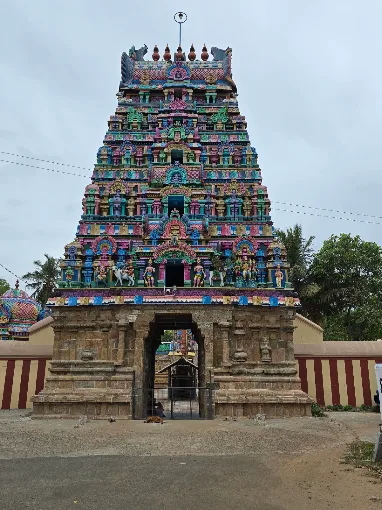
📍 0.72 km away

📍 3.96 km away

📍 4.30 km away

📍 5.66 km away

📍 6.51 km away
📍 6.80 km away
Stays near Therazhundur Devaadi Raja Perumal Temple

📍 Near Kurinji Andavar Temple · 245.4 km
stayStarting from ₹2,000 / night
Discover more temples you may be interested in
You may also like these temples