☰
🛕 Lord Krishna | 📍 Ambalappuzha, Alappuzha, Kerala
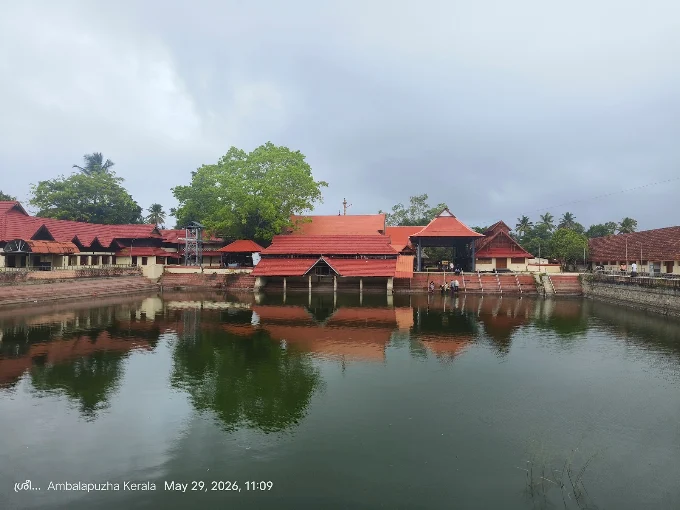
Ambalappuzha Sree Krishna Swamy Temple is one of Kerala's best-known Krishna temples and is traditionally counted among the seven great Vaishnava temples of the state. Located in the historic town of Ambalappuzha in Alappuzha district, the temple is particularly famous for its unique form of Lord Krishna as Parthasarathy, the divine charioteer of Arjuna. The deity is traditionally depicted holding a whip in the right hand and a conch in the left, giving the shrine a distinctive connection with the Krishna of the Mahabharata rather than simply the child or flute-playing forms commonly associated with Krishna worship. Kerala Tourism identifies Parthasarathy as the presiding form of the deity.
One of the temple's greatest attractions is the legendary Ambalappuzha Palpayasam. This sweet milk-and-rice pudding is offered to Lord Krishna as part of the temple's daily ritual tradition and has become almost synonymous with the identity of Ambalappuzha. The offering is not merely a food item for visitors; it is part of the temple's living devotional culture. A popular traditional story explains its origin through a game of chess between the ruler of the region and a mysterious sage who was later revealed to be Lord Krishna. According to the legend, Krishna requested that the king provide rice according to the amount agreed upon in the game, eventually leading to the tradition of offering Palpayasam. The story is a religious tradition rather than independently established historical evidence, but it remains deeply associated with the temple.
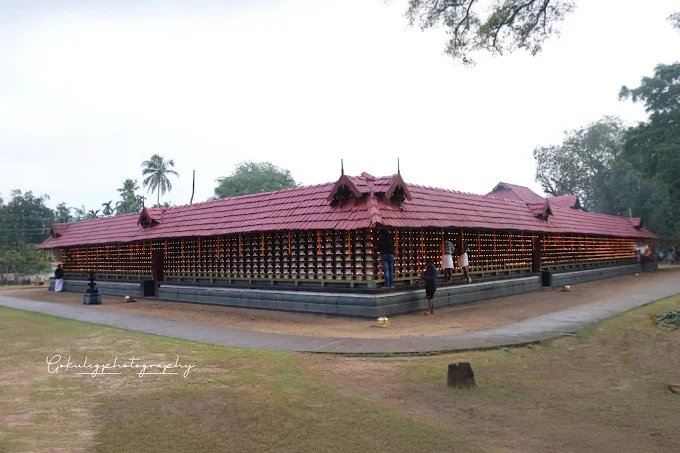
The temple is also important for Kerala's traditional architecture. Its buildings follow the characteristic Kerala temple style, with timber structures, sloping roofs and a carefully organised temple complex. The Chuttambalam surrounding the sanctum is especially notable for its wall paintings depicting the Dasavatharam, the ten major incarnations of Vishnu. These paintings add an artistic and educational dimension to the pilgrimage, allowing visitors to experience both religious worship and Kerala's traditional visual culture.
Ambalappuzha also occupies an important place in Kerala's performing-arts history. The temple is traditionally associated with the first performance of Ottanthullal, the satirical performance art created by the celebrated Malayalam poet Kunchan Nambiar. The art form combines poetry, music, dance and satire and became an important part of Kerala's cultural identity. According to Kerala Tourism, Ottanthullal was first performed at Ambalappuzha, giving the temple significance beyond religion and architecture.
The temple's festival calendar is equally important. The annual ten-day Arattu festival is one of the major celebrations, with flag hoisting, ceremonial rituals, Uthsavabali, Pallivetta and the concluding Arattu. Another major event is Chambakulam Moolam, associated with the traditional boat procession and the beginning of Kerala's annual snake-boat-racing season. The connection between the temple and the Chambakulam water festival demonstrates how temple worship historically interacted with the waterways and cultural life of the region.
Another important tradition is the temple's historical connection with Guruvayoor. During the period of Tipu Sultan's raids in 1789, the idol of Guruvayoorappan is traditionally said to have been brought to Ambalappuzha for safekeeping. This story created a strong cultural connection between the two Krishna temples that continues to be remembered today. Kerala Tourism presents this as part of the temple's historical tradition.
For pilgrims, Ambalappuzha therefore offers several layers of experience: devotion to Krishna as Parthasarathy, the famous Palpayasam offering, traditional Kerala architecture, Dasavatharam paintings, Ottanthullal heritage, annual festivals and the wider Vaishnava traditions of Kerala. It is a temple where religious practice, food tradition, performing arts, architecture and regional history come together in one living cultural landscape.
Ambalappuzha Sree Krishna Swamy Temple has a history closely connected with the former Chembakassery kingdom and the religious and cultural development of central Kerala. Kerala Tourism places the construction of the temple between the 15th and 17th centuries and identifies Pooradam Thirunal Devanarayanan Thampuran, the ruler of Chembakassery, with its establishment. The Alappuzha district administration similarly records that the Sree Krishna Swamy Temple was constructed and the Krishna idol installed during the reign of Pooradam Thirunal Devanarayanan.
The Chembakassery kingdom, associated with the Ambalappuzha region, became an important political centre during the 16th century. The district administration describes Pooradam Thirunal Devanarayanan as an accomplished ruler, scholar and poet. During his reign, Ambalappuzha developed as an important centre of religion and culture. The Krishna temple became closely associated with the royal house, and tradition remembers the ruler as having dedicated his kingdom to the deity and governed as the Lord's representative. Kerala Tourism states that the ruler assumed the title Deva Narayana after offering the state to the Lord.
The identity of the temple's deity is particularly significant. Lord Krishna is worshipped here in the form of Parthasarathy, recalling the Mahabharata tradition in which Krishna served as Arjuna's charioteer. The idol's distinctive attributes—a whip in the right hand and a conch in the left—reinforce this association. The temple's architecture developed in the traditional Kerala style, with the Chuttambalam surrounding the sanctum and elaborate Dasavatharam paintings. These architectural and artistic elements indicate that the temple functioned not only as a place of worship but also as an important cultural institution.
One of the temple's most famous traditions concerns the origin of Ambalappuzha Palpayasam. According to the traditional story, Krishna appeared in the guise of a sage and challenged the king to a game of chess. The king agreed to the sage's unusual condition that the reward would be rice, doubled according to the squares of the chessboard. Once the game was lost, the resulting quantity of rice became impossibly large. The sage then revealed his divine identity and asked that Palpayasam be offered to him and distributed as a continuing temple tradition. This story should be presented as temple legend rather than verified historical documentation, but it has become inseparable from the temple's cultural identity.
The temple's history became connected with Guruvayoor during the period of Tipu Sultan's military campaigns in Kerala. According to Kerala Tourism's account, the idol of Sree Krishna from Guruvayoor was brought to Ambalappuzha in 1789 for protection during the raids. The Ambalappuzha temple therefore became temporarily associated with the safeguarding of the Guruvayoor deity. This episode is an important part of the remembered historical relationship between the two Krishna temples.
Ambalappuzha also became an important centre for Kerala's performing arts. The temple is traditionally associated with Kunchan Nambiar and the first performance of Ottanthullal. Nambiar's satirical combination of poetry, rhythm, music and movement became a powerful form of popular expression. The temple thus occupies a place in Kerala's cultural history that extends beyond ritual worship.
The annual festival traditions also developed into important expressions of the temple's history. The ten-day Arattu festival includes ceremonial flag hoisting, Uthsavabali, Pallivetta and the final holy bath. Chambakulam Moolam developed as another major festival connected with the temple's history. Kerala Tourism notes that the Chambakulam boat race is traditionally associated with the arrival of the Krishna idol and is considered the beginning of Kerala's annual snake-boat-racing season.
Over the centuries, Ambalappuzha Sree Krishna Swamy Temple has therefore evolved from a royal-period Vaishnava shrine into a major pilgrimage and cultural centre. Its history is preserved not only through the temple structure but also through Palpayasam, festivals, murals, performing arts and the continuing worship of Krishna as Parthasarathy. For MandirVaas, it is best described as a historic Kerala Vaishnava temple whose documented royal-era history is complemented by rich legends and living cultural traditions.
No daily poojas available.
No special rituals available currently.
No festivals available.
Dress Code: Traditional and modest clothing is recommended.
Photography: No
Prasad: Not Available
Prasad Details: Ambalappuzha Palpayasam is the signature offering.

📍 13.35 km away
📍 23.72 km away
📍 26.47 km away
📍 76.74 km away
📍 108.69 km away
📍 116.10 km away
Stays near Ambalappuzha Sree Krishna Swamy Temple

📍 Near Kurinji Andavar Temple · 155.3 km
stayStarting from ₹2,000 / night

📍 Near Nachiyar Kovil (Thirunarayur Nambi Temple) · 381.6 km
stayStarting from ₹4,500 / night

📍 Near Kasi Vishwanathar Temple · 1,905.1 km
Starting from ₹1,200 / night


📍 Near Kasi Vishwanathar Temple · 1,905.1 km
Starting from ₹1,200 / night
Discover more temples you may be interested in
You may also like these temples