☰
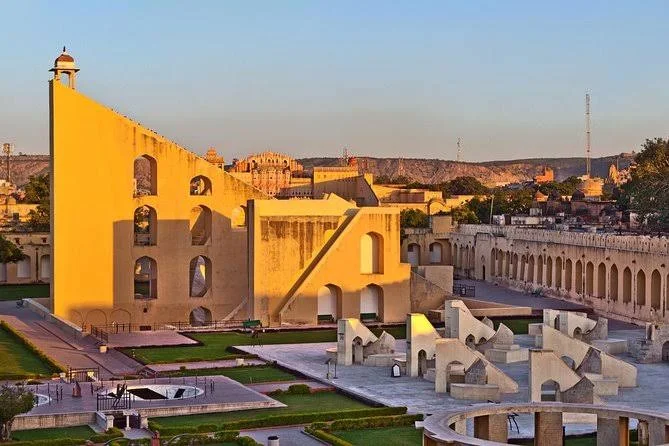
Jantar Mantar was built by Maharaja Sawai Jai Singh II, the ruler who founded Jaipur. Construction began in the 18th century and was completed around 1738. Jai Singh II had a strong interest in astronomy, mathematics and scientific observation, and developed several observatories across India.
The Jaipur observatory became the most comprehensive and best-preserved of his monumental observatories. Its instruments drew upon astronomical traditions from South Asia, the Islamic world and Europe while incorporating distinctive architectural and instrumental innovations.
Explore one of India's most important historic astronomical observatories.
See the world's largest stone sundial, the Brihat Samrat Yantra.
Learn how traditional astronomical instruments were used.
Experience the combination of science, architecture and history.
Visit a UNESCO World Heritage Site.
See monumental instruments designed for naked-eye astronomical observation.
Explore the astronomical instruments.
See the Brihat Samrat Yantra.
Learn how the instruments measure time and celestial positions.
Take photographs of the monumental structures.
Take a guided tour or use an audio guide.
Learn about traditional Indian astronomical practices.
| Category | |
|---|---|
| Entry Fee | ₹50.00 |
| Opening | 09:00:00 |
| Closing | 19:00:00 |
| Visit Duration | 2 Hours |
| Best Time | All Year |